
How to navigate immigration issues and business risks

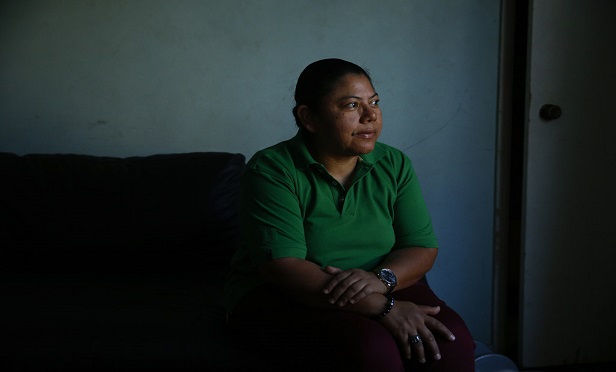 The status of undocumented visitors already in the U.S. must be clarified to remove the uncertainties that exist. The insurance industry can help policyholders understand and manage the risks in the current, confused system. Here, Iris Acosta, a 51-year-old hotel housekeeper from Honduras, pauses for photos in her sister's apartment in Los Angeles. Acosta is a Temporary Protected Status recipient, a program that is geared toward countries ravaged by natural disasters or war. (AP Photo)[/caption] Until recently, all I knew about immigration was that my grandfather came to the U.S. as a young boy, and that our family name was inadvertently changed. Compared to what some immigrants face today, the typo that changed "Castorio" to "Castoria" was a small price to pay for becoming Americans. As I write this, however, the future of the Deferred Action for Childhood Arrivals (DACA) program, which has allowed undocumented immigrant children to remain in the U.S., is in doubt. Those two words, "in doubt," are the foundation of the insurance industry. Whether the risk is a cargo ship's safe passage to its destination or a brokerage firm being sued for malpractice, uncertainty creates the need for insurance. Our immigration system's uncertainty extends to businesses, government agencies and service providers. Insurance agents, brokers, risk managers and underwriters may be better able to assess their insureds' and applicants' immigration-related liability risks by examining recent cases in several commercial settings.
 Health care liability risks
Undocumented immigrants present at least three liability risks to health care providers: lawsuits alleging denials of service based on the patient's national origin, malpractice claims, and accusations of colluding with Immigration and Customs Enforcement (ICE) agents. Medical facilities that accept Medicare payments are required by the Emergency Medical Treatment and Active Labor Act to provide patients with emergency treatment, regardless of their ability to pay. According to an Aug. 2, 2008, New York Times report, Luis Alberto Jiménez, an undocumented Florida gardener, sustained a severe brain injury in an accident, requiring more than $1.5 million in life-saving surgeries and continuing treatment over several years. The hospital hired an air ambulance to transport Jiménez to Guatemala, his country of origin, while a lawsuit between his guardian and the hospital was pending. Such "medical repatriations" raise issues that can be litigated by U.S.-based guardians or family members after the immigrant has been taken from U.S. soil. A related practice involves removing an undocumented patient from a medical facility before emergency treatment is provided. In 2015, Sara Beltran-Hernandez, who illegally entered the U.S. from El Salvador to visit family members, was detained and sent to a Texas center. As reported by the Los Angeles Times, in 2017 the 26 year-old mother was diagnosed with brain cancer and scheduled for emergency surgery. But before the surgery, she was forcibly removed from the hospital by federal agents and returned to the detention camp. Beltran-Hernandez was represented by counsel seeking asylum on her behalf before she was taken from the hospital. Undocumented immigrants can file medical malpractice suits, but if the immigrant is not already in custody, attending a court hearing may provide ICE the opportunity to seize the plaintiff. The chilling effect of possible arrest may dissuade many immigrants from pursuing a claim.Employers, financial institutions and others
Employers must maintain I-9 Employment Eligibility Verification forms on all employees who are not U.S. nationals. Employers aren't required to test the accuracy of the information applicants provide, unless a contract, law, or regulation so states or unless the information is patently false. Employers also face the same lawsuits by undocumented workers as by other employees — discrimination or sexual harassment, for example — with two differences:
- The immigrants face a similar "chilling effect," though they can file a separate claim for retaliation if the employer makes them targets for deportation in response to a workplace grievance; and
- They can't recover damages for lost wages because they weren't eligible to work.
Blame the lawyer
Main Street Legal Insurance, a firm specializing in insuring solo and small law firms, considers "overpromising the chances of success" as the number one cause of claims against immigration attorneys. For the unsuccessful client, seeking a rehearing based on "ineffective assistance of counsel" can be a long shot. Once the court's ruling is final, the client may file a malpractice action to stay in the country while the case is pending. But because the civil court system is separate from the federal immigration courts, there is no guarantee of that result. As with any professional liability suit, regardless of the case's merits or lack of them, the most important goals for the lawyer/defendant are to have sufficient liability insurance in place and to be defended by competent counsel paid for by that insurer.
Playing it safe
The status of undocumented visitors already in the U.S. must be clarified to remove the uncertainties that exist. The insurance industry can help policyholders understand and manage the risks in the current, confused system. Louie Castoria ([email protected]) is the co-chair of the Professional Liability Practice Group in Kaufman Dolowich & Voluck LLP, a national law firm. See also: 10 more issues impacting workers' compensation in 2018
© Arc, All Rights Reserved. Request academic re-use from www.copyright.com. All other uses, submit a request to [email protected]. For more information visit Asset & Logo Licensing.


