

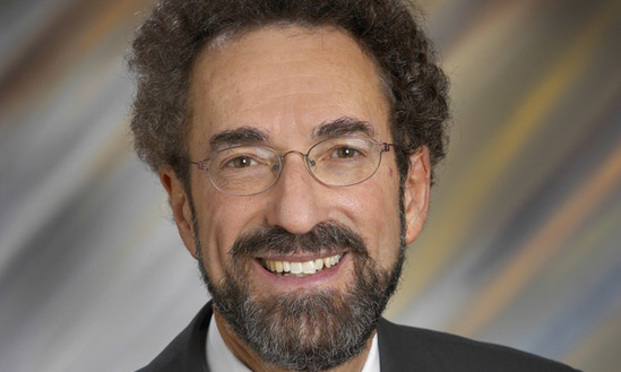
 Cliff Rieders
Judge Paige Rosini, in the case of Ackley v. Terry Johns and Shared Supports, CV-2017-1757, (Northumberland Co. C. P. Dec. 29, 2020), determined on a joint motion for neuropsychological examination, that a representative may be present during the entirety of the exam, even that which concerns so-called "objective" evaluation and questionnaire parts of the overall examination.
The entirety of the order reads as follows:
"The plain reading of Pa.R.C.P. 4010(a)(4)(i) permits the subject of the examination to have a representative present. Great care has been taken by the parties to draw distinctions between the objective evaluation and the questionnaire parts of the overall examination. While this court recognizes the difference, and interpretation of the case law on this issue may support a legal distinction, we are bound by the clear reading of the discovery rules."
The argument in this case by the defendants was that the presence of the plaintiff's counsel or a representative would somehow taint the evaluation/examination. The court addressed that perceived fear in a footnote as follows:
"The fear the defendants express relates to the plaintiff's counsel or personal representative 'tainting' the evaluation/examination in some way. It is axiomatic that any 'involvement' by the plaintiff's counsel or personal representative in the examination would be fertile ground for cross examination at trial and obviously go to credibility and weight of the evidence."
As indicated, the parties agreed to put this issue to the court in a joint motion.
This was a personal injury claim for injuries and damages sustained as the result of an auto collision on Jan. 27, 2017. The plaintiff, Jacob Ackley, was the restrained driver in a severe, head-on collision. At the time of the auto collision Ackley was 19 years of age. He sustained, as a result of this violent collision, a traumatic brain injury and multiple traumas, including right pneumothorax, right 11th rib fracture, and bilateral radius and ulna fractures. Ackley's permanent injuries include, but are not limited to, post-traumatic stress disorder, anxiety, depression, mood swings, anger issues, irritability, inability to think before acting and processing issues.
On Nov. 21, 2019, the plaintiff served the defendants with a thorough neuropsychological evaluation report prepared by Dr. Richard Lanham. This report was prepared by Lanham following the July 13, 2019, evaluation that he performed on Ackley, where he ultimately concluded that Ackley sustained multi-trauma injuries from his involvement in the head-on motor vehicle collision on Jan. 27, 2017, including a traumatic brain injury, the effects of which he continues to experience over two-and-a-half years post-accident. Lanham further concluded that these injuries are considered permanent in nature given the time post-injury.
Defendants in the case sought a neuropsychological evaluation by a medical expert of their own choosing. In correspondence to the plaintiff's counsel dated May 27, 2020, counsel for the defendant Shared Support, set forth that Dr. Christopher Royer's examination would last up to four hours, excluding any breaks taken. The letter further sets forth that the examination would begin with an interview that would last approximately 45 minutes to one hour followed by cognitive testing, and concluding with Ackley filling out a mood questionnaire. Except for the mood questionnaire at the completion of the exam, the entire examination involves verbal communication between Royer and Ackley.
It was the plaintiff's position that Ackley is entitled by right to have counsel or other representative present during the entirety of the examination by Royer. The defendants disputed this position, and therefore the parties had agreed to the joint motion.
In order to understand the current language of Pennsylvania Rule of Civil Procedure 4010(a)(4)(i) and its effect on the right to have counsel present during a physical or mental examination, it is important to look at how courts interpreted and handled this issue prior to the 1998 legislative amendments that added this explicit right.
The case of Machinski v. Schaaf, 35 Pa. D. & C. 3d 572 (Erie Co. C.P. 1984), involved a rear-end automobile collision between a car driven by the defendant and one drive-by plaintiff Ann Machinski. Among the various injuries to have resulted from the accident, the plaintiff claimed to be suffering from traumatic cervical, dorsal and lumbar myositis with severe muscle spasm; residual discomfort in her left knee, subluxation of her C4 and C5 vertebrae; and aggravation of her arthritic condition of the cervical spine. The plaintiff agreed to undergo the defendant's requested medical examination only if her counsel could accompany her. The orthopedic surgeon who was set to perform the examination refused to allow the plaintiff's counsel to be present, which led to the defendant filing a motion to compel the examination without the presence of counsel.
The court in Machinski first set forth that the only Pennsylvania appellate court decision dealing with the issue of whether a person may be accompanied by his attorney during an examination was that of State Farm Mutual Automobile Insurance v. Morris, 289 Pa. Super. 37, 432 A.2d 1089 (1981), where the Superior Court stated:
"Whether a person who is to be examined may be accompanied by his or her attorney is also discretionary with the court. In many cases, counsel will not be needed to protect the legal rights of the insured. he examination will be objective and the nature of the injuries readily diagnosed … Other examinations, of course, may involve psychiatric ailments, or physical injuries not readily demonstrated by X-rays or other objective means. In such cases the attendance of counsel may be desired. Therefore, the court may, in its discretion, allow the [plaintiff's] attorney to be present during the examination." See and compare: 10 Goodrich-Amram Procedural Rules Service p. 273m Section 410(a):9.
The court in Machinski found that the plaintiff's injuries fell within the category of "physical injuries not readily demonstrated by X-rays or other objective means." In coming to this conclusion, the court held:
"After consideration of the competing interests involved in this case, we believe that the plaintiff should be permitted to have her counsel present during the medical examination. Many of the injuries claimed by defendant involve subjective analysis. The orthopedic surgeon, to conduct a proper diagnosis, must ask various questions of plaintiff. The amount of the plaintiff's recovery may very well be determined by her answers to these questions. Thus, if she is confused or nervous when she sees the examining physician, who she may regard as more as an adversary than an impartial professional, she may not give proper answers to his questions and be denied a damage award that fully compensates her for her injuries. The truth-finding function of our system of law would thus be impaired."
The presence of counsel may calm the plaintiff and ensure that she gives the doctor complete and accurate answers. Counsel's presence will also ensure that the doctor does not ask any questions inappropriate under the circumstances."
Once this standard was met, the burden was then shifted to the defense to show by way of affidavit why the plaintiff's counsel being present would interfere with the examination. Failure to carry this burden resulted in counsel being present during the medical examination.
As set forth in Machinski, the courts of the commonwealth of Pennsylvania had absolute discretion in determining whether a person may be accompanied by his counsel or another representative during a medical examination being taken pursuant to former Pa. R.C.P. 4010. The 1998 legislative amendment and enactment of Rule 4010(a)(4)(i) removed the trial court's discretion, i.e., a party's attorney or other representative's presence is now a matter of right. See Black-Dienes v. Markey, 40 Pa. D. & C. 4th 571, 574-575 (York Co. C.P. 1999) (discussed below).
Pennsylvania Rule of Civil Procedure 4010, Physical and Mental Examination of Persons, was legislatively amended in 1998 and this amendment sets forth the applicable rules for examinations such as the neuropsychological examination at issue in the case at bar. Rule 4010 reads in pertinent part:
"The person to be examined shall have the right to have counsel or other representative present during the examination. The examiner's oral interrogation of the person to be examined shall be limited to matters specifically relevant to the scope of the examination."
The court in Hamby v. Callahan, 59 Pa. D. & C. 4th 177 (Lacka. Co. C.P. 2001), examined the language of Pa. R.C.P. 4010(a)(4)(i) and stated that the determination of the meaning of this section must be based upon statutory interpretation. The court set forth two statutes that guide this statutory interpretation and analysis and stated the following:
"We are guided by several other statutes in interpreting the above-stated rule, specifically 1 Pa.C.S. Sections 1921 and 1922. Under Section 1921, also known as the 'plain meaning rule,' when the words of a statute are clear and free from all ambiguity, the letter of it is not to be disregarded under the pretext of pursuing its spirit."
Our position is bolstered by the legislative amendments to the rule in 1998, which provide additional protections for the person to be examined. Comment 2 states in part "certain protections for the person being examined … include the right to have counsel or another representative present at the examination and a limitation on the examiner's interrogation of the person to be examined. This is additional evidence of the legislature's intent. See, Hamby v. Callahan, 59 Pa. D. & C. 4th 177, 181-183 (Lacka. Co. C.P. 2001)(emphasis added).
If the legislature intended for the person being examined to only have a right to counsel or other representative present for a portion of the examination as the defendants assert, then they would have expressed this in the statute and would not have added such an explicit extra right of protection for the person being examined. The words of Pa.R.C.P 4010(a)(4)(i) are clear and free from all ambiguity; thus, in accordance with the "plain meaning rule" the letter of it is not to be disregarded in the pretext of pursuing its spirit.
The court in Black-Dienes v. Markey, 40 Pa. D. & C. 4th 571 (York Co. C.P. 1999), addressed the applicability of Pa.R.C.P. 4010(a)(4)(i) as it applies to the right to counsel or other representatives present during the entirety of an examination and held:
"New subsection (a)(4)(i), which became effective July 1, 1998, gives the person subject to an IME the right to have counsel or other representative present during the examination. Prior to the enactment of the new subsection, the decision of whether to allow a party's counsel or other representative to be present during an examination was a matter within the discretion of the court." See e.g., Bewley v. Crouse, 4 D. & C. 4th 535 (1989); Harding v. Sears, Roebuck & Co., 47 D. & C. 3d 591 (1987). The enactment of subsection (a)(4)(i) has removed the trial court's discretion, i.e., a party's attorney or other representative's presence is now a matter of right.
The plaintiffs argue, and we agree, that subsection (a)(4)(i) is intended to offer protection to a party subject to an IME.
It is clear from the not only the language of the rule itself but also the language of the court in Black-Dienes v. Markey that the legislative addition of Section (a)(4)(i) providing the individual being examined "the right to have counsel or other representative present during the examination" is not limiting language for some of the examination, but definitive language setting forth a right to counsel for the entirety of the neuropsychological examination to be performed by Dr. Royer. See also, Romagoli v. Westmoreland Regional Hospital, No. 1514 of 2011 (C.P. Westmoreland, March 27, 2013)(Court denied the defendants' motion to compel IME of plaintiff without the presence of the plaintiff's counsel throughout the examination of the plaintiff and ordered that while the IME of the plaintiff shall be permitted to be conducted, counsel for the plaintiffs shall be permitted to be present during the entire examination of the IME); see, Sanderson v. Geiger, No. 2011-CV-8539 (C.P. Dauphin, August 22, 2013)(In an order without an opinion, the court set forth the "Plaintiff's attorney or representative shall be permitted to be present during all aspects of the examination, without exception; the plaintiff is also permitted to audio record the entire psychological examination, including the objective testing portion.").
The defendants relied upon the opinions in Shearer v. Hafer, 135 A.3d 637 (Pa. Super. 2016), and Fawn Dellavalle v. USAA and Garrison Property and Casualty Insurance, No. 2017 CV 4668 (C.P. Lackawanna, May 14, 2013), in support of their position that the plaintiff is only entitled to counsel or another representative being present for the 45-minute interview portion of the examination but neither the cognitive testing nor mood questionnaire.
The case of Shearer v. Hafer, however, is merely persuasive authority and not binding as the order therein affirming the trial court ruling that counsel may be present during the interview phase but not the standardized testing portion of the examination was subsequently vacated by the Pennsylvania Supreme Court on procedural grounds without addressing substantively the Superior Court's determination on the merits. There is no binding appellate authority on the issue presented in the case at bar.
The case of Fawn Dellavalle v. USAA and Garrison Property and Casualty Insurance, No. 2017 CV 4668 (C.P. Lackawanna, May 14, 2013), is distinguishable in two respects. First, unlike the plaintiff in Fawn Dellavalle, the plaintiff in the case at bar is not demanding to record or videotape the examination. The plaintiff's counsel merely requested that counsel or a duly selected representative be present for the examination. Second, based on the case precedents and arguments set forth above. The plaintiff argued that the court in Fawn Dellavalle incorrectly determined that the language of 4010(a)(4)(i) is "seemingly plain" and thus does not entitle the presence of the plaintiff's counsel or representative at the neuropsychological. On the contrary, the plain and very straightforward language of Pa. R.C.P. 4010(a)(4)(i) creates the right for the plaintiff to have counsel or a representative present. The undisputed language leaves no room for interpretation. The examination to be conducted by Royer is to consist solely of verbal question and answers and is not like a medical examination where there are verbal and nonverbal portions of the exam. The plaintiff asserted its entitlement to have counsel or another representative present during the entirety of the neuropsychological examination performed by Royer. The judge agreed.
Cliff Rieders, of Rieders, Travis, Humphrey, Waters, & Dorhmann, is a board-certified trial advocate in Williamsport, past president of the Pennsylvania Trial Lawyers Association and a past member of the Pennsylvania Patient Safety Authority. Contact him at [email protected].