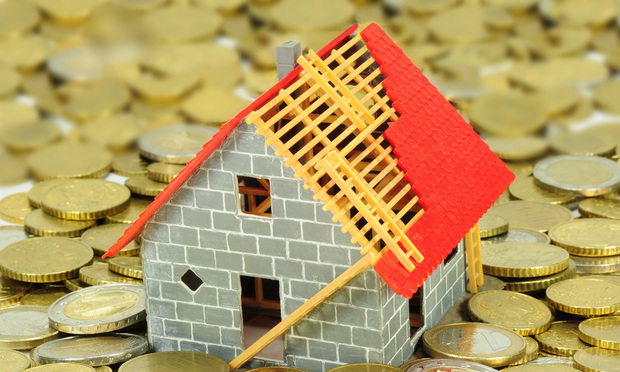
 Home repair costs. ©digitalfoto105 - stock.adobe.com
Opportunistic contractors are increasingly approaching homeowners after storms, pushing the rate of insurance claims higher even when the damage is unrelated.
Carriers absorb the investigation costs when the claims are denied, and the homeowners are stuck with a claim on their record. With the convective storm season in full swing throughout the Midwestern U.S., cities like Indianapolis, St. Louis and Chicago are at particular risk, with the regions’ homeowners set to fend off an onslaught of opportunistic contractors when the rain and winds stop.
Recently, PropertyCasualty360. spoke with Ben Piening, the chief underwriting officer (CUO) at Honeycomb. He is pioneering the shift away from traditional binary underwriting, leveraging mega data, artificial intelligence, and a culture of curiosity to redefine risk selection.
PropertyCasualty360. Why are some contractors and roofing companies referred to as storm chasers?
Piening: “Storm chasers” are contractors who show up unsolicited after severe weather events, using real-time storm tracking to target recently hit neighborhoods. The issue isn’t just their timing—it’s their tactics. Many of these contractors actively encourage homeowners to file questionable claims by attributing existing damage to recent storms for pre-existing issues, instructing them to say the damage was caused by the latest storm, even when it wasn’t.
Even if the claim is denied, it can still leave a lasting mark on the homeowner’s insurance record, affecting future coverage and premiums. But the consequences go beyond individual homeowners. This behavior contributes to a rise in questionable or inflated claims, which means insurers spend more, both on payouts and on costly investigations. Those higher costs get passed on across the board, driving up wind and hail premiums, deductibles, and more restrictive coverages for everyone, even those who’ve never filed a claim.
PropertyCasualty360.What are the top five Midwestern cities or regions at most risk? Why is Chicago the highest-risk metro?
Piening: According to CoreLogic’s 2025 Severe Convective Storm Risk Report, the Chicago metro area ranks as the highest-risk region in the U.S. for hail, tornado, and straight-line wind damage. Nearly three million homes are at risk for each peril, hail, tornado winds, and winds above 65 mph, with a combined reconstruction value of around $1.4 billion.

While the report focuses on Chicago as the single highest-risk metro, it also identifies several Midwestern states with exceptionally high hail exposure. In 2024 alone Texas, Nebraska, Missouri, Oklahoma, and Kansas collectively accounted for about 72% of U.S. homes impacted by severe hail.
Specific impact figures include 180,000 homes in Texas, 69,855 in Nebraska, 62,212 in Missouri, and 22,646 in Kansas. So, while Chicago leads in metro-level storm risk, the wider Midwest faces increasing exposure, which adds to the underwriting and pricing challenges that insurers are trying to handle in these regions.
PropertyCasualty360.There has been a 20% increase in hail and wind claims over the last year. How have storm chasers contributed to this growth?
Piening: Storm chasers are a driver of wind and hail loss severity and frequency. It’s almost like its own little industry that’s grown and spread, built around monetizing storms, not managing risk.
Even in my own home in Chicago, I’ve had contractors knock on the door claiming they’ve had success getting payouts in the neighborhood—and encouraging me to file a claim, too. That kind of unsolicited pressure leads to a higher volume of questionable claims.
Year over year, we’ve seen hail and wind filed claims increase by about 20%, but conversely, there’s been a 33% drop in the number of those claims actually resulting in a settlement. That gap tells the story: more claims are being filed, but fewer are legitimate.
Even when claims don’t get paid, the cost of handling them continues to rise. Insurers are spending more on inspections, adjusters, and outside engineers, just to determine whether covered damage has occurred or not. That overhead ultimately gets passed back into the system and contributes to rising costs across the board.
PropertyCasualty360. What role do storm chasers play in driving up insurance premiums?
Piening: They add friction and cost at every stage of the claims process. Even when the claims they trigger aren’t paid, insurers still absorb the expense of sending out adjusters, bringing in engineers, and reviewing the claim history. Multiply that across thousands of questionable claims per year, and the impact becomes systemic.
Loss ratios go up. Administrative costs go up. And ultimately, premiums follow, especially for hail and wind coverage. In wind and hail-prone areas, this pattern has made it nearly impossible to accurately price risk. So carriers respond by raising rates, narrowing coverage, or in some cases, pulling out of certain cities and states entirely. That means even indiscriminate policyholders—who didn’t ask for a knock on the door —end up footing the bill.
PropertyCasualty360. How does technology play a role in storm chasing?
Piening: Technology is at the core of the storm chaser business model. These aren’t just people knocking on doors randomly; they’re using sophisticated tools to zero in on high-opportunity properties immediately after a storm.
They track weather patterns with platforms like HailRecon and other storm-mapping tools that overlay hail paths with parcel data. In many cases, they can identify the exact properties impacted, along with ownership details, contact info, and building characteristics—all within hours of the storm.
From there, they use all forms of outreach: canvassing neighborhoods, direct mailing, emails, calls, and even texts, often addressing homeowners by name and referencing their neighborhood. That makes their pitch feel personalized and urgent, even though it's just part of a mass-scale operation.
The result is a highly efficient engine that drives claims volume, not always based on real damage, but rather on targeted claims. And that makes it much harder for insurers to distinguish between genuine losses and opportunistic ones.
PropertyCasualty360. How can storm chasers, hail and wind damage impact the insurability of a property now and in the future?
Piening: In recent years, we’ve seen insurers increasingly pull back from high-risk climate zones—not just storm-prone areas, but wildfire regions like California as well. Climate volatility has made broad risk categorization less reliable, and as losses accumulate, the margin for error continues to shrink.
Storm chasers don’t just exploit extreme weather—they amplify its financial impact. By encouraging inflated or opportunistic claims, they exacerbate the stress on an already fragile system. Over time, that could accelerate the withdrawal of insurers from specific markets or force even tighter underwriting restrictions.

And the consequences aren’t just industry-wide—they’re deeply personal. Even one questionable claim can leave a mark on a property’s record, impacting future coverage, premiums, or resale value.
Even with all the technology available to insurers today, there’s no substitute for responsible underwriting. At Honeycomb, our AI-driven model allows us to price risk at the individual building level. That precision has enabled us to identify this storm chaser-driven pattern early, which helps us price more fairly and flag problematic trends more quickly. But even with that edge, we still take on the cost of investigating every questionable claim—because it’s our responsibility to get it right.
In the end, it comes down to two types of risk: the natural risks we can’t control, and the behavioral ones we can. And it’s the second category that has the most tremendous potential to destabilize access and affordability for everyone.
© Arc, All Rights Reserved. Request academic re-use from www.copyright.com. All other uses, submit a request to TMSalesOperations@arc-network.com. For more information visit Asset & Logo Licensing.