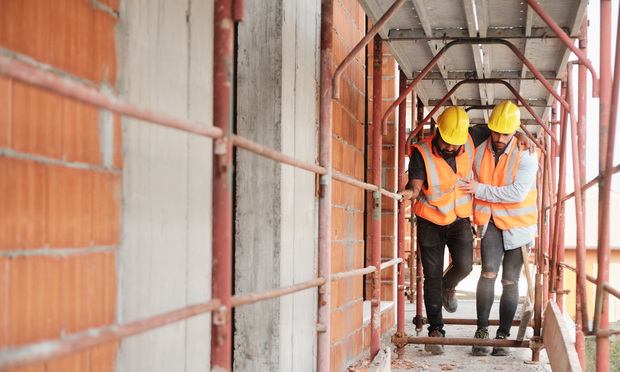
 People working in construction site. Young men at work in new house inside apartment building. Latino manual worker helping injured co-worker after accident on duty
He only fell 10 feet when it happened, but there was a heavy bundle of shingles on his shoulders when the ladder gave way. My big brother worked in construction for thirty more years after that fall — and the injuries are still evident in his hunched over way of walking.
But not all injuries are on the surface or leave physical reminders. Unfortunately, the residual symptoms of traumatic brain and other injuries are often invisible. Once the bruises heal, managers, co-workers and even the hurt employee expect an immediate return to normal work and behaviors.
As a business journalist for 15 years, I've written hundreds of stories on U.S. labor and employment, and to some degree, have touched every aspect of the industry from manufacturing and distribution; to corporate layoffs and worker injuries.
For most of those years, the mental health of workers impacted by brain and other injuries was not a topic for either industry or news reporting.
Today, I receive dozens of story pitches each month from folks like Pie Insurance, Clayco and Southeastern Oklahoma University solely focused on the mental health of U.S. workers, whether they've been injured on the job or not.
As it turns out, anxiety and depression are also invisible, and industry employers have finally recognized the importance of their workers' mental health and are responding through research and data collection, market reporting and jobsite policy changes.
But I bet if you asked the average American worker, they might say something different.
They might tell you their managers encourage rest when they're sick or physically hurt, but if they're suffering from anxiety or depression related to a work injury or stress of life, are told to suck it up.
But not every worker's lack of focus, change in mood and effort is because they're lazy or don't respect their managers. They aren't well — no different than another employee at home in bed with the flu. And while industry leaders say they're getting a handle on the mental health of their workers, their employees say something else.
Recently, I was guest on the Workers Comp Matters podcast to discuss some of the statistical discrepancies in employer and employee views. We talked about a recent Pie Insurance survey that showed 91% of employers are confident in their ability to address the mental health of their workers, compared to just 62% of employees sharing that same confidence about their employers.
Despite the gap, employers still identify physical, environmental and equipment hazards as the greatest risks to their employees, while the workers themselves say their greatest risks lie in mental health concerns.
Now, if you would've asked me a decade ago, I may have never predicted that the mental health of American workers would one day become the forefront of employer and employee conversation, so I will make no predictions now.
However, I have faith that American companies will respond to the mental health concerns of their employees, and eventually, they will turn those statistical discrepancies above the other way — just as I have faith in the resilience of American workers to put up with them until they do.
Opinions shared in this piece are the author's own.
© Arc, All Rights Reserved. Request academic re-use from www.copyright.com. All other uses, submit a request to TMSalesOperations@arc-network.com. For more information visit Asset & Logo Licensing.