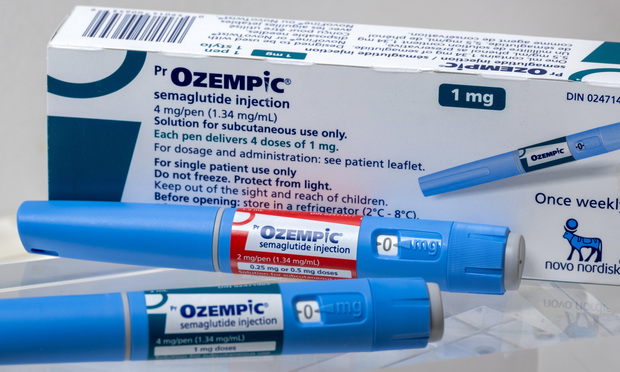
 Ozempic semaglutide injection pens. Credit: mbruxelle/Adobe Stock
While there are no current workers’ compensation guidelines that directly support the use of Ozempic and other GLP-1 drugs for weight-loss, there are certain cases where weight loss treatments are considered for coverage.
In patients where obesity is a contributing factor to a work-related injury or if weight loss is deemed necessary for the treatment and recovery process, the use of GLP-1 receptor agonists for weight loss can be evaluated, while considering the individual's specific circumstances and the recommendations of their health care provider.
Recently, PropertyCasualty360.com spoke to Nikki Wilson, the senior director of clinical pharmacy services at Enlyte, about the use of GLP-1 drugs and workers’ compensation claims. As a licensed pharmacist, Wilson has 14 years of comprehensive industry experience through leadership roles across prescription home delivery programs, pharmacy operations and benefit management (PBM), and clinical program development.
PropertyCasualty360.com: What are GLP-1 drugs? What are they used for?
Wilson: GLP-1 receptor agonists are medications that mimic a natural hormone called GLP-1 (glucagon-like peptide-1), which is naturally produced by the intestines in response to food intake. These drugs are designed to last longer in the body than natural GLP-1, which breaks down quickly.
They work by increasing insulin production while decreasing glucagon release to better regulate blood glucose levels. They also slow stomach emptying and reduce appetite, promoting a feeling of fullness and reducing cravings which can lead to eating less.
These medications are prescribed for managing type 2 diabetes and for weight management, offering benefits for both blood sugar control and weight loss. Branded drugs Byetta, Adlyxin, Bydureon, Victoza, Trulicity, Ozempic, and Rybelsus (the only oral tablet version) are FDA-approved for type 2 diabetes mellitus, while Wegovy, Saxenda, and Zepbound have achieved FDA-approval for weight management in patients who meet select criteria for obesity or are overweight in the presence of at least one weight-related comorbid condition (e.g., high blood pressure, high cholesterol, type 2 diabetes, obstructive sleep apnea, or cardiovascular disease).
PropertyCasualty360.com: How can a workers’ compensation policy rationalize weight-loss drugs?
Wilson: There are currently no specific workers' compensation guidelines that directly support the use of GLP-1 receptor agonists for weight loss. However, in certain cases weight loss treatments might be considered for coverage, including medications, if obesity is determined to be a contributing factor to a work-related injury or if weight loss is deemed necessary for the treatment and recovery process.
In such cases, the use of GLP-1 receptor agonists for weight loss should be evaluated on a case-by-case basis, considering the individual's specific circumstances and the recommendations of their health care provider. Of note, the FDA approval for chronic weight management for select GLP-1 medications is as an adjunct to a reduced calorie diet and increased physical activity. You might see a drug like Ozempic and similar GLP-1 drugs requested on your workers’ compensation claim for work-related diabetes management, weight management for injury recovery or pre-surgical optimization for work-related procedures.
PropertyCasualty360.com: What is work-related diabetes management and when might it be included in a workers’ compensation claim?
Wilson: If a workplace injury or occupational exposure contributed to developing or worsening diabetes, a GLP-1 could be prescribed as part of the treatment plan to manage blood glucose levels and prevent complications. This could also be part of a pre-surgery plan to get the patient’s blood glucose to a safe level.
PropertyCasualty360.com: Have injured workers been prescribed weight loss drugs for weight management during recovery? What types of injuries are required to become eligible?
Wilson: It’s possible to see GLP-1 medications requests for employees who gained significant weight due to reduced mobility from a work injury, where a GLP-1 medication’s weight loss effects could help patients return to a healthier weight, potentially improving recovery outcomes and reducing strain on injured joints or muscles.
We haven’t seen this become common practice in the workers’ compensation space today, with drug trend data showing minimal scripts and cost attributable to this category of prescriptions (0.03% of script volume and <0.2% of pharmacy costs annually).
PropertyCasualty360.com: What is pre-surgical optimization for a work-related procedure and how might a weight-loss drug like Ozempic be used?
Wilson: When a patient requires surgery for a work-related injury but has elevated BMI or poorly controlled blood glucose that increases surgical risks, Ozempic or similar GLP-1s could be prescribed to achieve weight loss and glycemic control necessary to safely proceed with the work-related surgical procedure.
PropertyCasualty360.com: Looking ahead, do you predict any potential abuses to receive weight-loss drugs by injured workers? How could this impact claims management and the workers’ compensation industry?
Wilson: The workers’ compensation system presents certain vulnerabilities that are continuously a consideration when it comes to medication coverage. For example, pursuing coverage of a weight-loss drug for personal use under the work comp system where there is minimal or non-existent patient cost-sharing for expensive drugs like GLP-1s (which range from $900-$2,000 a month on average) could be a potential abuse scenario.
Some potential abuse avenues for coverage under workers’ comp could be fraudulent injury claims (e.g., filing a false workers' comp claim for a back or musculoskeletal injury alleging it has led to weight gain); exaggerating legitimate claims (e.g., claiming a minor injury prevents exercise or has severely limited mobility and has led to weight gain that’s “medically necessary” to address), exaggerating comorbidity arguments (claiming workplace stress or injury has worsened diabetes or metabolic conditions), or even provider manipulation (e.g., seeking out providers who might be willing to prescribe GLP-1s liberally within workers’ comp cases).
We know GLP-1s are popular and pricey today. According to a poll published in June 2024 in JAMA (Journal of American Medical Association), one in eight Americans had tried a GLP-1 (12%) and 6% were currently taking one. About half (54%) of those who had taken GLP-1 drugs said it was difficult to afford them, including one in five (22%) who claimed it was “very difficult.”
The Associated Press reported in January 2025 that about half (54%) of Americans approve using weight-loss drugs to treat obesity. This trend is on the rise, so it certainly makes sense to pay attention to what we’re seeing in our workers’ compensation drug data and adjust accordingly.

When it comes to addressing specialty medications with limited use scenarios and significant cost implications, the best approaches include pharmacy program strategies to optimize outcomes. I recommend three general approaches:
Identify – target challenging categories of medications like GLP-1s through plan edits and drug list control (formulary) and, ideally, develop proactive solutions such as options for pre- and post-dispense review as well as medication prior authorization decision support that includes both clinical and regulatory or juris rules that reinforce utilization management and billing controls.
Follow the evidence - enforce clinical controls that target these categories and scenarios for interventions to promote first‑line, cost‑effective alternatives (where appropriate) through clinical review and timely recommendations, drug utilization assessments, and/or formal utilization review or UR with a focus on supporting treatment guidelines such as the Official Disability Guidelines (ODG). Follow this up by promoting ongoing clinician engagement, oversight, education, and coordination.
Evaluate – utilize reporting tools and data analytics to continually assess and improve processes and collaborate with the various stakeholders on the claim through communication, workflow adjustments, education, support, and partnership review to address areas of ongoing opportunity and impact.
© Arc, All Rights Reserved. Request academic re-use from www.copyright.com. All other uses, submit a request to TMSalesOperations@arc-network.com. For more information visit Asset & Logo Licensing.