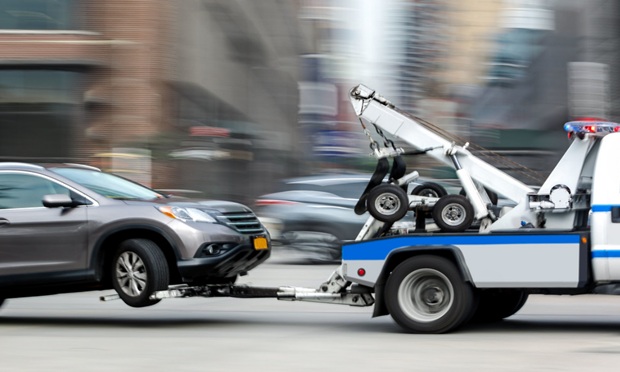
 In the confusion following a roadside emergency, it’s crucial for drivers to know the safest and most reliable way to get help. (Credit: Bluraz/Adobe Stock)
The scenario of a stranded policyholder falling prey to predatory towing practices after experiencing a flat tire or dead battery highlights a critical issue. While the tow industry at large is full of trusted and dedicated professionals, there is a smaller number of individuals who seek to exploit vulnerable situations. These individuals turn minor vehicle troubles into significant and costly problems.
Fortunately, insurers have a valuable tool to protect their policyholders: connecting them with reputable roadside assistance programs that act as a shield against potential fraud.
Earlier this year, California’s Department of Insurance alerted the public to a surge in unregulated towing, including instances where vehicles were held for ransom following accidents. These situations underscore the necessity of reliable roadside assistance services.
Fraudulent operators often use deceptive tactics such as impersonating legitimate companies, inflating prices after an initial low quote, towing vehicles without authorization to unapproved locations, or levying excessive charges for unnecessary repairs.
While troubling, insurers can play a key role in protecting against such unexpected events. Most insurance companies offer policy riders for dedicated roadside programs that can substantially reduce the risk of policyholders falling victim to predatory practices. These programs guide drivers in need to vetted and dependable tow service professionals, ensuring they receive quality assistance.
In the confusion following a roadside emergency, it’s crucial for drivers to know the safest and most reliable way to get help. Here are some ways insurance-backed roadside assistance programs benefit both motorists and the insurers that partner with them:
Access to a network of trusted service professionals
A reputable roadside assistance program, offered directly through an insurer’s policy, will typically operate a carefully vetted network of tow providers. This assures that policyholders are matched with trusted professionals to receive the highest quality service.
These roadside partners often have service-level agreements with their third-party providers and may also have fraud mitigation teams dedicated to identifying and eliminating fraudulent activities. Their risk management could include verifying service providers' insurance coverage, tax identification, conducting background checks, and confirming the physical location of their facilities.
Additionally, some roadside assistance networks will include modern performance tracking capabilities. These help ensure that quality standards are met, allowing insurers to select high-performing providers for specific jobs. It also aids in addressing any deviations from expected service practices and managing escalation processes appropriately. Importantly, using performance-based selection can encourage better customer service from tow operators.
A reliable channel for tow requests
Drivers should be wary if help arrives unsolicited or too quickly after a roadside incident. "Bandit towers" might appear and claim they were dispatched — even if the driver didn't contact them — only to take the vehicle to an unauthorized location and demand exorbitant recovery fees. An insurer’s roadside assistance program offers policyholders a secure and dependable way to request help. Motorists avoid the uncertainty of choosing a random tow provider from a quick online search, significantly reducing the chance of encountering predatory towers that use deceptive practices.
Most roadside programs offer several ways for drivers to easily make a service request, including via phone, text, or mobile app. Simultaneously, the roadside partner can use data-driven analysis to optimize service delivery and maintain a comprehensive tow provider network with wide coverage. Some programs available through these third-party intermediaries offer dynamic tow dispatching, which selects the most suitable towing company for fast and reliable service. This ensures a rapid response from a vetted professional within the network, whose identity the motorist can easily verify.
Enhanced customer loyalty, trust and satisfaction
Well-managed and user-friendly driver assistance offerings can lead to a significant increase in an insurer's Net Promoter Score (NPS) when policyholders utilize their roadside program. This translates to more satisfied customers who are more likely to recommend the insurer to others.
The ultimate success of a roadside assistance program lies in its ability to provide exceptional service. A modern, reputable program offers the user-focused capabilities that today’s drivers expect while ensuring high-quality support from trusted professionals. By doing so, these programs create lasting value for both policyholders and insurers.
Modern programs can offer text or live call options for streamlined communication, status tracking, and proactive event monitoring, ensuring drivers are supported from the moment they request help. Real-time reporting dashboards and dispatch details allow agents to oversee a policyholder’s case from start to finish to guarantee appropriate care. Moreover, thorough application processes and dedicated fraud mitigation teams help ensure that only legitimate tow operators assist drivers.
Given the significant benefits of a high-quality driver assistance program, it is crucial for auto insurers to educate their policyholders on their coverage and how to request assistance before it's needed. Many drivers are unaware of their roadside coverage or unsure how to use it. In fact, Agero's industry research indicates that only about half of drivers use their roadside coverage during an incident. Insurers that inform policyholders about how to access their coverage increase the likelihood that they will use the proper channels to request a tow. This minimizes the risk of fraud and helps motorists avoid paying substantial out-of-pocket emergency fees, potentially saving them hundreds of dollars.
Creating lasting benefits for policyholders and insurers
Despite the continued prevalence of predatory towing, effective strategies exist to help motorists avoid these scams. Reminding policyholders to rely on a well-established roadside program provided by their auto insurer can significantly reduce the chances of falling victim to such tactics.
The recent rise in towing scams highlights the importance of these programs in enhancing protection for policyholders, supporting legitimate towers, and strengthening an insurer’s business. By partnering with the right roadside assistance program, insurers can boost policyholder sentiment and build stronger loyalty due to the essential services these programs deliver.
Steve Medeiros is vice president of Insurance Market for Agero.
© Arc, All Rights Reserved. Request academic re-use from www.copyright.com. All other uses, submit a request to TMSalesOperations@arc-network.com. For more information visit Asset & Logo Licensing.