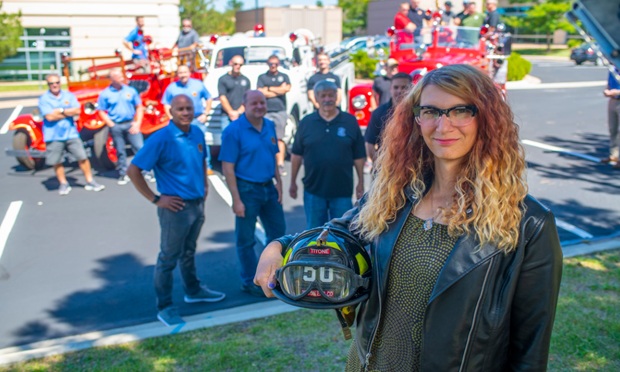
 Colorado State Rep. Brianna Titone (forefront) is a former volunteer firefighter who took an interest in property insurance and wildfire mitigation after witnessing the Marshall Fire’s devastation. (Sonora Photography image is published with permission from Colorado State Rep. Brianna Titone.)
A bill passed through the Colorado State Senate recently that would require property insurers to publicly disclose wildfire risk models and scoring along with their impact on premium pricing.
The bill also directs insurance carriers to provide insureds with wildfire mitigation steps for their property and discounts for taking those steps. Colorado Gov. Jared Polis is expected to sign the bill into law before summer.
“There’s a lack of communication between insurance companies and homeowners,” said Colorado State Rep. Brianna Titone, a geochemist, software developer and former volunteer firefighter who co-sponsored HB25-1182, Risk Model Use in Property Insurance Policies.
Titone spoke to PropertyCasualty360 about how the historic Marshall Fire, its victims and aftermath spurred Colorado legislators into action on property-insurance issues.
“There was one point in the night where we could see flames and the glow of the fire,” recalled Titone, who represents a swath of Jefferson County, a mountain-adjacent burg in the northwest Denver metropolitan area. “We packed up and drove around. The scene was pretty grim.”
The December 2021 Marshall Fire charred 37,500 acres of Boulder County, killed two people and destroyed 991 structures, making it the most destructive fire in Colorado history.
“Then the [insurance] rates started to go up, and as a legislator, you hear a lot about that,” said Titone, who became familiar with the inner workings of the insurance business during a stint as a condominium board president.
After the Marshall Fire, conversations with firefighting officials opened Titone’s eyes to a legislative opportunity and potential win-win for insurers and policyholders. Titone also worked with the Colorado Division of Insurance as well as insurance carriers to better understand the regulatory possibilities.
“We should be working together,” Titone said of insurers and insureds. “Because we all need insurance, and we want to protect our homes. We want to invest in our properties in the ways that give us a benefit.”
Will these new regulatory requirements mean higher costs for insurers; costs that could get passed on to policyholders?
“Anytime you make a change, there’s an upfront cost,” Titone said. “But I think that’s missing the forest through the trees … This program is going to get people to invest in making their homes less fire-prone, and that will reduce the risk pool” for insurers.
© Arc, All Rights Reserved. Request academic re-use from www.copyright.com. All other uses, submit a request to TMSalesOperations@arc-network.com. For more information visit Asset & Logo Licensing.