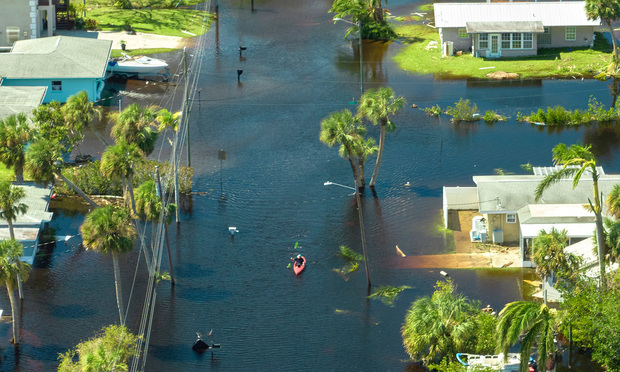
 In 2022, Hurricane Ian flooded Florida neighborhoods. Credit: bilanol/Adobe Stock
Florida’s insurance market is shaken once again as investigations point to widespread self-dealing by insurers and the debate intensifies over HB 1551, which would reform attorney fees.
The state’s insurance sector also has been rocked by catastrophic storms, high reinsurance costs and scamming contractors.
PropertyCasualty360.com recently spoke to Chip Merlin, Jr., founder of Merlin Law Group, about Florida’s turbulent insurance landscape. As founder and president of Merlin Law Group, Chip has dedicated his practice to the representation and advocacy of insurance policyholders in disputes with insurance companies nationwide. What follows are excerpts from Merlin's recent interview.
PropertyCasualty360.com: Why is Florida's insurance market in turmoil?
Merlin: Florida's insurance market is reeling from years of rising premiums, insurer insolvencies, and a shrinking number of carriers willing to write policies. Catastrophic hurricanes, high reinsurance costs, scamming roofers and alleged frivolous lawsuits were cited as factors resulting in reform legislation.
However, premiums have not materially dropped and deeper concerns have emerged over questionable financial practices by insurers and affiliated companies. These include shifting profits away from insurers on paper and masking financial results while claims practices were uncovered resulting in historic fines and national media criticism.
PropertyCasualty360.com: What investigations have exposed widespread self-dealing by insurers? What is self-dealing?
Merlin: A 2022 draft report commissioned by Florida's Office of Insurance Regulation uncovered billions in payments from insurers to their affiliated companies — raising serious concerns about potential self-dealing. Self-dealing occurs when a company enters into transactions with related entities that aren't conducted at fair, market-based prices — allowing profits to be shifted internally, often at the expense of policyholders or regulators trying to set fair rates.
While accounting standards require insurers to disclose these related-party transactions and justify that they are conducted at “arm’s-length,” those rules alone don’t prevent abuse — they rely on regulators to investigate and act. The draft report suggested that these disclosures may not have been sufficient to expose the full picture of financial transfers. Lawmakers, media, and now the public are demanding answers — and potentially, systemic reform.
PropertyCasualty360.com: What is Florida House Bill 1551 and what role does it play in the state's unsettled insurance market?
Merlin: Florida House Bill 1551 is a proposed law that would allow courts to award attorney fees to the prevailing party in lawsuits involving insurance companies. It aims to restore a path for policyholders to recover legal costs when they successfully challenge denied or underpaid claims while penalizing losing lawsuits which carriers win.
The bill comes in response to recent reforms that eliminated policyholder attorney fees, which critics say left consumers without meaningful legal recourse. Supporters argue HB 1551 brings fairness back into the equation leveling the playing field for policyholders wrongfully denied or underpaid, while opponents worry it could reignite excessive litigation.
PropertyCasualty360.com: How have Florida’s domestic insurance companies played a financial shell game to claim public losses while funneling billions into affiliated companies?
Merlin: Some domestic insurers in Florida have reported underwriting losses while simultaneously paying substantial fees to affiliates they own or control which cause the losses. These affiliates, such as MGAs or reinsurance entities, often record large fees and profits, masking the insurer’s true financial health.
By shifting funds internally, insurers avoid regulatory scrutiny while claiming rate increases are necessary due to expenses and costs which are overstated as a result of paying the affiliated company. The leaked report identified $14 billion in such transfers between 2017 and 2019 alone. This strategy distorts regulatory oversight and undermines consumer trust.
PropertyCasualty360.com: What reforms must happen to protect policyholders?
Merlin: Florida must implement strong oversight and enforceable transparency in financial transactions between insurers and their affiliated companies, so regulators and the public can see where the money truly flows. Policyholders also deserve transparency in claims practices and the right to be made whole when their claims are wrongfully denied or underpaid.
At the same time, we need a healthy, profitable insurance market, which means rates must be based on legitimate costs and be actuarially adequate — not inflated by hidden fees or insider deals. Reform must strike a balance between consumer protection and insurer sustainability. Long-term, Florida must continue investing in resilient construction and mitigation, so that homes and communities are better equipped to weather future storms, physically and financially.
© Arc, All Rights Reserved. Request academic re-use from www.copyright.com. All other uses, submit a request to TMSalesOperations@arc-network.com. For more information visit Asset & Logo Licensing.