 A fire pit should always be completely non-combustible with a stone or metal base. Walls should be a minimum of 12" deep and a two-foot safe zone around the pit to catch embers. (Photo: Jules Zagarola/Adobe Stock)
Property underwriters might appreciate that open fires around the home are nothing new. Our distant cousins Homo Erectus/Neanderthal experienced the first fire in a cave in South Africa somewhere between 400,000 and 1 million years ago. The discovery was completely accidental when stone tools were being shaped with flint elements. Sparks ignited straw bedding, and a new age in underwriting unfolded.
While humans were initially terrorized by fires, over a period of about 100,000 years, humans began to appreciate the benefits: light, warmth, cooking, and protection against hungry animals. Also, tribal companionship and an opportunity to sing songs popular at the time proved important.
Somewhere in the late 20th century, modern man rediscovered the fire pit. Again, it was found to be an excellent tool to socialize or just gaze into the fire and think about our ancestors.
 A fire pit at risk of igniting the elevated deck. (Photo courtesy of Continental Risk Improvement)
 Fire pits have become so popular that most homes may soon have one. In the field, we've seen them go from a curiosity to commonplace. We have also seen installations that make us shudder! We frequently have to courteously caution homeowners on the use and arrangement of pits and patio heaters.
To insurance carriers, the presence of millions of open, live fires should increase anxiety levels.
But there are ways homeowners can mitigate their risks. Here are a couple of steps to follow:
- Safe spacing from combustibles is paramount. We like 20-25 feet for fire pits and 10 feet for patio heaters. Spacing is both horizontal and vertical to structures, awnings, trees and bushes.
-
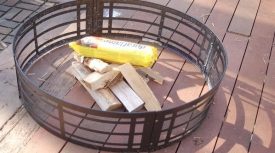 An insured claims this setup was ok because "heat rises." (Photo courtesy of Continental Risk Improvement)
The fire pit should always be completely non-combustible with a stone or metal base. Walls should be a minimum of 12" deep and a two-foot safe zone around the pit to catch embers.
In many discussions we have had with policyholders, it's been apparent that they are unsure about are not sure of the rules of fire pit safety. To help protect insurers as well as loss rations, we encourage insurers to provide a fire pit/patio heater checklist to consumers to educate them on the risks.
Michael Stumpf is the owner of Continental Risk Improvement, providing underwriters with insightful, individual risk information about hazards they face and effective control measures, with a goal to help insurers reduce the frequency and severity of losses. Stumpf has had a remarkable 63-year career in the property & casualty industry. He started at the age of 14 having binders executed by underwriters in New York's then Insurance District and has progressed through leadership roles in underwriting, claims, loss control and corporate risk management. He can be reached at customer.service@continentalrisk.com or 888-560-4103.
© Arc, All Rights Reserved. Request academic re-use from www.copyright.com. All other uses, submit a request to TMSalesOperations@arc-network.com. For more information visit Asset & Logo Licensing.