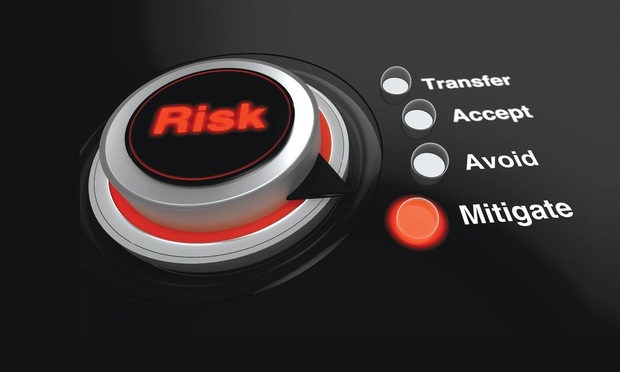
 New property management technology, or "proptech," may provide a solution to mitigating emerging risks. It promises to help facilities and personnel prevent all kinds of problems or limit their scope. (iStock'
The decade ahead promises unprecedented environmental, health and social risks — piled on top of enduring everyday property operations risks. Property insurance rates are likely to rise as a result, perhaps precipitously.
The industry is already in the midst of a multi-year run-up in insurance rate increases that are eating away at profits, shredding pro formas and killing acquisition deals.
New rate increases will be driven in part by a new class of property and casualty risk that underwriters are starting to consider in writing policies. For example:
- Increase in loss of life due to climate-triggered fires, tornadoes and hurricanes.
- Concerns over airborne infections, like COVID-19, that will need to be mitigated by better ventilation, amenity scheduling and enhanced cleaning protocols.
- More breadwinners working from home, creating greater risk of claims of loss of habitability and productivity when the electricity or heat fails.
Multiple dangers threaten us in our living spaces in the years ahead.
'Proptech' to the rescue
New property management technology, or "proptech," may provide a solution to mitigating emerging risks. It promises to help facilities and personnel prevent all kinds of problems or limit their scope.
One leader in the field is Leonardo247. The company offers remote operations and management software that streamlines and safeguards the property-management function. Such technology increases efficiency by delivering daily tasks, workflows, inspections and procedures to operations teams; and it fosters safer, more profitable operations by giving executives real-time visibility into compliance with policies, procedures, and best practices.
Other contenders in field include:
- AppFolio Property Manager, which offers mobile property management software that allows residential, commercial, student housing, and community association property managers to more effectively market, manage and grow their business efficiently.
- Yardi Voyager, a web-based, fully integrated end-to-end platform with mobile access for larger portfolios to manage operations, execute leasing, run analytics, and provide innovative resident, tenant, and investor services.
- Buildium offers an online, automated way to approve lease applications, resolve maintenance issues, handle payments and update financials, from anywhere at any time.
With improved consistency and accountability, however, will this proptech be enough to counter the daunting climate, health, and social challenges society currently faces?
One step in that direction is for insurance policies to wrap the use of such mitigation tools into coverage. This could be a great option for underwriters seeking an option for clients to secure lower insurance rates.
Minimizing risk exposure
Prevention, not just risk transfer through coverage, may be the new aim of the whole insurance game.
"Operaters that use risk-mitigating proptech to manage operations and maintenance through automated process which create consistency and allow for accountability are simply less risky," says Leonardo247 Founder and CEO Daniel Cunningham.
This has two tangible benefits.
First, fewer bad things happen.
"Real-time automated analysis of risk mitigation inspections and procedures enables compliance with best practices and helps avoid unnecessary property damage or personal injury claims," Cunningham says.
Second, rising rates are tamed.
"Underwriters can become more competitive on rates for clients where such technology is deployed," Cunningham adds. This gives brokers that work with proptech companies such as Leonardo247 the power to reward clients with lower premiums and win more business as a result.
In addition, look for synergies with health and auto insurance, which already lead in tech-powered risk mitigation.
Richard W. Samson (dick.samson@gmail.com) is director of the EraNova Institute, a small think tank with a big mission: helping selected organizations spread their solutions farther and faster. He is originator of the Smart Green Deal™ — a strategy that's green financially as well as environmentally, and smart socially as well as technically. He has served as consultant to tech leaders including IBM and AT&T, and his books include The Mind Builder, Creative Analysis, The Language Ladder, and Mind Over Technology.
These opinions are the author's own.
© Arc, All Rights Reserved. Request academic re-use from www.copyright.com. All other uses, submit a request to TMSalesOperations@arc-network.com. For more information visit Asset & Logo Licensing.