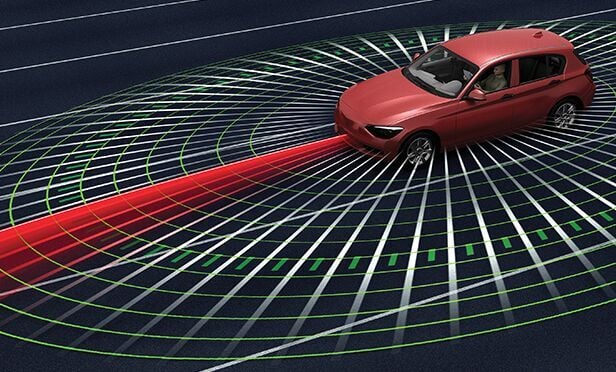
 The increased use of autonomous vehicles will impact many industries, particularly in the areas of claims and product liability litigation. (Photo: Shutterstock)
With billions of dollars spent on developing self-driving cars and trucks, important questions have been raised about the imminent role of autonomous vehicles (AVs) and the ramifications insurers and business owners may face in the wake of such rapid development.
IHS Automotive estimates there will be 4.5 million self-driving vehicles on the roads by 2030. Even now, U.S. officials are implementing legislation to allow for testing autonomous vehicles, and companies are sending their cars out onto the road.
Despite the accidents that have already occurred, the changeover to self-driving cars seems inevitable. Already some industry experts have high hopes and predictions for major changes to come within the next decade. Transport scholars at the University of Minnesota believe by 2030 every car on the road will be driverless (Insurance Information Institute, July 2016), while Goldman Sachs reports driverless cars will comprise 60% of auto sales by 2030.
Some experts are more conservative in their predictions. In a recent CNBC interview, billionaire investor Warren Buffet predicted the market would embrace self-driving cars slowly, despite the immense amount of capital tech companies are spending on development. “If I had to take the over and under bet 10 years from now on whether 10% of the cars on the road would be self-driving, I would take the under, but I could very easily be wrong,” he said.
One thing is clear: the rise of autonomous vehicles will impact many industries, especially when it comes to insurance claims and litigation. Whether a company has its own fleet or simply rents cars for employee travel, businesses must consider their potential liability if an accident occurs.
Related: Looking abroad for autonomous vehicle crash liability insight
Determining liability
According to the National Highway Transportation Safety Association (NHSTA), which is responsible for overseeing the industry, automated vehicles' potential to save lives and reduce injuries is rooted in one key fact: 94% of serious crashes are due to human error. Moreover, the Eno Center for Transportation projects autonomous vehicles would help save more than 1,000 lives per year and result in comprehensive cost savings of almost $18 billion annually.
While the benefits of this advanced technology are clear — substantially reducing the number and severity of accidents caused by human error — autonomous vehicles will inevitably still cause considerable damage. As a result, personal injury lawsuits related to autonomous vehicles will mount.
Consequently, many insurance-related considerations will emerge for self-driving cars — but a need for liability coverage will continue. According to a 2014 RAND study on autonomous vehicles, the burden will no longer be entirely on the driver. Instead, manufacturers, suppliers and municipalities will be called upon to take responsibility for what went wrong.
Related: Driverless Ubers? New study shows who would get in
Liability and insurance premiums will also likely hinge on issues pertaining to the condition of the car and owners' proper maintenance of the AV.
Autonomous vehicles are equipped with an array of sensors and actuators. Currently, laser-based radar (LIDAR) — with 360-degree coverage — is the most comprehensive safety monitor, but that technology will most certainly evolve and advance. The level of the vehicle's sensor-based sophistication will surely be a consideration in its overall safety and condition.
Assessing liability and risk could depend on how the computer was programmed as well as how the vehicle was instructed to operate. Another key consideration: the degree of automation, which could vary, ranging from no driver assistance to full automation.
Related: After the driverless fatality, insurance and litigation will be forever changed
Key questions to determine liability could include:
- What role did the driver play? Was the AV receiving communication from its driver?
- What role did the AV play? What sensors did it have, and were they functioning properly?
- What role, if any, did a third party play in the accident?
- While cognition is required while operating an AV, was the driver perhaps sleeping or distracted?
- What express warranty of AV manufacturers is at play?
In any event, a clear shift in liability has already begun, transferring the burden of liability from human error to strict liability.
This approach, however, could prove problematic. If liability falls primarily on manufacturers of AVs, this could present an upheaval of frivolous lawsuits against manufacturers and all those in the chain of commerce at the first sign of problems.
Related: Driverless cars? Not so fast
Modern products liability
Despite the enhanced safety and reduction in accidents autonomous cars will provide, it is inevitable, especially in their infancy, that they will still cause damage and take lives.
Current product liability law is developed to allocate fault for injuries and damages stemming from autonomous vehicle accidents — allowing litigants to utilize the current law to determine whether an autonomous vehicle is at fault for a collision.
Some believe the advent of autonomous vehicles will fuel excessive litigation and there is need for advancement – or adjustment – of current laws, so as not to inhibit growth in technology or drive manufacturers out of business.
With an eye on furthering innovation, Congress has proposed legislation that would exempt AVs from safety regulations — this could provide a certain amount of legal immunity for creators of driverless car technologies and fuel technological advances. Others are considering a no-fault compensation fund, where an aggrieved party in an accident is awarded compensatory relief without having to prove another party is at fault (where manufacturers could avoid excessive pain and suffering or punitive damages awards).
Related: Navigating the twists and turns of self-driving cars and insurance
This type of compensation system has been provided in the past to protect socially beneficial products entering the market. However, this compensation system would need to be funded in some fashion, likely a combination of manufacturers, buyers of autonomous vehicles, and a percentage of state motor vehicle fees. As laws and regulations catch up with the pace of innovation, we may well see an increase in such compensation systems.
The 2014 RAND study advocates for product liability laws that incorporate the concept of cost benefit analysis to mitigate the cost of claims brought against manufacturers. As a result, liability laws could evolve to ensure self-driving technology advances are not brought to a halt.
In any case, it could be necessary to limit liability in some fashion to avoid the potentially negative impact that excessive litigation could have on the evolution of the AV industry.
What can insurers do?
Despite the continued need for automobile insurance, a significant impact by the self-driving car industry on insurance companies seems inevitable. Coverage for physical damage caused by weather or theft will likely not change, but costs to repair or replace damaged vehicles may increase due to the complexity of the car's components. These costs, however, will be offset by the lower accident frequency rate.
Traditional underwriting criteria, such as the accident history of an applicant, will likely be replaced by the make, model and style of car. Jurisdictional factors might include whether there are dedicated lanes for automated driving in the locale of the applicant.
Auto insurance currently accounts for 42% of property and casualty insurance — a $200 billion market in the U.S. according to a report by KPMG. Insurers are and should be preparing for the almost certain market disruptions to come.
Ideally, insurers will make up for the shortfall in total coverage by creating solutions needed to assess automated drivers.
As with anything, research, preparation and creativity are paramount. Insurance companies proactively working to accept shifting long-standing paradigms and structures stand a better chance in successfully adapting to the technology. To remain viable, insurers should:
- Identify companies already in the process of evaluating emerging issues and collaborate with them.
- Gather and logically synthesize all existing data for complete understanding of the risks and history to date. Use the information to try to forecast and predict these risks.
- Tap into or hire in-house experts to create logical proposals to address ways of assigning risk and designating premiums.
- Consider retention of political consultants who may be needed to address how the technology is incorporated into infrastructure on a federal or state-wide basis. These consultants may also develop and lobby for any necessary legislation.
Ultimately, automobile insurers and claims professionals must stay informed and remain in control while the industry steers through this ever-changing technology.
Robert F. Tyson, Jr. (rtyson@tysonmendes.com) is a founding partner and the strategic managing partner of Tyson & Mendes, one of the nation's fastest growing insurance defense law firms serving clients across the country. Greta M. Schultz (gschultz@tysonmendes.com) is senior counsel in Tyson & Mendes' Los Angeles office, and is part of the firm's Autonomous Vehicles Liability Litigation practice group.
© Arc, All Rights Reserved. Request academic re-use from www.copyright.com. All other uses, submit a request to TMSalesOperations@arc-network.com. For more information visit Asset & Logo Licensing.