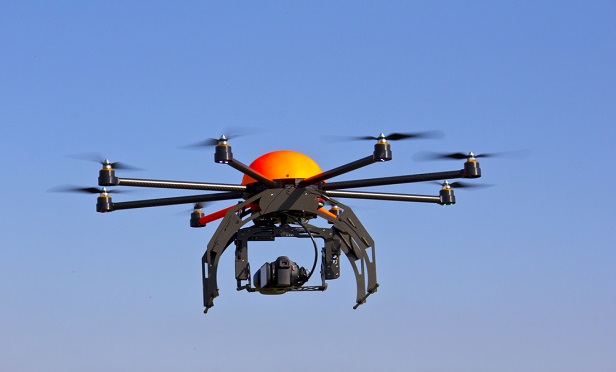
 By collaborating with their training efforts, government entities and insurers can join forces to ensure both parties obtain the information they need following catastrophic losses impacting a large area. (Photo: Shutterstock)
When a natural disaster or catastrophic event occurs, insurance companies want to send in their response teams as quickly as possible to facilitate the restoration and rebuilding of communities affected by the event. Oftentimes, the first responders are holding the carriers back as they try to evaluate and assess where to focus their efforts and determine what the most immediate needs are.
Related: Tools of the insurance trade
But what if the two groups, insurance carriers and emergency service personnel, could work together and leverage the data that both groups collect to improve response and recovery times? That's exactly what the theme was behind the Property Drone Consortium's (PDC) participation in the second annual Public Safety UAS Conference held recently in Crozet, Virginai.
Teaming up with the public safety community
The PDC was invited to the event so its members could learn more about how emergency response personnel operate following an event and to have the opportunity to fly together in various scenarios and trainings. The conference also provided an opportunity for first responders to learn more about the type of data the insurance sector is interested in gathering following an event.
One of the carrier's chief pilots participated in an exercise with members of the Federal Emergency Management Agency (FEMA) where FEMA was able to explain the flight profile that they train their pilots and other emergency responders to emulate, resulting in a consistent set of data every time. He flew on behalf of FEMA to demonstrate the capture of data and was joined by another carrier's property re-inspector who assisted in demonstrating what data and information the carriers are interested in obtaining following the inspection.
There were about 40 fire and rescue personnel in the exercise and they were very attentive and interested. "This really was an opportunity for us to begin building relationships and understanding that we can mutually benefit each other," explained PDC President Randall Ishikawa. "If they can let us in early, we can provide them aerial video and images and in turn, they may be able to provide us data before we even deploy to an area."
"It turned into a good conversation about the relationships that need to be in place and what our process should be when we need to get access to a site," said Ishikawa. "We learned the importance of establishing relationships with emergency management associations and how to go about getting authorization and emergency codes. It was very helpful."
The PDC also had a chance to lend its expertise in imaging science surrounding the use of drones as past President Charles Mondello sat on an sUAS Remote Sensing Panel to provide education on what different imaging bands and sensors are capable of in various circumstances. "There was a definite need for the emergency responders to be educated about the differences," said Mondello. "By understanding the science behind the imaging, they will be able to do their jobs better."
 Public safety officials and insurers learned how to operate drones and the types of data each entity needs. (Photo: PDP)
 Recognizing and building on common ground
Ishikawa says that aligning the carriers with the responders and leveraging each other's contributions makes sense. "It's great to see how technology is bringing everyone to a common ground as far as helping people," Ishikawa explained. "The federal, state and county governments are about the preservation of lives and helping people before, during and after a catastrophic event. Insurance carriers are similar in nature. They are about restoration of communities after an event happens, but they are also about protecting them before during and after as well. By bringing them altogether we find a common ground and learn how we can effectively help the customer better."
Ishikawa said that after a disaster or other CAT event, everyone really does want to help, but it's easy to get in each other's way. For instance, if a responder needs to follow a set process but needs to keep stopping because others are trying to enter the scene, it can slow down the overall process and cause frustration. "By bringing everyone together we can create a well thought out work plan that can meet the needs of both audiences – the carriers and responders."
A trainer for one of the PDC member companies was on the panel for the disaster response, commercial discussion and appreciated the opportunity to share the needs of the commercial participants. He said that the ability to talk with and learn from the public safety attendees was invaluable.
By attending the other sessions at the conference, the PDC members were made aware of ways to share information that they had never thought of before. "Hearing from the National Weather Service made us realize that our people are right there where the weather is happening," said Mondello. "So, if we have an understanding about the kind of data that NWS is looking for, and how to report that data to them, we've got a joint effort to help the community following a weather event."
Becoming trusted partners
One of the outcomes that the PDC hopes for is the development of guidelines for this kind of collaboration. By learning how public and private entities can work alongside each other and share information, can only grow and improve response and speed recovery times.
PDC past President Charles Mondello said a key takeaway was the importance of the interaction between the emergency response world and the insurance sector. "It has led emergency respondents to see that we can be trusted partners," explained Mondello. "Being a part of this exercise has resulted in discussions with the federal government to evaluate the details of our relationship and further explore the operations between commercial and government entities when a catastrophic event hits."
PDC members participating in and planning the event included Allstate Insurance, American Family Insurance, Auto-Owners Insurance, EagleView Technologies, Erie Insurance and Pilot Catastrophe Services.
Karen L. Edwards is president and owner of Casimir Group and leads the marketing communications activities for the PDC. Contact her at karen@casimirgroupllc.com.
© Arc, All Rights Reserved. Request academic re-use from www.copyright.com. All other uses, submit a request to TMSalesOperations@arc-network.com. For more information visit Asset & Logo Licensing.