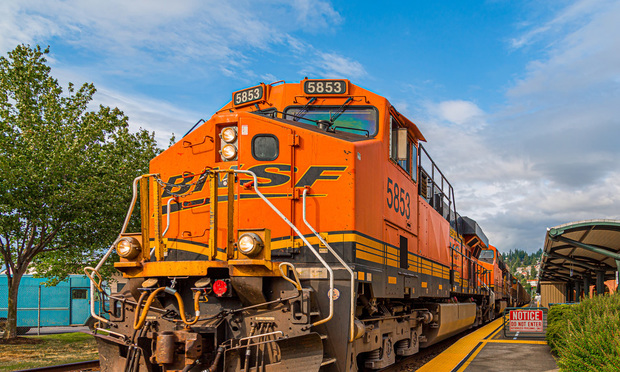
 BNSF train. Credit: dbvirago/Adobe Stock
A group of senators has reintroduced the Bipartisan Railway Safety Act, which aims to strengthen rail safety nationwide.
A similar bill was introduced in 2023 following the Norfolk Southern train derailment in East Palestine, Ohio. That bill passed the Senate Commerce Committee in May 2023 but ultimately stalled in the full Senate and didn't receive a floor vote.
The Ohio accident cost the railroad more than $1.7 billion, including a $600 million class-action settlement for residents and a $310 million settlement with the federal government.
The new bill, like its predecessor, seeks to eliminate some of the factors at play in that accident and others. It would improve train inspections, boost support for first responders and increase penalties on rail companies for wrongdoing.
"The Railway Safety Act will make communities across the country safer," said Sen. Maria Cantwell, one of the bill's sponsors, in a statement. "It has been over three years since the Norfolk Southern derailment disaster in East Palestine, Ohio, and it is past time for Congress to act. Our bill requires railroads to deploy technology that could have prevented the East Palestine derailment, holds large railroad companies accountable through stiffer fines, and ensures that trains carrying hazardous materials are held to a higher safety standard."
Key provisions of the act include:
- Mandatory use of defect detectors to make railroads stop trains when something is wrong. Hotbox detectors would need to be deployed an average of every 15 miles instead of the current average of every 25 miles.
- Expansion of the list of hazardous materials that are subject to higher safety standards, including vinyl chloride, which was carried by the East Palestine train.
- States would be notified about the hazardous materials being transported by rail through their communities.
- Mandatory requirements for proper maintenance and inspection of railcars.
- Civil penalties for rail safety violations would increase from $100,000 to $10 million.
- Two members would be required to operate a train, so there's back up in case of an emergency.
- First responders would be reimbursed for overtime, equipment costs and health care assessments.
- Hazardous Materials Emergency Preparedness grants would be expanded to allow fire departments to purchase personal protective equipment.
© Arc, All Rights Reserved. Request academic re-use from www.copyright.com. All other uses, submit a request to TMSalesOperations@arc-network.com. For more information visit Asset & Logo Licensing.