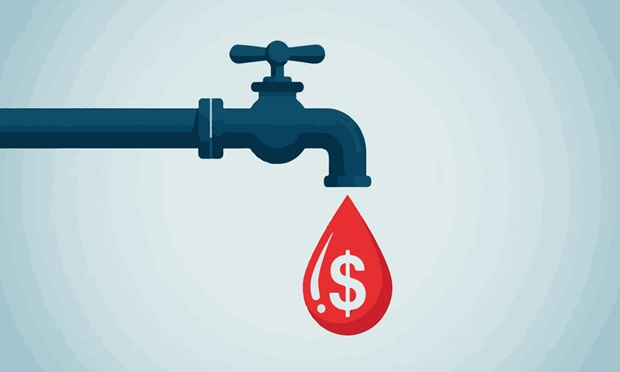
 Subrogation leakage rarely comes from one major breakdown; it's the cumulative effect of small misses throughout the claim. (Image credit: StockStudio via Adobe Stock)
Subrogation has always been one of the most reliable ways for casualty carriers to recover dollars, yet leakage continues to chip away at performance in ways that often go unnoticed. Busy claim environments, inconsistent processes, and missed liability signals all contribute to recoveries slipping through the cracks.
Over time, those small misses add up to real financial impact.
The strategic value of subrogation in casualty claims
Carriers recovered $51.6 billion through subrogation and salvage in 2021 across auto physical damage, commercial auto liability, and personal auto liability lines, according to the National Association of Insurance Commissioners (NAIC). This number underscores the magnitude of recoverable dollars at stake and the influence subrogation has on combined ratios and premium adequacy.
For casualty insurers, where incidents often involve third-party negligence — motor vehicle accidents, workplace injuries involving contractors, product failures, and premises liability — subrogation is not abstract legal theory. It is fundamental to cost containment.
Where subrogation leakage occurs
Research consistently shows that approximately 15% of P&C claims are closed without identifying a valid subrogation opportunity, amounting to an estimated $15 billion to $20 billion in annual missed recoveries industrywide. While the exact number may vary by carrier, the pattern is remarkably consistent: A meaningful percentage of claims with genuine recovery potential never reach the subrogation department.
The reasons for this leakage can be grouped into several operational categories:
No. 1: Missed Identification of Third-Party Liability
Frontline adjusters manage large caseloads and are measured on cycle time. As a result, subtle indicators of third-party responsibility may be overlooked. Seemingly routine first-party losses may in fact involve negligent contractors, defective products, failure-to-maintain scenarios, or contractual risk-transfer obligations.
No. 2: Insufficient or Late Documentation
Subrogation viability often hinges on the quality of initial fact gathering. According to industry experts, failures such as not obtaining incident photos, witness statements, or police reports early dramatically weaken recovery prospects as files age.
No. 3: Contractual Risk Transfer Overlooked
In casualty claims involving vendors, subcontractors, tenants, product manufacturers, or service providers, contractual risk-transfer provisions (indemnity clauses, hold-harmless agreements, and additional-insured requirements) frequently shift liability. These provisions are often found after a claim closes — too late to pursue recovery.
No. 4: Siloed Workflows and Inconsistent Referral Practices
Claims professionals may not consistently refer potential recovery files, or automated triggers may not be in place. Without structured screening, files with subrogation potential can stagnate unnoticed.
No. 5: Lack of Specialized Subrogation Expertise
Casualty subrogation requires technical knowledge — negligence law, product liability, building codes, commercial contract structures, and more. Without specialists or sophisticated tools, nuanced opportunities are missed.
Financial implications for carriers
For insurers, subrogation leakage has measurable financial consequences:
- Reduced recoveries directly increase net loss costs.
- Higher loss ratios weaken the ability to remain price-competitive.
- Increased reserves may be required for lines with chronic leakage.
- Premium adequacy deteriorates when recoveries do not contribute to loss-cost offset.
Conversely, improving subrogation performance — particularly in casualty — can significantly influence combined ratio improvement, capital management, and underwriting discipline.
Subrogation leakage rarely comes from one major breakdown; it's the cumulative effect of small misses throughout the claim. Understanding where those misses tend to occur is the first step.
Pragatee Dhakal is director of Product Strategy and Enablement at CLARA Analytics, a provider of artificial intelligence (AI) technology for insurance claims optimization. This article was published with permission from the author and CLARA Analytics and may not be reproduced.
Also by this contributor: 4 Ways insurers can strengthen subrogation performance
(Image credit: StockStudio via Adobe Stock)
© Arc, All Rights Reserved. Request academic re-use from www.copyright.com. All other uses, submit a request to TMSalesOperations@arc-network.com. For more information visit Asset & Logo Licensing.