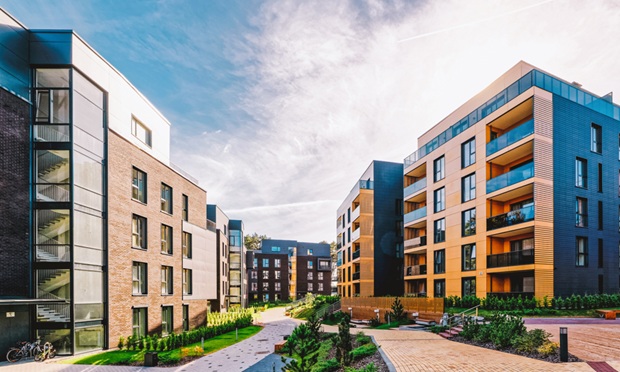
 Miami, Seattle, Fort Lauderdale and Los Angeles are among the metros expected to lead the 2026 resurgence. (Credit: Roman Babakin/Adobe Stock)
After a year of rent softening, the U.S. apartment market is gearing up for renewed growth.
Average market-rate effective asking rents are projected to climb 2.3% in 2026, rebounding from a 0.7% decline for the year ending in October 2025, according to RealPage Market Analytics. The outlook points to a broad-based upswing, with 11 of the nation’s 50 largest markets expected to see rent gains of 3% or higher.
Miami, Seattle, Fort Lauderdale and Los Angeles are among the metros expected to lead the resurgence. RealPage projects that Miami — after a slight 0.3% decline through October 2025 — will post a 3.8% next year, reflecting solid underlying demand. Seattle, which managed a small 0.1% uptick this year, is forecast to see a 3.7% rise in 2026 as renter activity strengthens. Fort Lauderdale’s growth eased 1% in 2025 but is expected to improve with a 3.5% gain, while Los Angeles is projected to reverse its 0.9% dip with a 3.2% increase, signaling renewed market confidence.
Several Midwestern and coastal markets are also poised for steady growth. Cincinnati, Columbus and San Francisco are each expected to post 3.1% gains in 2026. Cincinnati continues to show solid fundamentals, with rents already up 2.3% in 2025. Columbus logged a 0.6% increase this year and should see stronger momentum next year. Meanwhile, San Francisco — home to the country’s largest annual rent surge in 2025 at 7.4%—is forecast to normalize to 3.1% growth, pointing to cooling after a sharp rebound.
Meanwhile, Detroit, Kansas City, Philadelphia and West Palm Beach are each projected to post 3% rent growth in 2026. Detroit’s 0.6% gain this year suggests stable performance heading into the new cycle, while Kansas City’s 0.7% increase positions it for steady expansion. Philadelphia notched a 1.6% rent rise in 2025 and is expected to maintain moderate growth next year. In West Palm Beach, rents slipped 0.5% this year but are anticipated to bounce back with a 3% upswing in 2026 — another sign that demand remains resilient nationwide.
This article first published on GlobeSt.com.
© Arc, All Rights Reserved. Request academic re-use from www.copyright.com. All other uses, submit a request to TMSalesOperations@arc-network.com. For more information visit Asset & Logo Licensing.