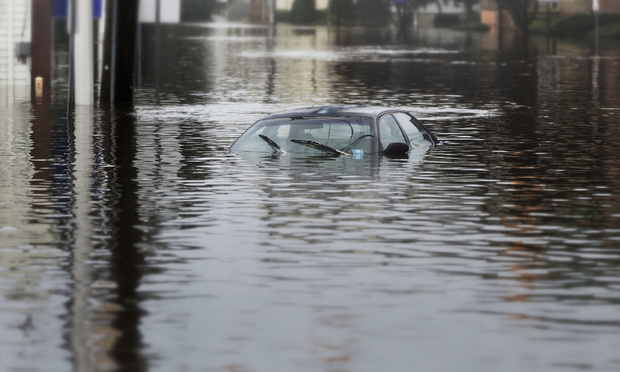
 The storm will impact the coast from central Florida to parts of southern New England. (Credit: Sabina Zak/Shutterstock)
A tropical rain and windstorm could bring coastal flooding, beach erosion and power outages to the East Coast this weekend, according to a report from AccuWeather.
Flooding, rough surf and high winds will affect central Florida up to southern New England, Friday evening through Monday. Parts of the East Coast could see coastline-altering damage, and the storm could wipe out boardwalks, wash out roads and damage coastal homes. This type of storm has the potential to cause billions of dollars in damage and economic loss, according to AccuWeather.
The storm has not been named by government forecasters, but AccuWeather is categorizing it as a 1 on its six-point scale for hurricanes.
“Perplexingly, the government’s National Hurricane Center does not have any risk for tropical or subtropical development identified near the U.S. East Coast through the next seven days,” said Jon Porter, AccuWeather’s chief meteorologist, in a statement. “As such, it seems the National Hurricane Center may not ever assign name to this storm once it develops Friday evening or may wait for the storm to exhibit certain meteorological characteristics, such as a warm core or other objective characteristics they have defined. By then, it may be way too late for people to take the needed precautions to save lives and protect property.”
The National Hurricane Center is still operating during the government shutdown but with essential staff only.
The storm is coming at a vulnerable time for parts of the coast, particularly North Carolina’s Outer Banks. “King tides,” when tides are running above their historical averages, have just ended, leaving severe erosion.
“On top of these tides, a slow-moving, relentless storm could produce hour after hour of strong onshore winds over multiple days, directing water toward the coastline with damaging waves on top of the elevated water levels,” Porter said. “In such a situation, the result in some areas could be coastline-altering damage, with some beaches no longer existing, major damage to homes near the coast, overwash of roads and destruction of boardwalks.”
Other sources have categorized the storm as a nor’easter, but AccuWeather says that’s not exactly correct.
“A nor’easter is a storm that produces strong winds from the northeast direction,” Poreter said. “By definition, any tropical storm or hurricane moving north along the East Coast is a nor’easter because the counterclockwise circulation around the storm produces a wind from the northeast as the storm approaches major cities such as New York City and Boston.”
The storm is better categorized as a tropical wind and rainstorm, according to AccuWeather.
© Arc, All Rights Reserved. Request academic re-use from www.copyright.com. All other uses, submit a request to TMSalesOperations@arc-network.com. For more information visit Asset & Logo Licensing.