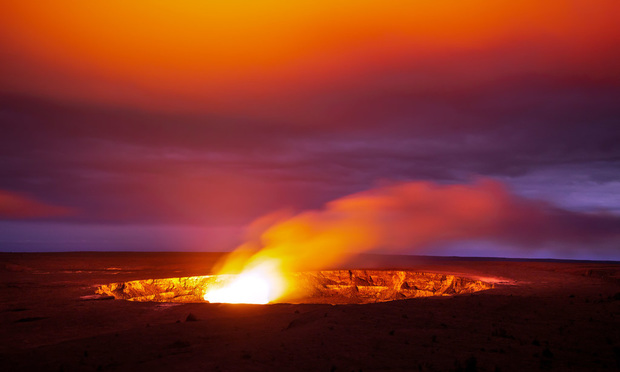
 Kilauea volcano crater colors the sky in Hawaii Volcano National Park, Big Island, Hawaii, USA. Credit: Gian78/Adobe Stock
Volcanic eruptions are one of the most powerful displays of nature’s power, with the potential to impact the landscape for thousands of miles.
Those living within the “danger zone” of a volcano face the threat of property damage caused by lava flows, ash, dust, airborne shockwaves, and explosions. For homeowners with policies that include volcanic eruption peril, these types of threats are covered.
But volcanic eruptions also have the potential to trigger earthquakes, which can cause a wide array of damage not typically covered by a standard homeowners policy. As homeowners explore the ways in which standard coverage protects them from damage related to volcanic eruptions, they are likely to uncover a long list of gaps that need to be addressed.
Standard homeowners policies typically don’t cover earthquake damage
The tremors caused by earthquakes and other seismic events can cause a wide variety of damage to homes. Major earthquakes can compromise utility lines and foundations, rendering homes uninhabitable. Even minor quakes can impact interior walls and chimneys in ways that require repairs.
In addition, earthquakes can trigger secondary events such as tsunamis and landslides that pose a threat to homes. Secondary events can cause damage to homes in areas that were not directly affected by the earthquake that triggered those events.
Earthquake damage, whether caused by tremors or secondary events, is widely excluded from standard homeowners policies. Damage caused by fire, which could be triggered by an earthquake that impacts electrical wiring or gas lines, is the one category that may be covered by a standard homeowners insurance policy. To ensure other categories of earthquake-related damage are covered, homeowners generally must purchase separate policies or endorsements.
The earthquake coverage provided by policies and endorsements extends to four areas, beginning with the dwelling. When tremors or more severe earth movements cause structural damage to a home, earthquake coverage pays for its repair or replacement. Detached structures such as fences, walls, or garages are the second area typically covered by earthquake coverage.
Personal property damaged by earthquakes is the third area covered, with policies providing for the replacement of furniture, electronics, and other common items kept in the home. Loss of use is the final area, which covers lodging and related expenses incurred when damage makes the covered home uninhabitable.
Earthquake policies often don’t cover secondary events
The threat earthquakes pose to property is multiplied by their capacity for triggering secondary events that can lead to damage thousands of miles away from the quake’s epicenter. The 8.8 magnitude earthquake that occurred off the coast of Russia in July 2025, for example, triggered tsunami alerts in multiple areas on the U.S. West Coast. Residents of Oahu, Hawaii, were instructed to evacuate low-lying areas due to concerns about flooding in the aftermath of the quake.
Earthquakes can also trigger landslides, which pose another significant risk to property. An earthquake centered off the coast of Cuba in November 2024 triggered landslides in that country.
Homeowners must purchase coverage beyond earthquake policies to be protected from the threats caused by secondary events. Damage from tsunamis, for example, is considered flood damage, which requires a flood policy. To cover damage from landslides, homeowners typically must have a Difference in Conditions policy.
When considering policies for secondary events, homeowners should carefully review the policies to ensure they don’t include exclusions for earthquake-related events. Flood policies, for example, can include exclusions for tsunamis. When the term “tsunami” is not explicitly stated as an exclusion, the ambiguity generally works in favor of the insured.
Secondary damage is typically excluded from flood coverage
In addition to addressing the possibility of secondary events, homeowners must also consider the threat of secondary damage. Policies typically only cover damage directly caused by an event like a flood. If the initial impact of an event creates conditions that lead to damage at a later point, that secondary damage is often excluded from coverage.
The flooding that can follow tsunamis provides an excellent example of the threat of secondary damage and the limitations policies place on covering that damage. The rush of floodwaters and their immediate inundation can cause structural damage to homes, as well as damage to plumbing, electrical, and other essential systems. A flood policy will generally cover this type of damage.
However, flooding can also create conditions that lead to wood rot or mold, which can eventually cause further damage. While homeowners insurance policies generally don’t cover this type of damage because insurance companies expect homeowners to address the underlying causes as part of flood cleanup, events like evacuations and loss of power resulting from a flood can make it challenging for homeowners to take the necessary steps to prevent secondary damage.
Policy endorsements are the solution for homeowners who want to cover the gaps that exclude secondary damage. Policyholders in flood-prone areas will commonly add mold remediation or loss of use endorsements to their flood coverage. An endorsement for “increased cost of compliance” can also help cover repairs needed to comply with local building codes, which may have been amended to include new requirements since the original construction was completed.
Policyholders should pay special attention to any sub-limits or restrictions stipulated by the endorsements added to general policies. Endorsements can limit claims by putting a cap on the amount available for mold mitigation or other restoration work needed in the aftermath of a flood.
While most homeowners with standard insurance policies are protected against the immediate effects of a volcanic eruption, the damage that can be caused by the wide range of secondary events triggered by an eruption is typically not covered. Consequently, homeowners in areas prone to seismic activity should take steps to enhance their coverage, paying special attention to the wide range of endorsements that may be needed and the exclusions that can limit the protection those endorsements provide.
Theodore “Ted” Patestos is co-founder and CEO of Tiger Adjusters. A seasoned innovator and policyholder advocate in the public adjusting industry, Patestos consistently champions tools and strategies that bring greater transparency, efficiency, and value to both consumers and adjusters. His work includes the development of systems and the forward-thinking technologies that reduce friction in the claims process. Tiger Adjusters has recovered millions of dollars in settlements on behalf of clients across the country.
Opinions shared in this piece are the author's own.
© Arc, All Rights Reserved. Request academic re-use from www.copyright.com. All other uses, submit a request to TMSalesOperations@arc-network.com. For more information visit Asset & Logo Licensing.