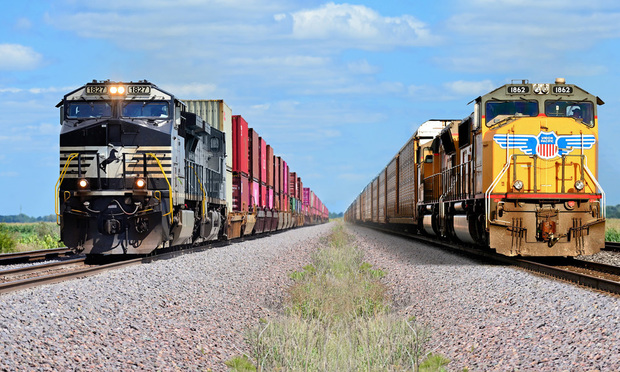
 On average, there's one train accident every day with more than $100,000 in damages. (Credit: Courtesy of Union Pacific)
None of the nation’s largest freight railroads have joined a voluntary federal program designed to reduce rail hazards and prevent accidents.
Despite promises made two and a half years ago, after a train derailed and sent toxic gases across Eastern Ohio, most railroads haven’t signed up for the Confidential Close Call Reporting System. The system is modeled after a similar program used in aviation and allows railroad employees to report safety issues and — as long as no one was hurt, no hazardous materials were released and the employee didn’t intentionally break the law — be shielded from disciplinary action.
BNSF and Norfolk Southern have launched trial runs of the program but haven’t fully joined. Other railroads have complained that the program isn’t any better than their own existing processes.
However, Amtrak and several smaller freight and passenger railroads participate in the program, and studies have found that it reduced accidents for participants by roughly 20%.
Over the last decade, more than 1,000 trains have derailed every year, according to data from the U.S. Department of Transportation. And, on average, there’s one accident every day that has more than $100,000 in damages.
All six Class I freight railroads agreed to join the program after the East Palestine, Ohio, derailment in 2023. Dozens of chemicals were spilled when 38 cars derailed and caught fire. The accident caused an environmental disaster, and residents in a one-mile radius were evacuated.
More than 176,000 tons of contaminated soil and more than 44 million gallons of tainted water had to be removed from the area. Some residents say they suffered short- and long-term health effects.
Norfolk Southern has spent millions helping the town recover: $25 million to refurbish the town’s park, $4.3 million to upgrade its water treatment system, $20 million to build a regional training center for first responders.
But some safety advocates say the railroads’ reluctance to join the federal safety program, after promising to do so, shows they haven’t learned anything from the Ohio crash.
“We had an opportunity as a group to make things better and make things safer, and we didn’t do it,” Jim Mathews, president and CEO of the Rail Passengers Association, told the Associated Press. “Think about how much better and how much safer it could be if we could add all of those 120,000 employees into the mix and all of those operations of hundreds and hundreds of trains a day all across the country.”
© Arc, All Rights Reserved. Request academic re-use from www.copyright.com. All other uses, submit a request to TMSalesOperations@arc-network.com. For more information visit Asset & Logo Licensing.