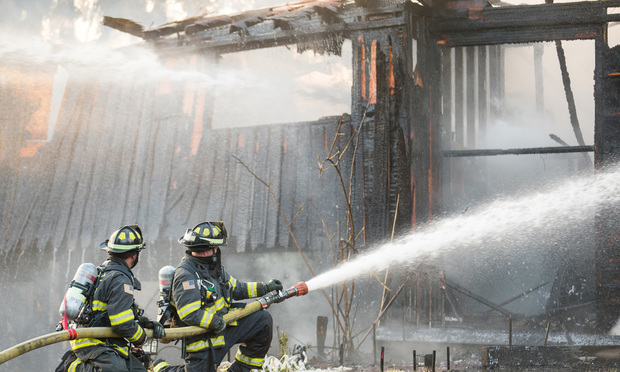
 Both courts ruled that soot can constitute physical loss or damage if it renders a property uninhabitable. (Credit: Mat Hayward/Adobe Stock)
An appeals court has upheld a $27 million finding against Travelers in a dispute over a commercial insurance policy.
At issue is a September 2018 fire at the Metropolitan, a multi-building apartment complex in Birmingham, Ala. The fire completely destroyed one of the buildings, and the others were damaged.
Maxus Metropolitan had a Travelers policy that covered up to $35 million for direct physical loss or damage and up to $5 million of lost business income. It notified Travelers of the fire the day it happened.
Travelers didn’t provide a coverage determination until nearly two months after the fire, after Maxus filed a consumer complaint with the Alabama Department of Insurance. Travelers said it would pay $1 million for initial cleanup and repairs. It eventually increased the payment to $3.5 million.
But Travelers denied coverage for soot and water damage and other remediation costs, which led Maxus to hire a third-party, Forensic Building Science, to look at the property. The company found soot stains in several of the buildings and recommended remediation efforts as well as the evacuation of the property’s residents and employees.
Travelers responded by sending its own industrial hygienist, who said there were no odors or stains that indicated smoke infiltration.
Worried about the third-party’s report, Maxus notified Travelers that it was going to proceed with remediation efforts. It then sued Travelers for breach of contract and vexatious refusal to pay.
The jury ruled in favor of Maxus and awarded $27 million in damages, $546,905 for vexatious refusal to pay and the cost of “reasonable” attorneys’ fees.
On Aug. 28, an appeals court upheld the district court’s ruling. The court agreed with the jury that microscopic soot can be “direct physical loss or damage” if it makes a property uninhabitable. The insurance policy also included soot in a list of pollutants.
The court also upheld the jury’s “vexatious refusal” finding, citing inadequate investigation and failure to communicate coverage decisions on Travelers’ part.
© Arc, All Rights Reserved. Request academic re-use from www.copyright.com. All other uses, submit a request to TMSalesOperations@arc-network.com. For more information visit Asset & Logo Licensing.