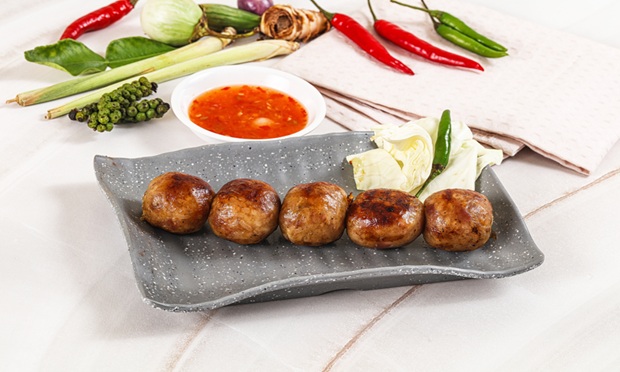
 “Dragon balls,” or the dish at the heart of the liability lawsuit against Coup de Thai in Los Gatos, Calif., is made with Bird’s Eye chili, also known as Thai chili, which measures around 50,000 – 100,000 Scoville units — less spicy than a habanero but many times hotter than the spiciest jalapeños, according to Wikipedia. (Andrei Starostin/Adobe Stock)
A Thai restaurant in California is facing a lawsuit after a San Jose neurologist claimed she suffered permanent internal injuries from an overly spicy appetizer called “Dragon Balls.”
he woman is accusing Coup de Thai in Los Gatos of serving her a dish so spicy that caused chemical burns to her vocal cords, esophagus, and the inside of her right nostril, according to the Hanford Sentinel.
The physician reportedly ordered the $11 chicken-meatball appetizer, which contained Thai “bird’s eye” chili, during a visit to the establishment in July of 2021. She had allegedly asked for a less spicy version due to her intolerance to spicy foods and was told by the server that this request could be accommodated. Soon after consuming the dish, however, she began coughing and experienced burning sensations “like fire” throughout her mouth and nose.
“The story does not really surprise me,” said Ryan McEachern, a commercial insurance underwriter with Burns & Wilcox in Woodland Hills, Calif. “Individuals going into restaurants and ordering a spice level higher than they are comfortable with feels like a tale as old as time. It is important to know what you are getting into and what you can handle when you order at a restaurant.”
A supervisor at the restaurant told reporters that no other customers have reported such injuries and that the Dragon Balls cannot be made less spicy because of the way they are prepared. The woman’s lawsuit seeks unspecified damages, along with medical expenses and compensation for lost wages, the publication reported. These costs can typically be covered by a restaurant’s Commercial General Liability (CGL) Insurance, including legal defense costs, which can be a significant expense, even if the restaurant is not found liable for the injuries.
“As an insurance company, there is a duty to defend the insured for bodily injuries,” said Jeffrey Phillips, associate manager of Commercial Insurance at Burns & Wilcox in Toronto, Ontario. “A lot of times, it does not matter whether the business is at fault. The longer the case gets dragged out, the higher the legal fees will be. Those costs can rack up pretty quickly.”
The impact of food-related injury claims
The doctor’s lawsuit against the Thai restaurant was filed in 2023. The case was scheduled to go to trial in August.
Although it is unclear how often restaurants face litigation over customer injuries linked to food, burns, allergic reactions, and food-borne illnesses have led to many high-profile lawsuits in the past. “This case reminds me of the infamous McDonalds lawsuit, which was also in the U.S., where a woman sued over burn injuries after spilling hot coffee on herself,” Phillips said, referring to the 1994 Liebeck v. McDonald’s Restaurants case in which a jury ultimately awarded the customer more than $2.8 million.
A similar lawsuit was filed against McDonald’s in 2023 after an 85-year-old woman spilled hot coffee on herself because the lid reportedly wasn’t put on correctly, NPR reported. In January, a 19-year-old customer filed a lawsuit against a barbecue restaurant in San Antonio, Texas, after reportedly suffering second-degree burns from the “dangerously hot” barbecue sauce she was served in the drive-through. The container she was given was too hot to hold, which led her to drop the container onto her leg, WKRC reported at the time.
Though these types of lawsuits do not appear to be common, they can lead to major expenses, underscoring the need for CGL Insurance. In addition to medical and legal costs, the reputation of the business could also be impacted, McEachern said.
“There is not only the monetary loss to consider — which is a big deal for restaurants, particularly post-pandemic — but reputational damage, as well,” he said. “It is a different kind of pain for a restaurant to be dragged into the news like this. That can affect their reputation in the community and neighborhood.”
How restaurants can minimize risks
Following industry best practices on food safety, staff training, and customer communication can help restaurants to reduce the risk of customer injury claims, Phillips said. For example, “servers can be trained to ask about any allergies to certain foods when guests are first seated,” he said.
Providing clear information about spice levels and ingredients is also important. “Having ingredients and warnings clearly marked on menus can help alert customers who may have sensitivities,” McEachern said.
“My advice for any business owner, especially in hospitality, is to not overlook insurance or let it be the last thing you think about for your business,” Phillips said. “It should be a top priority. You need to find the right expert who will help you secure the proper coverage. That is what we do at Burns & Wilcox — we have experts in these fields.”
This article first published on the Burns & Wilcox website and is reproduced here with permission.
© Arc, All Rights Reserved. Request academic re-use from www.copyright.com. All other uses, submit a request to TMSalesOperations@arc-network.com. For more information visit Asset & Logo Licensing.