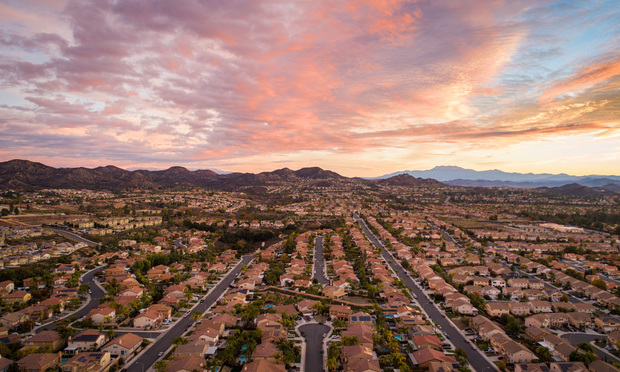
 Eight of the top 15 metro areas for wildfire risk are in California. (Credit: Mario Cobian/Adobe Stock)
More than 2.6 million homes in the Western United States face moderate or greater risk of wildfires, and more than one million of those homes are at high risk, according to a new report from Cotality.
The homes represent a combined reconstruction cost value of $1.3 trillion and are spread across 14 states. Nearly half — 1.3 million — are located in California. But hundreds of thousands of homes in states like Colorado (319,000), Texas (243,000), Oregon (128,000) and Arizona (124,000) are also at risk.
Eight of the top 15 metro areas with the most homes at risk are also in California. But other major cities, including Austin, Denver and Colorado Springs, are also seeing increased risk.
Wildfire risk is growing in these areas as more people build homes in the Wildland-Urban Interface (WUI). These homes are typically close to forested or undeveloped land, where fires can catch, spread and impact nearby residences.
A hotter, drier climate and fuel build-up from decades of fire suppression efforts are also contributing factors.
Since 2020, wildfire-induced conflagrations — urban fires started by the spread of wildfire, like the LA wildfires in January — have destroyed more than 26,000 structures across the country.
The increased risk has had significant insurance impacts on homeowners. In California, as insurers have reduced coverage or left the state, many have come to rely on the California FAIR Plan, which had 452,000 policies in effect in 2024. In Colorado, several of the state’s largest carriers are writing fewer policies, and foothill communities like Evergreen and Boulder have seen average premiums increase nearly 60% over the last five years.
When a wildfire does hit, many homeowners are finding they’re under-insured as reconstruction costs surge higher than dwelling limits. In the aftermath of a disaster, contractors are typically in short supply and materials costs surge, boosting the rebuilding price tag and delaying reconstruction further.
Regulators in both California and Colorado have been working to bring coverage levels back up. California’s Sustainable Insurance Strategy allows insurers to use catastrophe models for rate making in exchange for writing coverage in high-risk areas. In Colorado, a new law that takes effect next July will require carriers to disclose wildfire scores and classifications and give discounts for homeowner mitigation efforts.
Risk reduction efforts will be key going forward, said Jamie Knippen, Cotality’s senior product manager, in an interview with PropertyCasualty360.com. “Homes in the Wildland-Urban Interface are ultimately more prone to exposure,” she said. “That’s where mitigation and building codes become really important.”
Things like a Class A fire-rated roof and clearing vegetation to create defensible space can make a big difference, Knippen said, both in reducing risk and making a property more attractive to insurers. “Carriers understand that mitigation does matter,” she said.
© Arc, All Rights Reserved. Request academic re-use from www.copyright.com. All other uses, submit a request to TMSalesOperations@arc-network.com. For more information visit Asset & Logo Licensing.