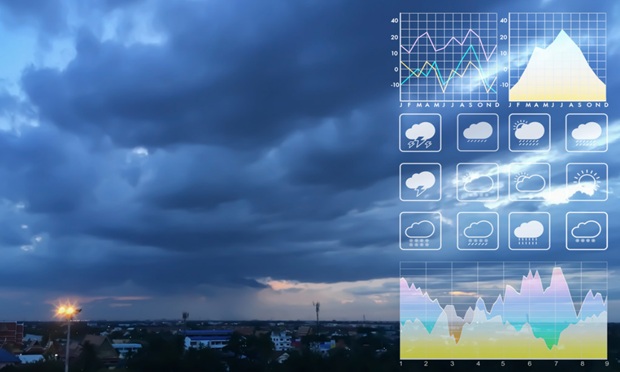
 NOAA data has been critical for evaluating exposure to risks like coastal flooding, heat stress, and wildfire spread, especially in high-risk regions like California, Florida and other states along the East Coast. (Credit: ekapolsira/Adobe Stock)
Recent changes to federal climate research funding, particularly affecting the National Oceanic and Atmospheric Administration (NOAA), are prompting businesses and investors to rethink how they assess and manage climate-related risks.
NOAA has long served as a cornerstone for weather forecasting, disaster preparedness, and climate modeling. As its capacity is reduced, the private sector must adapt quickly to ensure continuity in risk intelligence and resilience planning. Insurance professionals and investors must consider three crucial factors to make informed decisions and avoid risk.
What’s changing
For insurance professionals, NOAA’s forecasts, hazard maps, and historical data-sets have been essential for:
- Predicting natural disasters: NOAA’s hurricane and storm surge models help assess property exposure in coastal regions.
- Understanding long-term trends: Historical data on rainfall, drought, and temperature extremes inform underwriting and risk pricing.
- Supporting flood risk analysis: NOAA contributes to the National Flood Insurance Program (NFIP) and provides tools like floodplain maps and precipitation frequency estimates.
- Delivering early warnings: Real-time alerts and severe weather forecasts help businesses prepare for and mitigate losses.
With budget cuts affecting research labs, satellite programs, and data dissemination systems, access to these resources may become limited or delayed. Specifically, data-sets such as sea surface temperature anomalies, hurricane track forecasts, precipitation intensity models, and long-term climate projections may be disrupted. These are critical for evaluating exposure to risks like coastal flooding, heat stress, and wildfire spread, especially in high-risk regions like California, Florida and other states along the East Coast.
What we need now...
- Reliable, forward-looking climate risk insights: Companies need to understand how physical climate risk — like flooding, heatwaves, wildfires and storm surge — could impact operations, supply chains, and infrastructure over the next 5, 10, or 30 years. For example, an event on the scale of Hurricane Katrina today would generate nearly $100 billion in insured losses. Having the proper policies in place, informed by advanced climate insights, will help minimize losses.
- Regulatory readiness: Disclosure requirements under frameworks like the Corporate Sustainability Reporting Directive (CSRD), Task Force on Climate-Related Financial Disclosures (TCFD), and SEC climate rules are expanding. Transparent, auditable climate risk reporting is becoming a baseline expectation.
- Investment-grade risk visibility: Investors are increasingly focused on the longterm resilience of their portfolios. They need confidence that capital deployed today will remain viable and productive in a changing climate — making companies that invest in resilience more attractive to investors.
How insurance pros should respond...
Conduct site-specific climate risk assessments that incorporate various climate change scenario models and consider temperature, water, wind, and soil-related risks. Focus areas vary by region, such as droughts and wildfires in California, and storms and floods in Florida.
Use high-resolution modeling to quantify potential future impacts, such as projected flood depths or heatwave durations, at the asset level. Through a comprehensive technical risk assessment of specific locations, processes, and operations, climate consulting analyses future physical climate risks and proposes effective risk-mitigation strategies. Models can predict climate risks up to 100 years into the future and should be taken into account by Risk Managers, Brokers, Cover Seekers, and Insurance Professionals alike, given the omnipresence of climate-related risks.
Integrate climate risk reporting into enterprise risk management and ESG strategies to meet stakeholder expectations and regulatory obligations.
Climate consulting empowers companies to understand their risks and respond proactively. In a world of evolving climate dynamics and data landscapes, proactive risk intelligence is not just a compliance tool; it’s a strategic asset. Businesses that understand their exposure and act early will be better positioned to protect value, prevent business interruptions, attract capital, and lead in a more resilient economy.
Lars Regner is head of Resilience Services at HDI Global SE, where he leads the company’s global efforts in climate risk assessment and prevention. In close collaboration with HDI colleagues in Chicago, Lars and the HDI Global team are focused on delivering localized climate risk insights that address the unique challenges faced by businesses in the Midwest and beyond.
© Arc, All Rights Reserved. Request academic re-use from www.copyright.com. All other uses, submit a request to TMSalesOperations@arc-network.com. For more information visit Asset & Logo Licensing.