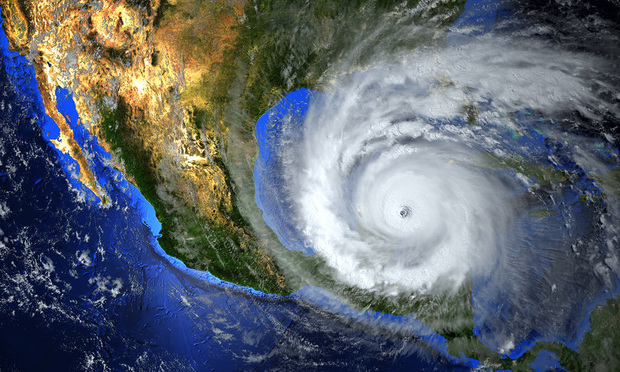
 Current research predicts the Earth could hit the two-degree warming mark by about 2050. (Credit: Mike Mareen/Adobe Stock)
Insured losses from U.S. hurricanes could rise nearly 50% if the Earth warms by 2 degrees Celsius, according to a new MS Amlin study.
The study, published in the Journal of Catastrophe Risk and Resilience, found that climate change will increase the frequency of category 4 and 5 hurricanes. Due to warming ocean temperatures, storms will maintain strength as they travel north. States that are further up the Eastern seaboard will see their risk increase and insured losses multiply.
- In New York, insured losses could rise by 64%.
- Rhode Island and Massachusetts could see increases of more than 70% in average annual losses.
- Florida could see insured losses rise by 44%.
- The Carolinas could see a 60% increase in losses during major storm years.
The study found that repeating 2022’s hurricane season, but under warmer temperatures, would increase losses from $62 billion to $90 billion.
The 2-degree mark has long been an important climate change threshold. Environmental efforts like the Paris Agreement sought to limit warming before we reached that mark, but many researchers now believe the planet will be 2 degrees warmer by around 2045 or 2050.
“Our research shows that major storms could increasingly impact cities that have historically seen few hurricanes,” said Sam Phibbs, co-author of the study and MS Amlin’s head of catastrophe research, in a statement. “Warmer oceans will allow hurricanes to maintain their intensity further north and will push significant new risk into areas less prepared to absorb it.”
The 50% estimate could even underestimate the full impact, Phibbs said, once sea level rise, urban growth and more intense rainfall are factored in.
MS Amlin CEO Andrew Carrier warned that insurance pricing doesn’t account for the growing risk exposure, leaving many communities exposed.
“Asymmetry in the market is becoming more pronounced,” Carrier said in a statement. “Climate-related losses are rising, yet pricing and coverage terms are failing to keep pace.”
He also called for stronger building codes moving forward, particularly in the Northeast.
“The evidence is mounting — risk appears to be rising faster than recognition or response,” he said in a statement. “While this study points to a need for stronger building codes along the U.S. Northeast and mid-Atlantic coast, aligned with hurricane-prone regions like Florida and Louisiana, at the same time, there seems to be a widening gap between risk and readiness.”
© Arc, All Rights Reserved. Request academic re-use from www.copyright.com. All other uses, submit a request to TMSalesOperations@arc-network.com. For more information visit Asset & Logo Licensing.