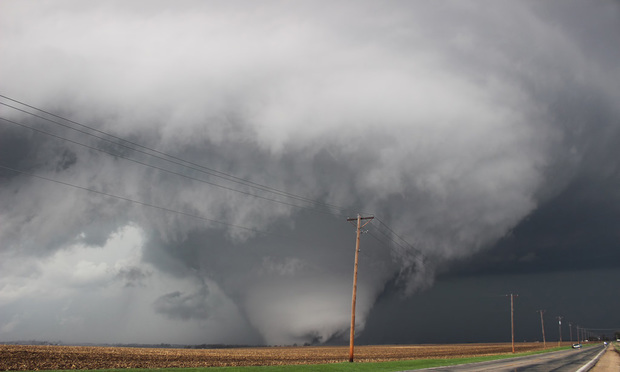
 The May 16 tornado caused an estimated $1.6 billion in damage. (Credit: Dan Ross/Adobe Stock)
It’s been a month and a half since St. Louis was hit by a devastating tornado, but recovery efforts are just beginning in many places, due to a slow response from the Federal Emergency Management Agency.
On May 16, a mile-wide tornado cut a 22-mile path through the area, damaging or destroying 16,000 buildings and killing five people. Damage is estimated at $1.6 billion, the biggest weather disaster for Missouri since a tornado hit Joplin in 2011.
Missouri Gov. Mike Kehoe make a formal request for federal disaster aid to President Donald Trump on May 26. Disaster aid wasn’t approved until June 10.
Lawmakers and residents in the state have expressed frustration with the delays.
“Some people are staying in homes that are completely unsafe to stay in after the storm has wiped out their entire neighborhood,” state Sen. Brian Williams, a Democrat from University City, told The Missouri Independent. “It’s saddening, it’s disheartening, and I’m not interested in any conversation outside of ensuring that storm victims are taken care of.”
While waiting on federal assistance, local organizations, such as Action St. Louis and 4 the Culture STL banded together to form The People’s Response. Operating out of a local YMCA, they distributed donated food, water and supplies to victims. An organization called 4theVille created a tornado recovery site and was one of several local groups that helped board up broken windows and tarp damaged roofs.
But after a month of providing support, both The People’s Response hub and 4theVille’s tornado recovery site were forced to close due to lack of resources, and the groups had to dial back their efforts.
“When we came out the day of the tornado and set up shop for the next day, we had no idea that it was going to bloom into a full-blown relief hub,” said Kayla Reed, executive director of Action St. Louis, in an interview with St. Louis on the Air. “I think we saw ourselves standing in the gap, and we anticipated that the gap would be shorter than this.”
By contrast, when the Joplin tornado hit Missouri, causing about $2 billion in damage, President Barack Obama issued a major disaster declaration the next day.
FEMA funds help disaster victims pay for temporary housing and begin repairs. They also allow state and local governments and nonprofits to be reimbursed for 75% of the cost of recovery and rebuilding.
Trump has previously suggested that FEMA should be abolished.
Since receiving the federal funds, the city has opened several FEMA Disaster Recovery Centers, including three last week, where residents can receive assistance applying for available aid.
© Arc, All Rights Reserved. Request academic re-use from www.copyright.com. All other uses, submit a request to TMSalesOperations@arc-network.com. For more information visit Asset & Logo Licensing.