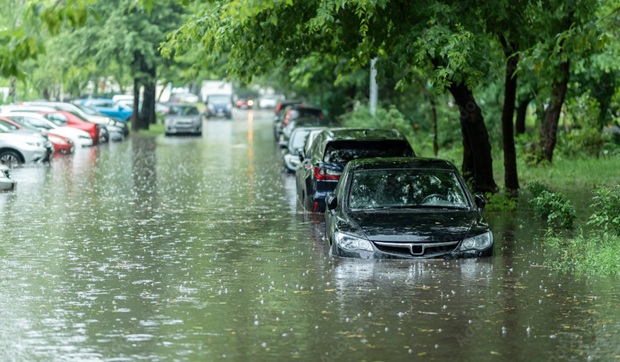
 Many people are under the impression that flood insurance is unaffordable. However, flood insurance rates are based on a property’s exposure. (Adobe Stock)
Hurricane season begins June 1, so many insurance professionals start thinking about flood insurance in May or even earlier.
Hurricanes are known for causing widespread and historic flooding and damage along the coasts and even in some inland areas. Since 1980, hurricanes have caused $1.5 trillion in damages, with an average cost of $23 billion per event. Recovery after an event may take several months or even years.
The National Flood Insurance Program (NFIP) policies come with a 30-day waiting period before coverage is effective, so if you’re in an area susceptible to hurricanes, you want to have coverage in place early. FEMA provides maps of most properties that are readily available online. But if you don’t live near the beach or a river, why should you pay attention to floods and insurance?
As many residents in mountainous areas of North Carolina discovered last October, flooding can still be a real possibility even if you live nowhere near a body of water. It’s been said that if it rains, it can flood. Rivers and streams can and do overflow, regardless of size, and cities often flood when rainwater runoff has no place else to go.
Many people are under the impression that flood insurance is unaffordable. However, flood insurance rates are based on a property’s exposure.
If you’re not next to the beach or a body of water, your rate will likely be lower than you imagine. An NFIP flood policy could cost less than $400 annually for many insureds. Even so, with improved technology in assessing flood risk, there are now more policies available beyond the NFIP standard offerings. These policies often offer better coverage and higher limits, and are often less expensive than the NFIP policies. There still may be a waiting period before coverage becomes effective.
The National Weather Service has a calculator to predict how often a storm of a certain magnitude will occur over a given time frame. The results, as seen below, are enlightening - a property with a 1% chance of a 100-year flood has a 127% chance of some flooding in a ten-year time span. By 20 years, the chances of some flooding are 195%. Many people are far more at risk of flooding than they realize. Even in areas with low to moderate flood risk, a homeowner is five times more likely to experience a flood than a fire over the next 30 years.
Being prepared and having the coverage needed makes any catastrophe a little easier to manage.
© Arc, All Rights Reserved. Request academic re-use from www.copyright.com. All other uses, submit a request to TMSalesOperations@arc-network.com. For more information visit Asset & Logo Licensing.