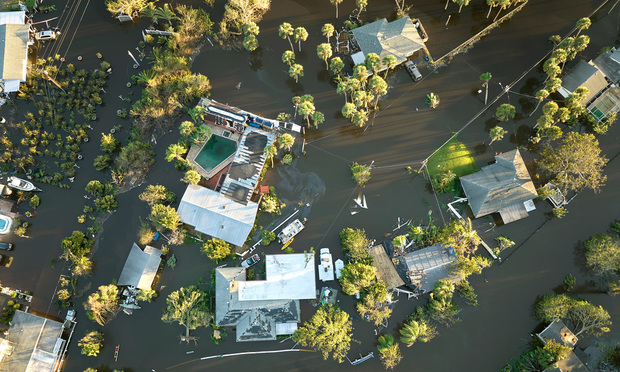
 Hurricane Ian flooded houses in Florida residential area. Credit: bilanol/Adobe Stock
Natural disasters in the U.S. are becoming more frequent and severe, leaving an increasing number of communities in urgent need of repairs. Recent events, including Hurricanes Helene and Milton and the Los Angeles wildfires, have created major centers of reconstruction in California, Florida, and North Carolina. Yet, despite the immediate need for extensive rebuilding in these areas, the road to recovery is complex, constrained by labor shortages, supply chain disruptions and rising costs.
The demands for skilled labor and administrative resources outpace the supply
In disaster-affected regions, the availability of skilled labor is often the first major bottleneck. The construction industry has faced workforce challenges for years, and when disasters concentrate demand in specific areas, finding qualified workers becomes even more difficult. Contractors struggle to secure talent, leading to extended project timelines and rising costs.
At the same time, local building departments—facing a surge in permit applications—often experience delays that further slow the reconstruction process. While the labor shortage and permitting backlog are separate challenges, they compound each other, creating a cascading effect that prolongs recovery efforts.
Ultimately, these delays have a significant ripple effect on carriers. When the estimating and repair processes are prolonged, the claims adjudication timeline inevitably stretches, which can erode policyholder satisfaction as homeowners and businesses grow frustrated waiting for their lives and livelihoods to be restored.
Delayed rebuilds drive other insurance-related expenses
Insurance carriers, meanwhile, are navigating their own set of challenges. Many policies cover additional living expenses (ALE) for displaced homeowners, and when reconstruction efforts are delayed, these costs can increase. Carriers must balance their obligation to policyholders with the reality of prolonged payout periods, a factor that is becoming more pronounced as disaster recovery timelines stretch beyond historical norms.
From a commercial claims perspective, delays in rebuilding can also escalate business interruption claim costs. When businesses are unable to reopen in a timely manner, insurers may have to consider covering lost income for longer periods, further compounding the financial impact of slow reconstruction.
The frustrations inherent in these challenges create opportunities for unintended activity
Beyond logistical and financial hurdles, an additional risk emerges when demand for reconstruction services significantly outpaces supply: the influx of unqualified or unethical contractors. Disaster-affected areas often attract bad actors who capitalize on urgency, leading to price gouging, poor workmanship, and even cases where contractors take payment without completing the work.
In these high-demand environments, a common misconception emerges: that speed is the most critical factor in beginning reconstruction. While speed is certainly important—homeowners want their lives back to normal as quickly as possible—it is trust that ultimately determines the success of the rebuilding process. When policyholders are desperate to repair their homes, it becomes all too easy to choose the first available contractor rather than the right one.
Without proper vetting, rushed decisions can lead to costly rework, disputes, or even abandonment of the job altogether. Incomplete work and poor workmanship don’t just impact the homeowner; they also affect the carrier, which remains responsible for insuring a property that may have unresolved structural or safety issues.
By helping policyholders access vetted, reputable contractors, carriers not only reduce risk but also enhance the overall customer experience. When a carrier facilitates a trusted contractor referral, it reinforces its commitment to policyholders, leading to greater satisfaction and a stronger perception of the carrier’s reliability. This, in turn, deepens trust and strengthens the policyholder-carrier relationship—positioning the carrier as a valuable resource and advisor during the recovery process.
Building for the future: A more resilient approach to reconstruction
As prolonged claims timelines exacerbate tense situations in major centers of reconstruction, the pressure to prioritize speed over quality often takes hold. In these high-demand environments, it is essential for insurance restoration stakeholders to maintain a trusted, structured approach to rebuilding.
Beyond quality workmanship to restore properties to their pre-loss condition, looking ahead presents an opportunity to explore ways to make buildings more resilient to severe weather events. Fortifying structures against future disasters will require collaboration across the industry—insurers, policymakers, contractors, and property owners alike.
Leveraging funding programs, public-private partnerships, or other incentives could help drive these efforts forward. As reconstruction continues to evolve, so too must the industry’s approach to long-term resilience and risk mitigation, helping to better protect communities while also reducing the likelihood and severity of future claims.
At the same time, a more effective and transparent reconstruction process benefits not just the physical rebuild but also the overall claims experience. When policyholders have access to trusted contractors and a streamlined recovery process, their satisfaction increases—a factor that has ripple effects across the entire claims lifecycle.
A positive claims experience strengthens retention and loyalty, reduces disputes, streamlines settlements, and improves operational efficiency for carriers. By prioritizing both trust and long-term resilience, insurers can reinforce their role as reliable partners in disaster recovery while enhancing the stability of future catastrophe response efforts.
Lance Malcolm is the U.S. president of contractor connection at Crawford & Company.
© Arc, All Rights Reserved. Request academic re-use from www.copyright.com. All other uses, submit a request to TMSalesOperations@arc-network.com. For more information visit Asset & Logo Licensing.