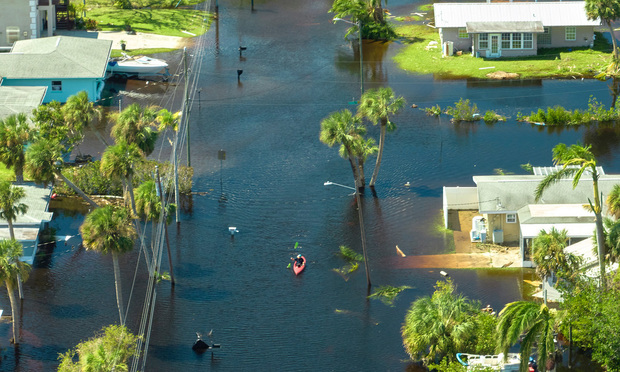
 Hurricane Ian flooded houses in Florida residential area. Credit: bilanol/Adobe Stock
Most natural disaster victims say they are targeted by scammers within one month of being displaced from their homes, according to a study by Instant Roofer.
Sixty-two percent of homeowners reported scams, the data showed, with 42% experiencing ‘lots’ of scam activity, 26% encountering ‘some’ scam activity and 32% dealing with a ‘small amount’ of scam activity.
"Post-disaster scams aren't limited to shady contractors,” said Jacob Petrosky, founder of Instant Roofer.
"After a disaster, people also fall victim to fake FEMA representatives, fraudulent charities, or identity theft scams involving phony relief applications and utility shutoff threats,” he added. “If someone calls asking for personal information, hang up and contact the official number of the company or government agency they claim to represent."
According to Petrosky, homeowners should:
- Always work with licensed, insured professionals, and take the time to research any contractor - check their reviews, verify their credentials, and ask to see examples of their previous work.
- Be especially wary of high-pressure sales tactics, such as demands for upfront payment, urgent 'act now' offers, or deep discounts that seem too good to be true.
- Never rely on verbal agreements. Get everything in writing: the scope of work, timeline, cost, and any warranty terms.
Victims in New York and Michigan are the most likely to be targeted by scammers, with 90% of displaced residents in New York experiencing scam offers after a disaster. Eighty-four percent of victims in Michigan report scam activity.
Victims in Texas, Louisiana and Florida top the list for disaster displacement, with Louisiana facing scam activity rates of 80%, well above the national average of 62%.
Meanwhile, more than 13% of homes in the U.S. are not insured. Of the 82.9 million owner-occupied homes across the country, a staggering 11.3 million are uninsured.
“For most people, your home is your most important investment, and it’s important to protect that investment with insurance,” said Rob Bhatt, LendingTree home insurance expert and licensed insurance agent.
However, “Insurance has become more expensive and harder to get in recent years,” he added. “This is putting people just one disaster away from losing the physical and financial security their home provides. A major disaster like a hurricane or tropical storm could leave a lot of people without enough resources to rebuild their homes. This could have tremendous consequences — not only for the affected individuals but the entire community.”
© Arc, All Rights Reserved. Request academic re-use from www.copyright.com. All other uses, submit a request to TMSalesOperations@arc-network.com. For more information visit Asset & Logo Licensing.