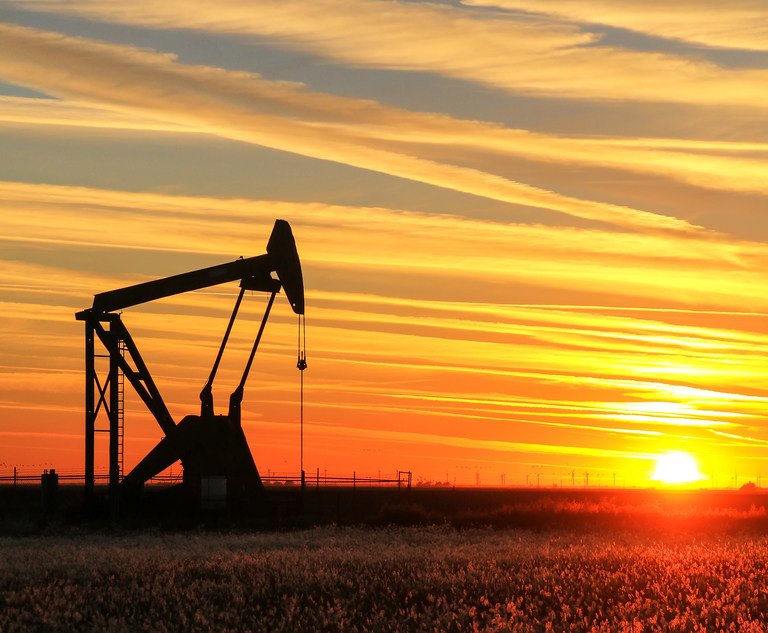
 Photo: Adobe Stock
This summer brought brutal heat and lunar-like haze from Canadian wildfires to wide swaths of the United States, while record-high marine temperatures promise a punishing tropical storm and hurricane season this fall. State and local governments have filed lawsuits in multiple jurisdictions seeking damages from fossil fuel companies for property damage and bodily injury resulting from climate change.
Leaving aside the significant causation and other legal challenges in the underlying lawsuits, another emerging question is whether liability insurers who sold coverage to fossil fuel producers for decades will be required to stand behind their insureds and provide the defense and indemnity coverage they promised.
Hawaii, recently devastated by the Lahaina Fire, looks to be the first state to have its Supreme Court weigh in on the applicability of pollution exclusions to climate change lawsuits. On Sept. 5, 2023, the U.S. District Court for the District of Hawaii asked the state's highest court to weigh in on whether an insurance company must defend its insured in climate change litigation.
This article examines what is at stake for policyholders and the road to recovery in this rapidly evolving area of insurance coverage law.
Climate Change Lawsuits Are Moving Now
The underlying lawsuits for which coverage is sought generally feature state and local government entities asserting claims of negligence, products liability and nuisance, and charging that the fossil fuel industry's emission of carbon dioxide and other greenhouse gases caused property damage, disease and death within the plaintiffs' jurisdictions.
Although the U.S. Supreme Court held in American Electric Power v. Connecticut, 564 U.S. 410 (2011) that the Clean Air Act displaced federal common law with respect to climate change, the viability of claims under state common law was still undetermined until this year.
However, in April 2023, the court denied certiorari in BP v. Mayor & City Council of Baltimore, No. 22-361, leaving in place lower-court decisions that state-law climate change lawsuits were not preempted by federal law. As a result, stays in many state-court climate change cases have now been lifted, and litigation is proceeding.
Insurance Coverage for Climate Change Cases
Multiple types of insurance may cover liabilities arising from climate change cases, but the focus of the coverage battles to date is on current and historic general liability (CGL) insurance policies.
CGL policies generally provide coverage for property damage and bodily injuries "neither expected nor intended by the insured" caused by an accidental "occurrence." CGL policies also require insurers to defend lawsuits if any allegation against the insured potentially gives rise to coverage. Most climate change lawsuits allege some form of property damage, often coupled with alleged bodily injury due to respiratory disease, fire or flood.
In addition, climate change lawsuits often sound in products liability, implicating not only the standard CGL coverage grant, but also a coverage extension contained in many CGL policies for the "Products Completed Operations Hazard," which covers product liability claims.
Insurance companies contend that climate change lawsuits are removed from the coverage grant because the lawsuits allege deliberate rather than accidental conduct, pointing to allegations that the companies intentionally emitted greenhouse gases and knew of the danger such emissions posed. However, numerous courts have found that an insured's conduct is covered unless the insured intended the resulting damage itself. See, e.g., Johnstown v. Bankers Standard Ins., 877 F.2d 1146, 1150 (2d Cir. 1989) ("Recovery will be barred only if the insured intended the damages, or if it can be said that the damages were, in a broader sense, 'intended' by the insured because the insured knew that the damages would flow directly and immediately from its intentional act.").
Indeed, awareness of a peril is precisely why policyholders buy insurance, and the insurers' argument sweeps too broadly because "to exclude all losses or damages which might in some way have been expected by the insured could expand the field of exclusion until virtually no recovery could be had on insurance." Accordingly, policyholders do not lose coverage for taking a "calculated risk." See Union Carbide v. Affiliated FM Ins., 101 A.D.3d 434, 435 (1st Dep't 2012).
Insurers also argue that pollution exclusions in CGL policies bar coverage for climate change lawsuits, but policyholders have substantial arguments that such exclusions do not apply. A typical version of the exclusion states that the policy does not provide coverage for property damage caused by "pollutants," defined as "any solid, liquid, gaseous or thermal irritant or contaminant, including smoke, vapors, soot, fumes, acids, alkalis, chemicals and waste." Here, it bears noting that courts construe exclusions narrowly. See, e.g., Seaboard Surety v. Gillette, 64 N.Y.2d 304, 311 (1984). Moreover, ambiguities in policy language are resolved in favor of coverage.
Numerous courts have confirmed that pollution exclusions apply only to "traditional environmental pollution" like cleanups of discrete spills. See, e.g., Roofers' Joint Training, Apprentice & Educ. Comm. v. Gen. Accident Ins. Co. of Am., 275 A.D.2d 90, 92 (4th Dep't 2000). The release of a substance in the ordinary course of business and without any claim for clean-up should not be considered "traditional environmental pollution."
Moreover, carbon dioxide is not a "pollutant," as that term is used in a typical pollution exclusion. Unlike "soot, fumes, acids" and other substances referred to in pollution exclusions, carbon dioxide is not inherently harmful at any exposure level. Indeed, it is a byproduct of human metabolism, found in every human body and naturally expelled into the atmosphere by every person on earth.
In addition, the U.S. Supreme Court in recent years has repeatedly rejected attempts to classify carbon dioxide or greenhouse gases as pollutants. See Util. Air Regulatory Grp. v. EPA, 573 U.S. 302, 319 (2014) (rejecting "categorical position that greenhouse gases must be air pollutants for all purposes"); West Virginia v. EPA, 142 S. Ct. 2587 (2022) ("rejecting rules proposed by EPA based on agency's "finding that carbon dioxide is an 'air pollutant'").
The type of claim asserted in the underlying lawsuit can offer additional avenues for coverage. Some older versions of pollution exclusions explicitly carve out product liability as exempt from the exclusion. Even in the absence of a specific carve-out, courts have construed product liability claims as distinct from the type of loss encompassed by a pollution exclusion. See, e.g., Continental v. Rapid-American, 177 A.D.2d 61, 66-67 (1st Dep't 1992) (pollution exclusions do not "effect a total obliteration of negligence and/or product-liability coverage" and refusing to apply a pollution exclusion to a product-liability claim).
Insurers may also argue that exclusions for loss that was known by the insured will bar coverage for climate change lawsuits, but here, too, insureds have counterarguments.
The potential applicability of that exclusion is dependent upon proof that the policyholder understood in advance both that the loss would occur, and that it would be liable for such loss in an amount likely to impact its insurance coverage. See, e.g., Johnstown, 877 F.2d at 1152–53. Again, the history of climate change litigation does not support any theory that fossil-fuel producers anticipated that these lawsuits would gain traction in the courts.
For example, in Comer v. Murphy Oil USA, No. 1:05cv436-LG-RWH (S.D. Miss.), Gulf Coast residents filed a class action against various energy companies asserting claims for nuisance, trespass, negligence, unjust enrichment, fraudulent misrepresentation and civil conspiracy in relation to greenhouse gas emissions and alleged resulting climate change.
The court dismissed the case, reasoning that the case required "the formulation of standards dictating, for example, the amount of greenhouse gas emissions that would be excessive and the scientific and policy reasons behind those standards," which the court system was ill-equipped to handle. Comer, Transcript of Hearing at 43 (Oct. 4, 2007), ECF No. 373. The dismissal was upheld by the U.S. Court of Appeals for the Fifth Circuit, 607 F.3d 1049 (2010), and a re-filed version of the case was also dismissed, Comer v. Murphy Oil USA, 718 F.3d 460 (5th Cir. 2013).
Given precedents like Comer, insureds can argue that they did not know that their routine and legal business operations would give rise to liability, as climate change cases surviving dismissal motions is a relatively recent phenomenon.
This brings us to Aloha Petro v. National Union Fire Ins., No. 22-372 (D. Haw.), a case filed last year in which the plaintiff is seeking a defense from its insurers for underlying state court climate change cases. After both sides filed summary judgment motions, the district court for Hawaii certified two questions to the Hawaii Supreme Court: whether recklessness can give rise to an "accident" covered under a CGL policy and whether greenhouse gases are "pollutants" subject to a pollution exclusion.
Fossil fuel producers facing litigation asserting liability for climate change need not go it alone in the fight to secure insurance coverage. After Hawaii weighs in on coverage for such claims later this year or in 2024, we can expect to see more decisions in state and federal coverage cases as policyholders vigorously assert their rights to the insurance coverage they paid for.
Courtney C.T. Horrigan is a partner in Reed Smith's insurance recovery group and recognized as one of the top policyholder insurance recovery trial attorneys in U.S. and foreign litigation and arbitrations. John Ellison is a partner at Reed Smith concentrating his international policyholder practice in courts and arbitration forums. Russell M. Squire is an associate in Reed Smith's insurance recovery group. His practice involves complex, multi-faceted coverage claims.
© Arc, All Rights Reserved. Request academic re-use from www.copyright.com. All other uses, submit a request to TMSalesOperations@arc-network.com. For more information visit Asset & Logo Licensing.