 "Recovering from a disaster is an intimidating task, and homeowners should not be victimized twice," NICB President and CEO David Glawe said in a release. "Dishonest contractors further complicate the situation by exploiting victims at the expense of homeowners and insurance providers resulting in higher insurance costs for everyone." (Credit: Timothy D. Easley/AP)
The National Insurance Crime Bureau (NICB) reported these schemes often begin with unsolicited offers for repair work following a natural disaster. This is followed by pressuring homeowners into paying out their insurance claim prior to repairs being made. Once the payment is collected, the contractors disappear without completing the promised repairs.
"Recovering from a disaster is an intimidating task, and homeowners should not be victimized twice," NICB President and CEO David Glawe said in a release. "Dishonest contractors further complicate the situation by exploiting victims at the expense of homeowners and insurance providers resulting in higher insurance costs for everyone."
Additionally, some fraudsters will claim to be from a government agency, NICB reported. However, the Federal Emergency Management Agency doesn't endorse individual contractors or loan agencies.
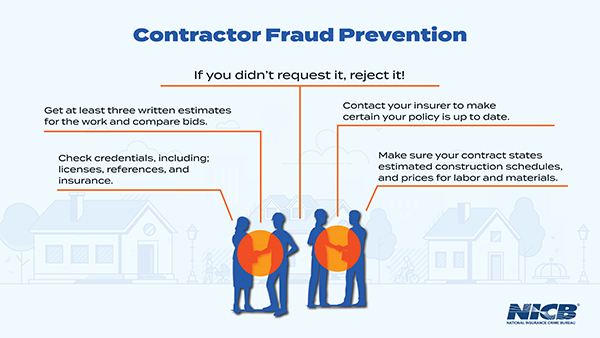 (Credit: NICB)
 Showing how these scams can play out following wildfires, Mercury Insurance's special investigation unit uncovered fraud earlier this summer after a public adjuster submitted a large number of smoke and ash damage claims.
"When we checked on our insureds to see how we can help them and make sure we fulfill our promise of being there for them, many were unaware a claim was filed on their homeowner's policy," Pete Galassi, Mercury Insurance special investigations unit manager, said in a release. "Some professional entities don't care about the harm they can do and will use trickery to take advantage of law-abiding homeowners in vulnerable situations."
The public adjuster promised "thousands of dollars" to homeowners through a slew of sales tactics, including claims of a state government program. In turn, these policyholders were tricked into believing they would receive money for smoke and ash claims from insurance companies doling out the money on behalf of the state of California.
Mercury Insurance also reported some fake public adjusters were asking homeowners to sign documents to allow them to take "soil samples." However, the policyholders were actually signing letters of representation and a settlement contract.
"Elderly parents of our homeowners were duped into forging the homeowner's signature on letters of representations and settlement contracts without their knowledge or understanding what they were signing," said Galassi. "Other policyholders were lied to by the public adjuster when told the claim would not be filed on their insurance policy or would not affect their insurance premiums."
In addition to the tips from NICB above, Mercury Insurance recommends the following:
- Do not sign any document you do not understand and do not give your insurance policy information to anyone.
- Do not allow a stranger to inspect or work in your home without fully understanding their purpose and fee.
- Verify alleged government programs with government officials first before signing any documents.
- If you have questions on claims that can be filed, call your insurance agent directly.
Related:
© Arc, All Rights Reserved. Request academic re-use from www.copyright.com. All other uses, submit a request to TMSalesOperations@arc-network.com. For more information visit Asset & Logo Licensing.