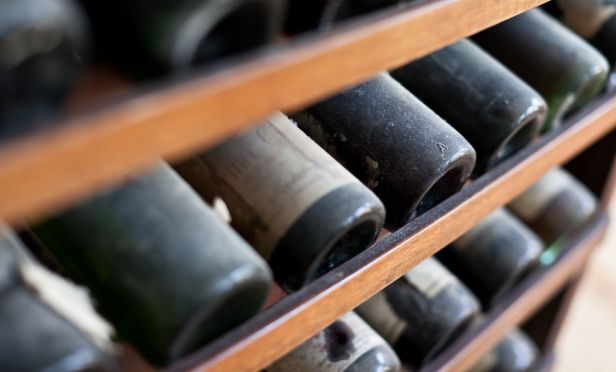
 The appellate court acknowledged that the insured had suffered a financial loss, but it found that there had been no loss to his covered property — that is, the wine that had been purchased and insured. (Photo: Shutterstock)
This story is reprinted with permission from FC&&S Legal, the industry's only comprehensive digital resource designed for insurance coverage law professionals. Visit the website to subscribe.
An appellate court in California has ruled that a vintage wine collector's insurance company did not have to cover the loss he suffered when he purchased close to $18 million in counterfeit wine.
Purportedly rare, vintage wine
After David Doyle purchased close to $18 million of purportedly rare, vintage wine from Rudy Kurniawan, a law enforcement investigation revealed that, for many years, Kurniawan apparently had been filling empty wine bottles with his own wine blend and had been affixing counterfeit labels to the bottles.
Kurniawan was convicted of fraud and was sent to prison for 10 years.
Claim seeking reimbursement
Doyle filed a claim seeking reimbursement for "the losses" he had sustained due to Kurniawan's fraud with his insurer, Fireman's Fund Insurance Company, under the "valuable possessions" policy he had purchased from Fireman's Fund to insure his wine collection.
Fireman's Fund denied all coverage, stating there had been no covered "loss" under the policy.
Doyle sued Fireman's Fund for breach of contract, the trial court ruled in favor of the insurer, and Doyle appealed.
He argued that his insurance policy provided "broad protection against all insurable risks," including "crime-related losses to [his] investment whether anything physical happened to the wine or not."
No loss or damage to 'covered property'
For its part, Fireman's Fund argued that no "loss or damage to covered property" had occurred; that is, the wine was "in the exact same condition now that it was in when [Mr. Doyle had] first insured it."
The Fireman's Fund Policy
The Fireman's Fund policy covered:
"Collectibles", meaning wine, sports cards, dolls, model trains, and other private collections of rare, unique or novel items of personal interest including memorabilia.
The policy provided:
We insure for direct and accidental loss or damage to covered property caused by an "occurrence"
, defined as:
a loss to covered property which occurs during the policy period . . . and is caused by one or more perils we insure against.
Appellate court affirmed
In its decision, the appellate court acknowledged that Doyle indeed had suffered a financial loss, but it found that there had been no loss to his covered property — that is, the wine that Doyle had purchased and insured.
Related: How to spot counterfeit items
According to the appellate court, Fireman's Fund was insuring "against any losses to the wine" but was not insuring "against any losses to [Mr.] Doyle's finances or to his unrealized expectations as to the value of the wine he had purchased."
The appellate court pointed out that when Doyle had purchased the wine from Kurniawan, it was counterfeit. "The wine remained counterfeit (and essentially worthless) throughout the entire coverage period of the policy," the appellate court noted.
It added that Doyle might have a valid claim against Kurniawan for fraud, but it found that he could "not reasonably expect" his Fireman's Fund property insurance policy to reimburse him for his multiple purchases of wine from Kurniawan, when the wine was "essentially valueless at the time of purchase."
The appellate court concluded that Doyle had not purchased "a provenance insurance policy"; he had purchased a property insurance policy.
The case is Doyle v. Fireman's Fund Ins. Co., No. G054197 (Cal. Ct.App. March 7, 2018).
Steven A. Meyerowitz, Esq., is the director of FC&S Legal, the editor-in-chief of the Insurance Coverage Law Report, and the founder and president of Meyerowitz Communications Inc. Email him at smeyerowitz@meyerowitzcommunications.com.
© Arc, All Rights Reserved. Request academic re-use from www.copyright.com. All other uses, submit a request to TMSalesOperations@arc-network.com. For more information visit Asset & Logo Licensing.