Do a search in any browser for "drone crashes," and you'll get a list of headlines that a few years ago might have read like they were pulled straight from a science fiction novel.
"US Open match interrupted due to drone crashing into stadium."
"Civilian drone crashes into Army helicopter."
"Candy-dispensing drone crashes into crowd injuring 6."
Drones have become increasingly commonplace in public spaces. More drones flying above our parks, stadiums and tourist attractions, even passing down our neighborhood streets, means higher risk for something to go wrong. The previous headlines attest that things do go wrong and when they do, property may be damaged or injuries may occur.
Statistics from early this year show that more than 770,000 drone registrations were filed with the federal government in a 15-month period, and the Federal Aviation Administration forecasts that over 7 million drones will be sold in the U.S. by 2020. That sort of traffic increase will inevitably lead to an increase in accidents. How will this affect the insurance industry?
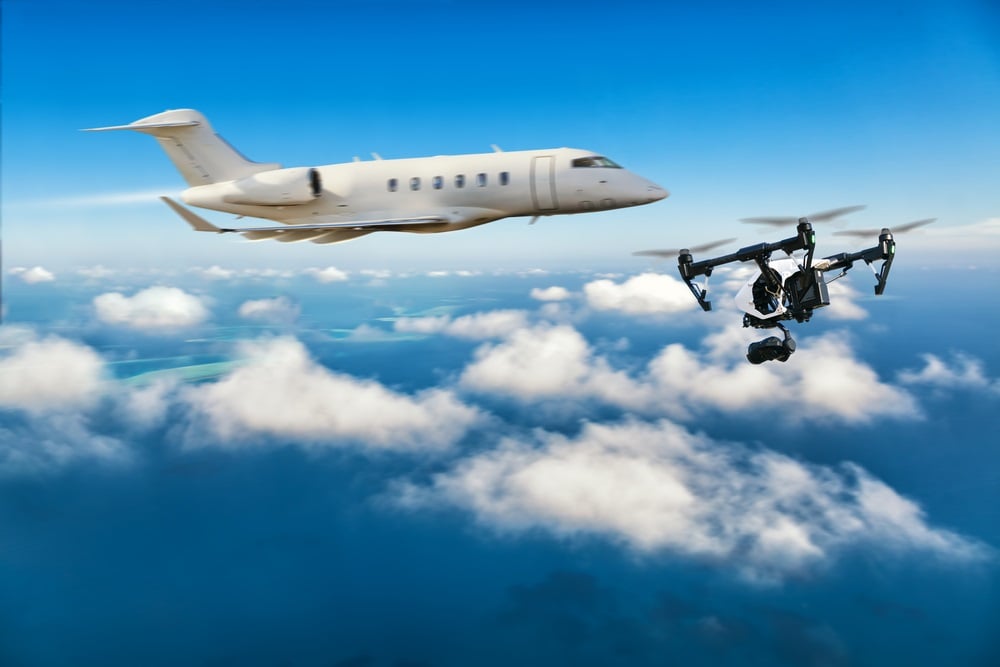
The number of drone near misses is on the rise as the use of drones increases. (Photo: Shutterstock)
1. Potential losses caused by drones
There are numerous scenarios that can lead to drone-related losses, and some of the more common ones that may result in insured losses include:
- Drone crashes causing personal injury or damage to property.
- Drone flyaways or crashes resulting in claims to repair or replace the drone.
- Drone collisions with manned aircraft.
- Fires originating from drone batteries or other electronics causing property damage.
- Litigation arising from drone privacy invasion claims.
Related: Surge in drone safety reports prompts `emergency' action at FAA

The risk of accidents involving drones aren't limited just to planes. Crash landings can also be an issue. (Photo: Donan)
2. Investigating drone-related claims
As with any type of loss, potential causes for drone accidents are numerous and varied. Operator error, a hardware failure, a software issue or GPS or control signal interference are some potential causes of a drone accident. As drone systems become more complex and flight operations more extensive, additional causes will arise.
Due to the complexity of drone accidents, a thorough investigation by professionals with relevant expertise may be needed to pinpoint the cause and assist in determining coverage and whether there is subrogation potential. But what sort of expertise is needed in losses involving drones? The answer can vary widely based on the specifics of the accident and the suspected cause.

Gathering information from drones after an incident can help investigators determine the cause of a crash. (Photo: Shutterstock)
3. Drone data retrieval
For many claims involving drones, the most valuable information for reconstructing the events leading up to the accident will be contained in flight data stored on the drone itself or on the associated ground control unit. There are numerous proprietary drone systems available on the market, and expertise is needed to identify, retrieve and interpret the data. Additionally, retrieval of deleted photos or videos from the drone may provide important information.

Drone operators must comply with both state and federal regulations. (Photo: Shutterstock)
4. Understanding restrictions & regulations
A comprehensive understanding of applicable FAA flight restrictions as well as state and local regulations may be key to determining liability. Restrictions vary significantly with location and will continue to change frequently as drone technology evolves.

By utilizing weather data, investigators can better assess whether or not weather contributed to an incident. (Photo: Donan)
5. Weather analysis & manufacturer specifications
Analysis of recorded weather data in combination with a review of performance and limitation specifications from the manufacturer of the drone will be helpful in determining whether environmental factors may have contributed to the accident.

Operators must be aware of the dangers presented by drones because they can cause personal injuries. (Photo: Shutterstock)
6. Drone design & safety evaluation
As the size and flight speeds of drones increase, there is greater potential for personal injury as a result of accidents. However, even a small drone can cause severe injuries due to contact with its propeller(s) which may be rotating upwards of 10,000 rpm. Personal injury claims may warrant an expert analysis of the drone's design and safety features to identify deficiencies.

The NTSB will generally issue a preliminary report after there has been an accident. (Photo: Shutterstock)
7. NTSB investigations
Any accident involving a collision between a drone and a manned aircraft, as well as many accidents resulting from commercial drone flight operations, will require a thorough investigation by the National Transportation Safety Board which will provide valuable information for handling associated claims.

As drones become more sophisticated and costly, keeping them in good working condition becomes even more critical. (Photo: Donan)
8. Evaluating drone repairs & replacement
With the cost of professional drone systems running upwards of $10k-$50k, replacing a lost or damaged drone is no small setback. Inspection and testing of the drone system is typically required to determine the extent of damages and cost of repairs. Additionally, an inspection and analysis on a damaged drone may provide information needed to determine coverage and subrogation potential.
Related: Who's allowed to shoot at drones?

Drones are an excellent tool for a wide variety of industries, but with the benefits come multiple risks to insurers and owners. (Photo: iStock)
Future challenges
With the number of drones in the skies projected to explode in the coming years, the industry can expect a significant increase in insurance claims related to drone accidents and failures. There are even more drone-related risks on the horizon: Heavy-lift delivery drones flying overhead create greater exposure; large, expensive drones inspecting sensitive infrastructure risk potential crash damages and business interruption; and the projected widespread use of drones for numerous and diverse applications opens up the possibility of accidents in new places.
As carriers work to adapt policy language and coverage to the new risks presented by drones, new tools and techniques will likewise be needed to properly investigate these claims.
Duane Battcher is the director of acquisitions & strategic development for DONAN. Contact him at dbattcher@donan.com.
© Arc, All Rights Reserved. Request academic re-use from www.copyright.com. All other uses, submit a request to TMSalesOperations@arc-network.com. For more information visit Asset & Logo Licensing.