Smart water shut off valves, mold monitoring sensors and smart home security systems are among the top smart home technologies for homeowners age 50 and older, according to new research from Hartford Financial Services Group and the MIT AgeLab.
"Smart home technology can make life easier for people of all ages, but it can be especially beneficial to those ages 50 and older as their lifestyles change," said Jodi Olshevski, gerontologist and executive director of the Hartford Center for Mature Market Excellence.
Avoid property damage and insurance claims
Some of the technologies on the list can help homeowners avoid potential problems before property damage occurs and may help avoid costly repairs and insurance claims.
The research consisted of a review of 25 technologies by a panel of experts on aging, housing and technology. These reviews were used to identify the top 10 technologies that can help with home maintenance and enhance safety and security for homeowners over the age of 50.
The top 10 technologies include:

(Photo: Hartford video screenshot)
1. Smart smoke and carbon monoxide detectors
These devices can send an alert to the user's smart phone while sounding an alarm in the home about the presence of smoke and carbon monoxide. If the smart technology is connected to a security system that has central monitoring, emergency responders may be alerted.

(Photo: Hartford video screenshot)
2. Wireless doorbell cameras
These cameras offer homeowners increased security by sending an alert when someone is present and by live streaming to the area around a door to the user's smart phone to monitor activity and to enable homeowners to interact with visitors remotely or from within the home.

(Photo: Hartford video screenshot)
3. Keyless entry
Keyless entry technology provides homeowners with the ability to lock and unlock a door remotely via their smart phone or by holding their phone near the lock for increased security and convenience.

(Photo: Hartford video screenshot)
4. Automatic lighting
Automatic lighting can be turned on and off, scheduled and adjusted for brightness via smart phone to increase visibility when at home and for additional security when away from home.

(Photo: Hartford video screenshot)
5. Smart water shut-off valves
These valves enable a homeowner to turn the water off remotely via smart phone or automatically. When the device is used with a smart water sensor, it will automatically turn off the water when a leak is detected to prevent additional water damage.

(Photo: Hartford video screenshot)
6. Smart home security systems
Smart security systems use sensors and/or cameras to monitor access and activity around the home and send an alert to the user's smart phone when motion has been detected. When activated, the system may also alert emergency responders.

(Photo: Hartford video screenshot)
7. Smart outlets/plugs
These smart devices connect with a smart phone to allow users to control power to the outlet and the devices and appliances plugged into the outlet. Smart outlets/plugs may send an alert if items are left on, which can prevent fire and save energy.

(Photo: Hartford video screenshot)
8. Smart thermostats
Smart home thermostats allow the homeowner to monitor and adjust home temperature and humidity remotely and may learn patterns of residents and make adjustments automatically, thereby reducing the cost of heating and cooling the home and avoiding frozen pipes.

(Photo: Hartford video screenshot)
9. Water and/or mold-monitoring sensors.
These smart home sensors detect water leaks and/or mold and can send an instant alert to the user's smart phone, bringing immediate attention to a potential problem. If used with a water shut off valve, a leak can be stopped immediately.
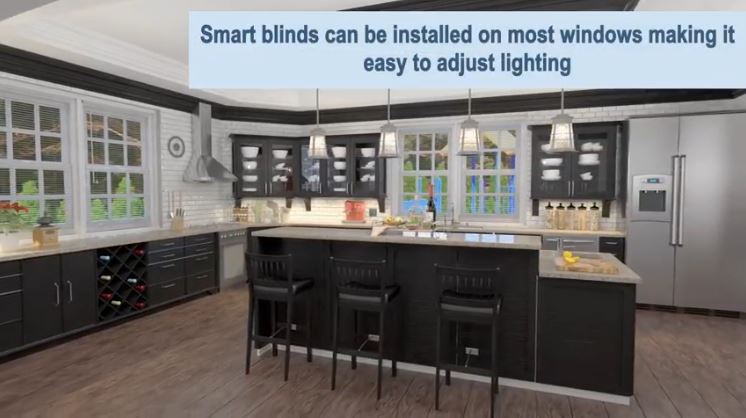
(Photo: Hartford video screenshot)
10. Smart window blinds
These window blinds can open and close according to a set schedule, by sensing changes in light or temperature, or be controlled by a smart phone to increase security and privacy whether the homeowner is at home or away.
When considering smart home technology, Hartford and the MIT AgeLab recommend that homeowners:
- Research what's out there and the benefits of the technology.
- Determine what might work best for your home and family.
- Visit Hartford's Smart Home website to take a tour of a digital smart home and learn more about how these technologies work.
The infographic below highlights the research findings:

(Source: The Hartford)
© Arc, All Rights Reserved. Request academic re-use from www.copyright.com. All other uses, submit a request to TMSalesOperations@arc-network.com. For more information visit Asset & Logo Licensing.