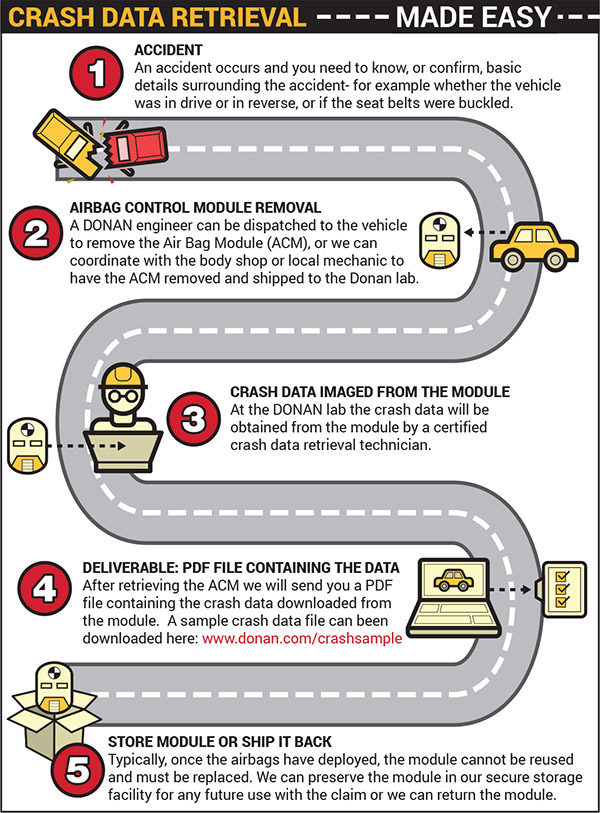
Picture this. A driver is going down the highway with the cruise control on. As the vehicle approaches stopped traffic ahead, the driver presses on the brake pedal to slow down. Instead of coming to a stop, the vehicle accelerates aggressively, causing the driver to swerve off to avoid the vehicle ahead and resulting in a head-on collision with another vehicle.
The driver insists that the brakes malfunctioned.
But what really happened?
Actual information retrieved from the vehicle shows that the brake pedal was never depressed prior to the collision. Actually, the driver inadvertently applied the accelerator pedal which sent the car flying into oncoming traffic, causing property damage and injury.
This data was retrieved from the vehicle's event data recorder (EDR), which is much like an automobile's "black box" — a source of vital information that can be invaluable for confirming details related to the accident and for investigating reported equipment malfunctions.
Here is a list of common scenarios where retrieving the crash data may be prudent:
-
Investigate reported steering, accelerator, or brake malfunctions
-
Determine seatbelt status at time of impact
-
Identify if there were any passengers in the vehicle at time of impact
-
Obtain recorded speed prior to impact
-
Determine vehicle odometer mileage at time of impact
-
Identify whether any diagnostic trouble codes were present at time of impact
-
Determine if cruise control was in use prior to impact
-
Preserve data for any future accident reconstruction
-
Determine if vehicle in drive, park, reverse or neutral at time of impact
-
Investigate reported malfunction of airbags — did not deploy or reportedly deployed but no impact
How to choose a service provider for your Crash Data Retrieval needs:
-
Are they knowledgeable? Ask for the certifications and experience of those retrieving the data. Make sure they can perform the task and interpret the information accurately.
-
Is their service easy to use? Can they manage the entire crash data retrieval process, from project acceptance to storage of evidence. Contact them once the accident occurs and ensure they can coordinate the shipping of the module to their facility and then send you a PDF of the module's recorded crash data.
-
Can they expedite data processing? Time is of the essence in these situations. Are they able to image and email crash data within 3 business days of receiving the module?
-
Do they offer storage and evidence handling? After imaging the crash data from the module, ensure that the company can securely store the module, or ship it to you directly. You will need this capability as the subrogation process can be lengthy and you should partner with a vendor that has experience with subro and claims.
© Arc, All Rights Reserved. Request academic re-use from www.copyright.com. All other uses, submit a request to TMSalesOperations@arc-network.com. For more information visit Asset & Logo Licensing.