Three years after Hurricane Sandy swept up the East Coast, homeowners are still working to collect money for the damage they sustained. It has been a long and frustrating fight for many.
Media reports highlighted their efforts and some accused insurers and engineers of colluding to under-report the damage.
Multiple failures
The reality is there were multiple failures and the blame should be shared by many, not just a few. Upon closer examination, there wasn't just one entity which made mistakes, mismanaged the situation or exploited opportunities, but multiple factors which exacerbated the situation because no one had all of the facts or was prepared for a storm the magnitude of Hurricane Sandy.
Over a period of several months, adjusters, engineers, consumer organizations, attorneys and others were interviewed on how the reports were assigned, how peer reviews are conducted, where problems existed, and who or what was responsible. The issues, like the answers, are not black and white.

Workers attempt to pump out the flood water from a bar and restaurant as a result of Superstorm Sandy on Tuesday, Oct. 30, 2012 in Hoboken, N.J. (AP Photo/Charles Sykes)
When catastrophes come knocking
Whenever a catastrophe like Sandy, Katrina or Isabel impacts a large area, all resources are strained beyond capacity. Police and fire departments attempt to respond to citizens' needs. Insurance companies scramble to bring in adjusters to inspect and manage the thousands of claims from their policyholders. Restoration companies, roofers, water damage mitigation firms, building contractors, engineers and other service providers are equally taxed, working as quickly as possible to bring in additional resources to meet countless requests from residents.
There are never enough adjusters to respond to all of the policyholders filing claims. Insurance adjusters from other jurisdictions come in to help with the overflow, but they may lack experience, be unfamiliar with how buildings in a particular area are constructed and what to look for following a major disaster, or not understand that estimate pricing can vary significantly from one jurisdiction to another.
Catastrophe adjusters face challenges
Catastrophe adjusters have special expertise. They know that getting into a devastated area means their hotel (if they can find one) may be several hours away from the losses they are adjusting; that there won't be any electricity, air conditioning or possibly even lights in the buildings they are inspecting. There are looters, rioters and others who would seek to harm them for being in the right place at the wrong time.
They've seen this level of devastation before and know how powerful rain, floods, winds and unruly waves can be. While finding addresses without street signs or building numbers is easier with today's global positioning systems, getting from one place to another still takes hours in areas where debris litters the streets, roads are washed away and entire neighborhoods look like desolate wastelands.
They spend weeks meeting with policyholders, reviewing estimates and determining what damage was caused by the event, what may have been pre-existing, what is covered by insurance and how the policyholders will be compensated for their loss.
Traditional Homeowners insurance does not cover losses from floods or storm surge; a separate Flood insurance policy is required. Unfortunately, many of the agents selling Flood insurance and most of the homeowners purchasing it don't really understand what Flood insurance does and does not cover.
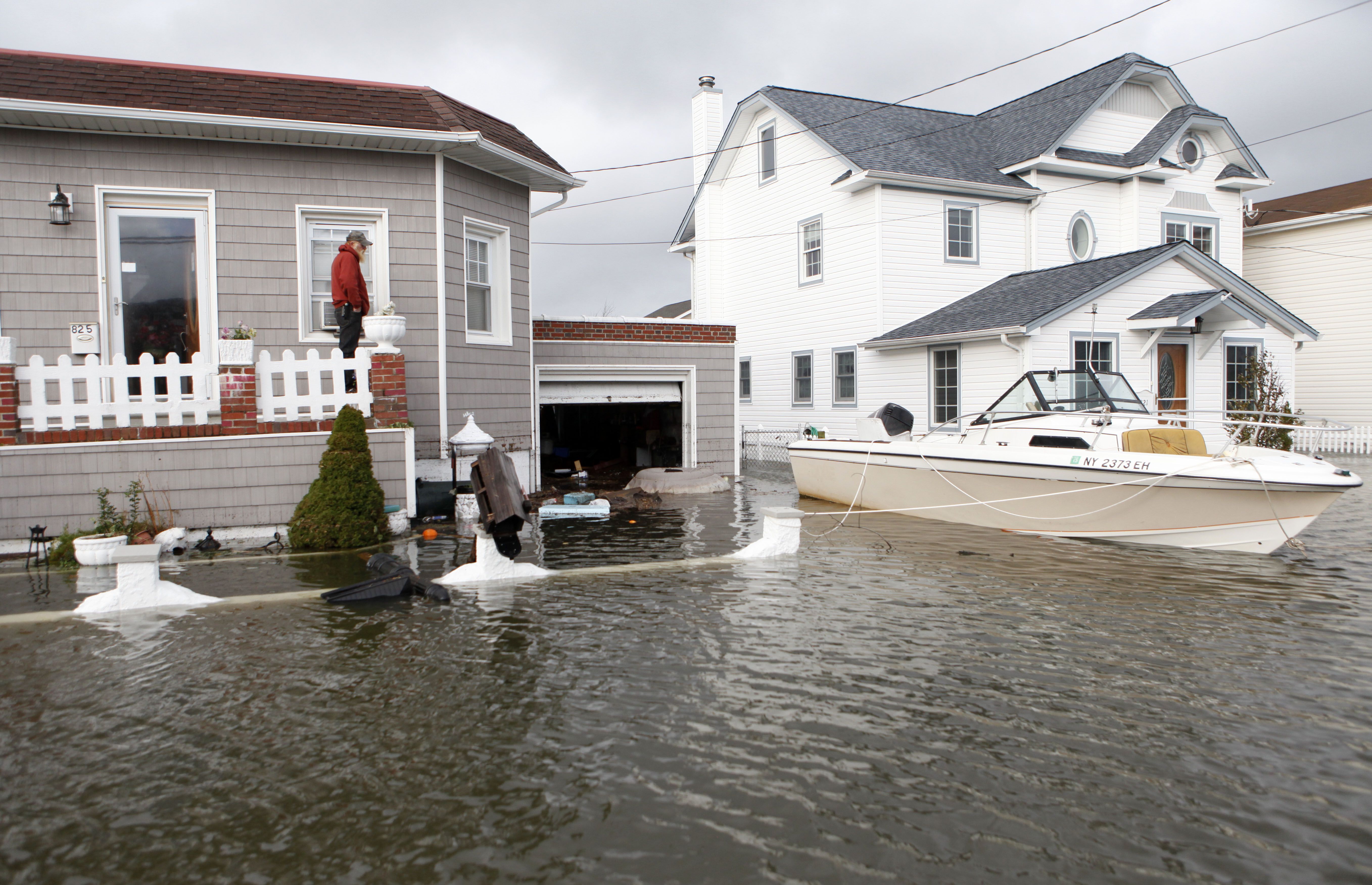
In this Oct. 30, 2012 file photo, a boat floats in the driveway of a home in the aftermath of Superstorm Sandy in Lindenhurst, N.Y. (AP Photo/Jason DeCrow, File)
Floods are the No. 1 disaster in U.S.
Floods are the number one disaster in the U.S. and the cost of recovery grows each year. According to the Federal Emergency Management Agency (FEMA), the average claims paid in 2014 ranged from $10,746 to $42,275. The average cost of a flood insurance policy in 2012 was $650.
Flood insurance covers dwellings up to $250,000 and contents up to $100,000 and will not pay more than the policy limits for any claim. It does not cover items outside of the home like walkways, plants/trees, swimming pools, sea walls, patios or decks; most self-propelled vehicles (e.g., cars, motorcycles, four-wheelers); damage caused by moisture that could have been prevented by the homeowner or renter; damage caused by settlement (even after a flood event), and specialty items such as currency, precious metals and valuables.
Authorized adjusters are certified
FEMA's National Flood Insurance Program (NFIP) maintains a database of authorized adjusters. To obtain NFIP adjuster certification for residential, commercial and mobile homes, an individual must:
- Have four consecutive years of full-time property loss adjusting experience;
- Be able to prepare residential scope and estimates up to $50,000 for mobile homes and $500,000 for residential and commercial losses;
- Have attended an NFIP workshop and be able to demonstrate knowledge of the standard Flood insurance policy (SFIP) and NFIP adjustment criteria for all policy forms; and
- Be familiar with manufactured (mobile) home and increased cost of compliance techniques.
Adjusters for commercial properties must have similar credentials and five or more years of experience with commercial claims of $500,000 or more, submit recommendations from three insurance company supervisory or claims management professionals, and carry Errors and Omissions insurance.
Unscrupulous charlatans arrive on the scene
When a catastrophe occurs, unscrupulous individuals suddenly become experts in roofing, construction, insurance and other trades. These charlatans promise fast service, demand money up front, don't bother with the paperwork most reputable companies provide, and rarely take a job to completion.
All of these factors and many more combined to create a perfect storm after Hurricane Sandy swept up the East Coast in October 2012.
© Touchpoint Markets, All Rights Reserved. Request academic re-use from www.copyright.com. All other uses, submit a request to TMSalesOperations@arc-network.com. For more information visit Asset & Logo Licensing.