Claims personnel are often called to a building with a large loss caused by water leakage from underground water piping systems. Investigating the cause is an integral part of the claims adjustment process since it bears on insurance coverage as well as potential subrogation. The first step is finding the source of the water and determining the nature of the leak.
Photographing the source and documenting the circumstances of the leakage are helpful for those who will be performing a more detailed analysis of the problem.
The following case study illustrates a water leakage loss as a result of a failed underground pipe. Figure 1 is a photograph of a large industrial building that sustained a substantial water loss from a failed four-inch water pipe near an exterior wall. The underground pipe was sufficiently close to the exterior wall that once the leakage occurred, the water was able to enter the building, causing significant water damage to the products and machinery.
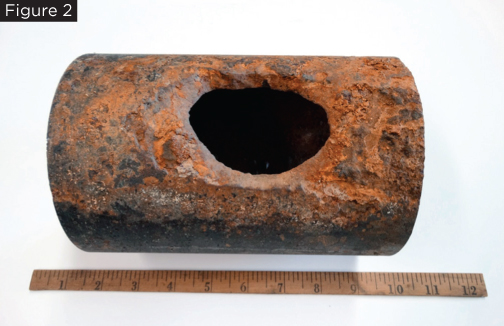
Figure 2 is a view of the opening in the pipe that was the source of the leakage. There was severe localized corrosion in the pipe wall in this area. As shown in Figure 3, the corrosion was not occurring along the entire length of the pipe underground. At approximately five inches on each side of the hole, the wall of the pipe was in good condition with no decrease in wall thickness from corrosion.
There was no active corrosion control in the form of DC voltage control or sacrificial anodes. There was no protective wrapping or coating on the iron pipe. This type of corrosive attack is characteristic of electrical current flow to ground. It is not uncommon to use a piping system as a ground for electrical equipment in a plant. What happens is that the electrical current flows along the pipe and may exit randomly at a location in the soil which is conductive and at a lower voltage. This results in rapid corrosion of the exterior of the pipe in a localized area, which was the issue in this case.

Corrosion control on this particular piping system was lacking. The designer of the piping system should have provided adequate corrosion control. Typical methods of corrosion control are external coatings, polymer wrap, cathodic protection and material selection.
The root cause of the loss is insufficient corrosion protection of the pipe. Retaining the failed pipe, taking statements of the insured's personnel, documenting information regarding the loss and obtaining an engineering failure analysis report will aid in a successful recovery for the insurance adjuster's client.
© Arc, All Rights Reserved. Request academic re-use from www.copyright.com. All other uses, submit a request to TMSalesOperations@arc-network.com. For more information visit Asset & Logo Licensing.