Dictionary.com defines a forklift as "a small vehicle with two power-operated prongs at the front that can be slid under heavy loads and then raised for moving and stacking materials in warehouses, shipping depots, and so on." The U.S. Occupational Safety and Health Administration, better known as OSHA, calls them "powered industrial trucks" in its extensive regulations.
No matter what name you use, forklifts are moving vehicles, but does one qualify as an "auto" for purposes of the exclusion from bodily injury liability from an auto under a commercial lines policy? The answer, according to the U.S. District Court for the Southern District of Indiana is "no." [Nat'l Am. Ins. Co. v. Harleysville Lake State Ins. Co., 2014 U.S. Dist. LEXIS 160593]
It all started with a delivery
Venture Logistics, Inc., offers trucking, freight, warehouse and brokerage services to its customers, including Indy Power Coatings. On Feb. 10, 2009, Trevell Lasha Parker, a truck driver for Venture, went to Indy to complete its trucking and hauling jobs. Robert Harden, a forklift operator for Indy, was unloading skids from the Venture tractor-trailer driven by Parker. After Harden had unloaded a few skids, Parker asked him if he was finished, but he said no. Nevertheless, Parker began to drive the truck away.
Worried that the forklift would fall off the back of the truck as it went up a hill, Harden got off the forklift and tried to get Parker's attention. The forklift then slid down the trailer and pinned Harden against the wall. He was able to get one leg free and partially fell out of the truck. Eventually, someone honked a horn at Parker and she stopped the truck. As a result of the accident, Harden's leg, among other things, was seriously injured. He sued Venture Logistics and Parker personally.
At the time of the accident, Venture was insured by two companies: State National Insurance Company and Harleysville Lake State Insurance Company. State National had issued a Commercial Truckers Coverage Policy to Venture, and the policy covered bodily injury resulting from the ownership, maintenance or use of a covered "auto." The policy had an exclusion for bodily injury or property damage resulting from "the movement of property by a mechanical device (other than a hand truck) unless the device is attached to the covered 'auto'."
Harleysville issued a commercial lines policy to Venture that excluded coverage for bodily injury or property damage from any aircraft, "auto" or watercraft owned or operated by or rented or loaned to any insured. Under the policy, use includes operation of the vehicle as well as "loading and unloading." Similar to the commercial truckers policy, the commercial lines policy noted that "loading or unloading" doesn't include the movement of property by means of a mechanical device, other than a hand truck, that is not attached to the aircraft, watercraft, or "auto."
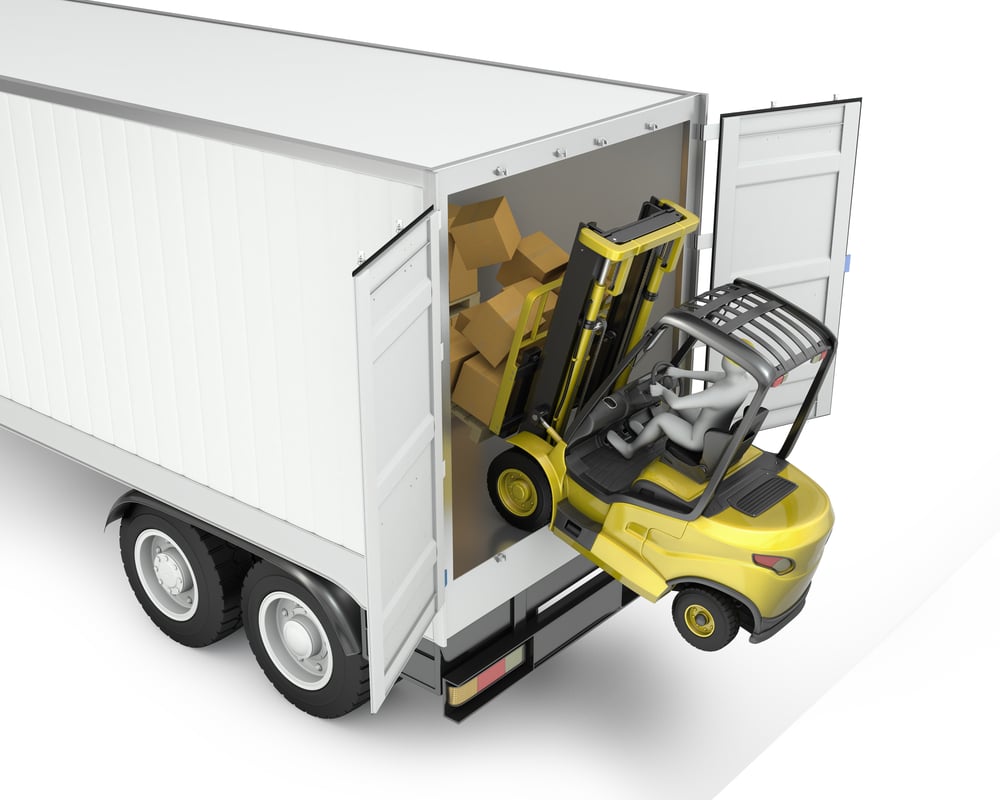
The next day, Venture reported the accident to National American Insurance Company (NAICO), who had agreed to handle claims for State National. NAICO defended Venture in the Harden lawsuit without reservation until late in 2012. At that time, NAICO raised the issue of the "Movement of Property by Mechanical Device" exclusion in the State National Policy. NAICO realized that the exclusion could apply when an unrelated NAICO claim involving a forklift raised the same exclusion. NAICO notified Harleysville that it could have potential coverage liability for the accident. After conducting a coverage analysis, Harleysville denied coverage for the accident under the "aircraft, auto or watercraft" exclusion.

Battle of the insurance policies
The Harden lawsuit settled in May 2013, and NAICO paid Harden $800,000 on behalf of Venture. In August 2013, NAICO and State National filed another lawsuit, seeking a declaration that coverage for the Harden lawsuit was excluded under the State National policy. At the same time, the suit also asked for a declaration that coverage for the Harden lawsuit should be provided by the Harleysville policy. The suit also asked for subrogation or, alternatively, contribution from Harleysville.
The core dispute in this case is whether the relevant exclusions found in the Harleysville and State National policies "clearly and unambiguously exclude coverage for the Harden lawsuit under the unique set of facts that led to Harden's injuries." Although the case was filed in federal court, the underlying issue—contract interpretation—is a matter of state law, and Indiana law controlled.
NAICO asked for a declaratory judgment on two grounds:
- Coverage for the underlying lawsuit was excluded under the State National policy's "movement of property by mechanical device exclusion, and
- Coverage for the underlying lawsuit was provided by the Harleysville policy.
Both requests were based on State National's belief that the "bodily injury" in the underlying lawsuit occurred while Harden was using a forklift to load or unload property from a covered "auto" as described in both policies. According to the trial court, the case "boils down to" whether Harden's injuries occurred due to his use of the forklift to load and unload the skids from the tractor-trailer (meaning Harleysville would be liable), or whether his injuries arose from Parker's premature movement of the tractor-trailer (meaning NAICO would be liable).

Ultimately, the court agreed with Harleysville that what set in motion the chain of circumstances leading up to Harden's injury was Parker's use of the tractor-trailer, specifically when she pulled away while he was still loading and unloading the trailer. The court found that "There simply was no injury that occurred when property was being moved," that is, during the loading and unloading process. It was true that Harden was unloading skids prior to the accident, said the court, however, as soon as Parker began to drive the trailer away, he stopped. Harden's injuries didn't result from the unloading of the skids; his injuries resulted from Parker negligently, and prematurely, driving the tractor-trailer away, causing the forklift to pin Harden against the wall of the trailer. In other words, had Parker not driven away, Harden never would have been injured.
As a result, the court ruled, Harleysville had no liability for the Harden lawsuit because the accident fell under the "aircraft, auto, or watercraft" exclusion. In addition, the court ruled that Harleysville was not required to subrogate or contribute to NAICO.

What should you do?
Given the nature of Venture's business, having coverage for damage resulting from its use of trucks or tractor-trailers is important, and the commercial truckers policy did just that, to the extent of the $800,000 settlement, notes Steven A. Meyerowitz, Esq., director of FC&S Legal: The Insurance Coverage Law Information Center. Brokers, agents, policyholders and risk managers have to understand the underlying business, consider the potential risks—such as truck accidents in this case—and obtain coverage that will lower those risks.
Even more important, Meyerowitz adds, brokers, agents, policyholders and risk managers should follow the insurance coverage battles that play out in the courts, particularly as they relate to specific industries, to see the kinds of liability issues that can arise and the positions that carriers take in these cases so they can adjust the behavior of their employees, contractors and managers accordingly. For example, based on this case, Meyerowitz points out, risk managers might want to make certain that their truck drivers pay closer attention to forklift operators removing skids from their trucks—something that happens countless times every day.
Finally, brokers, agents, policyholders and risk managers must be aware of safety regulations and any training or licensing required for operating equipment such as forklifts. In addition to losing a lawsuit, you may find OSHA knocking on your door after an accident, with citations and fines in hand.
© Arc, All Rights Reserved. Request academic re-use from www.copyright.com. All other uses, submit a request to TMSalesOperations@arc-network.com. For more information visit Asset & Logo Licensing.