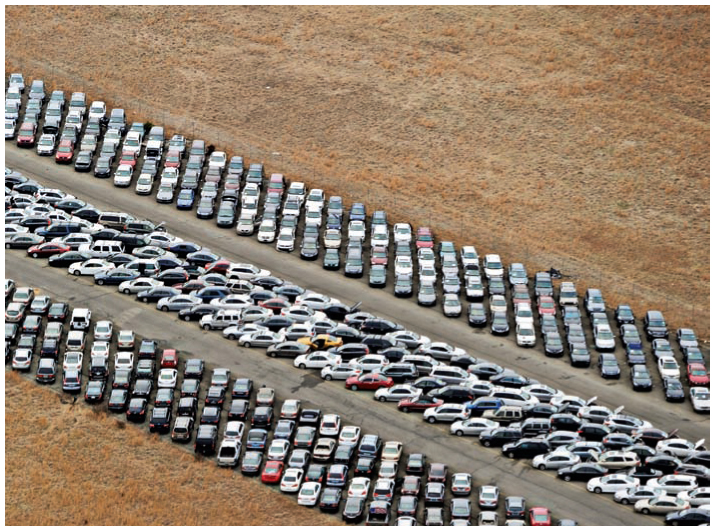
 Remember this photo? One striking image that appeared following Superstorm Sandy was this photo of an airplane runway in Riverhead, N.Y. completely filled with tens of thousands of automobiles that were totaled out following the catastrophe. NU's editors were so enamored with this image that we ran it as the "First Look" photo in our February issue.
The runway is now empty—but, perhaps predictably, not all of those cars were sold for scrap. According to experts, thousands of them have wound up back on the road, or sitting on used car lots located in some cases not even that far away from where the total-loss claims were settled.
At best, these vehicles are soon-to-be headaches for their new owners when they inevitably break down. At worst they can cause much more dangerous scenarios to new owners, as salt water can cause such critical mechanisms as airbags or anti-lock brakes to malfunction.
According to reports and anecdotal evidence from these sources and investigative reports, many of these vehicles may be back on the road—sold at auctions.
"We can't know with certainty," says Frank Scafidi, director of public affairs for the National Insurance Crime Bureau (NICB), when asked how many flood-damaged cars are back on the road. "There are a lot of different ways it can happen."
Selling a Sandy-damaged vehicle isn't a crime, so long as the damage is disclosed to the buyer. The problem is, knowledge of that damage is often hidden by those in the game of selling used cars. The National Salvage Vehicle Reporting Program (NSVRP) says it knows of cars being sold on eBay, Craigslist or donated to charities. Others have been transferred to second parties and sold through auctions or used car dealers with title rebranding or a record of flood loss.
NSVRP has already identified more than 100,000 water/flood total-loss vehicles that have been listed for sale by the salvage auction. A number of these are being offered for sale under clean title paperwork. Many have been moved to other states before being offered for sale.
Scafidi says salvage laws differ in each state."Operations involved in taking advantage of this situation absolutely know which states are easiest to get one of these cars back out there," he says. "The only time we become aware is when one of these cars is involved in an accident."
Insurance Auto Auctions (IAA) provides salvage services to many major auto insurance carriers. The company says it recovered vehicles, secured land for storage, processed the vehicles and titled them before shipping them to auctions.
"One of the most critical aspects of this process is ensuring that all vehicles are titled accurately," IAA says. "As many in the industry know, this isn't always an easy feat."
Nevertheless, IAA says it processed all cars in accordance with state laws with full discloses and title history. IAA reported all cars it sold to the National Motor Vehicle Titling Information Service and to the NICB.
© Arc, All Rights Reserved. Request academic re-use from www.copyright.com. All other uses, submit a request to TMSalesOperations@arc-network.com. For more information visit Asset & Logo Licensing.