 These days we face a lot of problems, some of which can seem more pronounced in New York. After three years of debate and two full rounds of hearings, New Yorkers recently weighed in on a multifaceted issue that has commanded the national and global limelight.
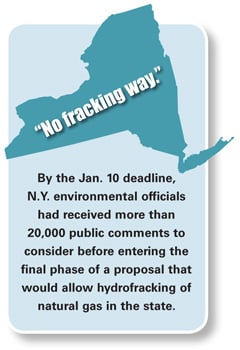
 Far from reticent, state residents—more than 20,000 of them—expressed their concerns to New York environmental officials in January, with the intent to halt hydraulic fracturing in the state. Also called "fracking," the practice involves injecting water, sand, and chemicals underground to free gas trapped in rock.
The immediate and long term impact of fracking operations on public health and the environment definitely require further assessment. The lack of documented evidence is astounding; everyone seems to at least agree on that, if nothing else.
Dissension has seeped into subsets of the varied grassroots anti-fracking organizations that supposedly strive for solidarity. Should the practice be banned altogether in favor of imposing strict limitations?
Although the associated risks may seem steep, so too are the potential consequences of inaction. That's because the issue hints at the very core of our country's commitment to domestic energy production and to our collective well being.
It is among a list of energy policies President Obama believes will propel the creation of more than half a million jobs by 2020.
"We have a supply of natural gas that can last America nearly 100 years, and my administration will take every possible action to safely develop this energy," Obama said in his final State of the Union address before facing the nation's voters in November.
In addition to reinvigorating economically struggling swaths of the country, could wider adoption help preempt the eventual relegation of the U.S. to a "second-class" industrial power? I won't pretend to be qualified to render a compelling answer to that question. Similar to politicians, each side of the fracking debate has forged alliances with scientists, activists and legal experts to corroborate the respective stances. Is fracking causing earthquakes in northeastern Ohio? Polluted drinking water in Pennsylvania? Regardless, the current climate and deluge of protests are spurring claims and litigation, both very real issues with which claims professionals must contend. Attorneys from Nelson Levine de Luca & Horst explore today's fracking-related liability and coverage issues, beginning on page 27.
The next issue marks our inaugural column oriented to claims litigation management to keep you apprised of the most pressing developments in environmental liability, subrogation, and an array of other topics, so keep on reading!
© Arc, All Rights Reserved. Request academic re-use from www.copyright.com. All other uses, submit a request to TMSalesOperations@arc-network.com. For more information visit Asset & Logo Licensing.