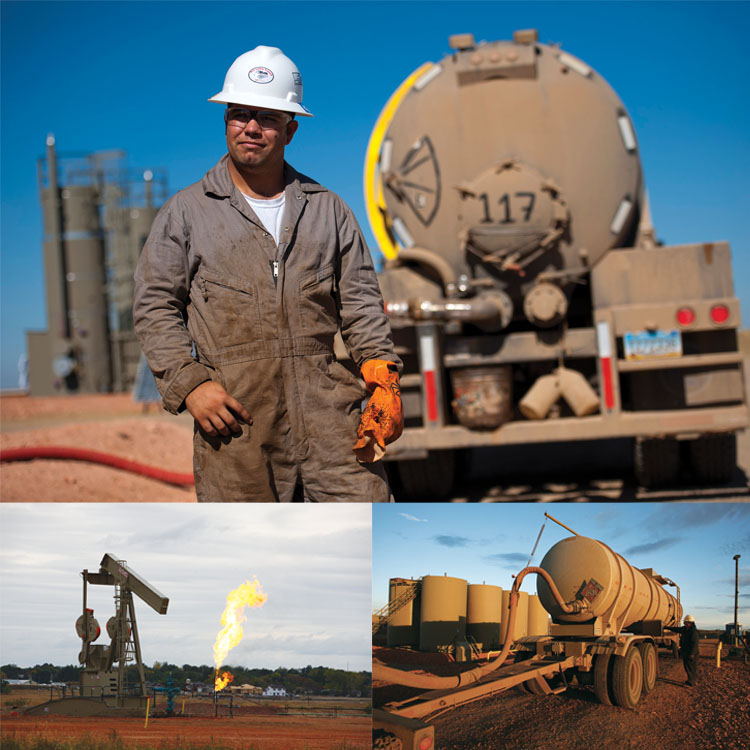
 While insurance agencies in most parts of the country are enduring mighty tough times, some producers in North Dakota—which has the lowest unemployment rate in the country, at 3.4 percent—are so busy they have to turn away new business.
The state is booming thanks to a surge in energy production: 6,300 oil wells, pumping 24/7, are producing some 510,000 barrels of oil per day.
This has led to a massive influx of workers and equipment—and the insurable risks that accompany them. Direct premiums written in the state have jumped a whopping 45 percent from 2005 to 2010.
STREETS PAVED WITH BLACK GOLD
At Manger Insurance, located in Williston, N.D., in the heart of oil country, so many requests for quotes were coming in that the agency had to place a moratorium on all new business for a few months until it "could get put back in place," says Tim Hermanson, a producer at Manger—which places auto, home, business and specialty coverage, including oil-work business.
 "The oil-work business takes a lot of continued service," Hermanson explains. "[Clients] can have 10-20 different vendor contracts. It got to a point where we just thought it'd be a disservice [to new customers] if we couldn't give them the attention they need."
Evan Mandigo, state executive of the North Dakota Association of Independent Insurance Agents, says he knows of other agencies deciding to decline new customers, at least temporarily.
"[Agencies] get so much additional premium on audits—that is their new business," Mandigo says. "Renewals never come in flat."
While the demand for oil-work coverage is immense, not all of the state's agents are ready to capitalize on it—though many are trying to learn the nuances of this niche as fast as they can.
Steve Becher, executive director of the Professional Insurance Agents of North Dakota, notes that oil-service-related inquiries "aren't your typical Main Street insurance calls."
"Right now it's a lot of independent contractors looking to move fast," Becher adds. "You don't even know how long they are going to be here. It's crazy."
OIL'S IMPACT ON OTHER INSURANCE BIZ
While agents able to write oil-service-related coverage may have more business than they can handle, the energy-driven prosperity is extending into other insurance spheres.
"The rising tide floats a lot of boats," says Mandigo.
 For example, Fargo-based Nodak Mutual Insurance Co., the third-largest personal-lines and fifth-largest commercial-lines provider in North Dakota, has seen a rise in premiums of 15-25 percent in the western half of the state—largely driven by the soaring prices of homes in the area, says Jim Alexander, the mutual's CEO.
And Nodak is finding other ways to cash in on the oil boom. For example, farmers or ranchers are investing in semis to haul supplies and goods to the oil patches. Though Nodak may not directly write this risk, it can broker a deal. And it also can pick up the added small businesses this movement creates—like new welding outfits or repair facilities.
If, or when, the largely transient oil workforce starts to settle in the state, then Alexander expects to see an even broader and longer-lasting impact on his bottom line.
"The [out-of-state oil workers] have insurance on their cars when they arrive," he explains. "But when people start living here—when there are places built for them to live and people begin buying new things—that will bring future business," he says.
"Nobody paid attention to North Dakota until recently," Alexander adds. "Now there's national news stories [about our prosperity], and many people can't believe it. We're amazed at what is happening."
THE DARK SIDE OF GROWTH
With almost full employment and a billion-dollar budget surplus, few states or their citizens may be feeling much sympathy for North Dakota.
But the extraordinary growth does have its drawbacks, both for the state in general and its insurance providers in particular.
For one, the state's infrastructure is being seriously strained. Traffic jams are now common on the once-empty streets of small towns. And good luck trying to find somewhere to live. Housing prices and rent have skyrocketed—driving up the cost of living for everyone and forcing many newly arrived workers to stay in "man camps."
 Communities throughout the state are emptying out, their businesses fighting to keep locals who are looking at the opportunity to make $80,000 per year driving a gravel truck. Even McDonald's is paying $18 an hour, just to keep and attract employees.
Alexander says he is having trouble keeping claims adjusters, who are either offered more money from the oil companies or from larger, national insurance companies looking to service additional claims since, as Mandigo puts it, "There are more people doing dumb things."
Highway fatalities are up as newcomers aren't used to driving during North Dakotan winters. Alexander says auto-claims frequency in the western part of the state during the last five years is double the rest of the state.
"Who knows over time what this [oil boom] will bring?" Alexander ponders. "More accidents, more thefts? You can see a good opportunity, but there is always a downside."
© Arc, All Rights Reserved. Request academic re-use from www.copyright.com. All other uses, submit a request to TMSalesOperations@arc-network.com. For more information visit Asset & Logo Licensing.