National Underwriter asked members of its Risk Managers Advisory Board to respond to the following questions:
What are you doing regarding your own education?
What are you doing about education of those who report to you?
What do you look for when recruiting new talent?
* * *
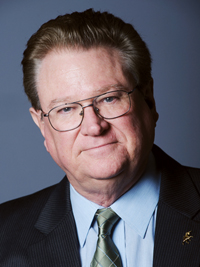 Mike McDonald
Vice President of Enterprise Risk Management
Quality Distribution Inc., Tampa, Fla.
"I spend a lot of time participating in industry-focused risk-management (rather than general risk-management) events, both as a speaker and attendee. In particular, I look for interactive forums where I can learn from other industry risk-management participants.
Most of my employees require CEU's, so I send them to seminars, specific classes, invite service vendors in for presentations and make online learning available.
We do not have any entry-level positions, so I do not recruit from schools. We only hire experienced professionals—and I am always looking, whether I have an open position or not. Attitude, personality and work ethic are the things I look for in a potential hire."
 Gary Pearce
Vice President of Risk Management
Kelly Services Inc., Troy Mich.
"Technology advancements have made possible more education opportunities than ever before. Our staff is required to complete a curriculum of 25 classes through Kelly Services' in-house Learning Center to learn about our company's operations. The Law & Risk Management Division hosts weekly "101" training sessions to teach our staff about key legal and risk issues.
We attend webinars sponsored by vendors and other organizations. And, because Kelly generously invests in professional development, we send people to out-of-town seminars when attractive opportunities arise.
We take advantage of more-traditional approaches, such as tuition reimbursement and on-the-job training and rotation. We're active in the Detroit Risk and Insurance Management Society chapter, which always has a good roster of meeting topics.
I subscribe to an absurd number of publications, both at home and on the job, and I average an hour or two per day with them to keep up on business and risk topics.
Finally, thanks to the remarkable breadth of exposures that our customers offer, we're always learning about risk issues we hadn't previously dealt with.
We've been able to retain our key talent and therefore haven't recently been in the market for new staff. When we are recruiting, I look for the right attitude and an ability to take on new challenges. Experience from a formal risk-management program is a plus, but not a requirement."
 Tim East
Director of Corporate Risk Management
The Walt Disney Co., Burbank, Calif.
"I completed a master's in Business, Risk Management and Insurance in 2008 from Florida State University, an online program. It was very demanding, but I learned a great deal and feel it greatly enhanced my knowledge and career.
At a minimum [for employees], a bachelor's degree in a field that's related to risk management/business, finance, management—the possibilities are many because risk management is broad.
For an entry-level position, that's sufficient; for a more senior position, I'd like to see experience in the industry, either with an insurer or broker, and some certification such as the ARM, CPCU or other credential.
For schools, we look at Florida State Univ., Georgia Southern and the Katie School, although there are others emerging. For recruiting, we look for individuals who have the education and are the right fit for our unique organization."
 Michael Liebowitz
Director of Insurance and Risk Management
New York University, New York
"I go to RIMS; that's where I get my main education. I get the rest of it by networking with colleagues—it takes a lot of time to go back and do a full, formalized education.
I make sure my employees go to the pertinent continuing-education programs. They go to RIMS, and I will also send them to local education programs that are specific to their positions.
As for recruiting new talent, I haven't hired anybody new and everybody I have promoted has been internal.
For my organization, if I hire, it will be at entry level. For this I will look for students that come out of risk-management programs that are not actuarially based—students with enterprise-risk management training.
The hardest thing today in finding someone is getting an individual who is well rounded. Sometimes students are very focused; they jump at the first job that comes along. I understand that, but there is a difference in working at the carriers or the brokers, compared to working inside a corporation with a risk-management department.
I would rather have someone with a blank slate than someone with preconceived notions, or who has obtained a little bit of experience over the last 18 months or year.
The 'but' is that this generation moves around, and how much time do you want to invest in someone who is going to be gone in two years?"
© Arc, All Rights Reserved. Request academic re-use from www.copyright.com. All other uses, submit a request to TMSalesOperations@arc-network.com. For more information visit Asset & Logo Licensing.