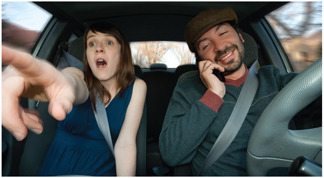
 Long ago, when one was on the telephone and something else happened, one might say, "Hold the phone a minute; there's somebody at the door." Today, there is no need for that. The phone is portable, so the speaker can take it with him, multitasking while talking. Not only is the phone now portable, but it can be used to send text messages, check the weather, forward an email, provide directions, or play a movie, all while blaring music loud enough to damage the walls.
But therein lies a problem: Too many of us are talking, texting, or using a GPS while we are cruising down the highway. Cell phone usage is on its way to becoming a cause of more auto accidents than drug usage or drunk driving. An astounding 28 percent of fatal auto accidents are now attributed to texting or cell phone use.
According to the Centers for Disease Control (CDC), there are around 6.8 million auto accidents annually. Now, that may include minor accidents involving door dings obtained in a parking lot, but that number represents over 2 percent of the total U.S. population, ranging in age from infants to seniors.
In 2008, 13,846 of 37,261 auto fatalities, or 37 percent, involved a driver with a blood alcohol level of more than .08 percent. The most alcohol-related fatalities occurred in South Carolina (50 percent at 463 of 920 deaths) and North Dakota, also with 50 percent (52 of 104). The fewest occurred in Utah at 20 percent of 275 fatalities and Vermont with 73, or 21 percent, alcohol-related deaths. The national figures include drunk pedestrians who were killed when they wandered in front of a moving vehicle.
Phones on the Road
According to a report by the Pennsylvania law firm of Edgar Snyder & Associates, in 2009, 5,474 people were killed in accidents involving a distracted driver. Additionally, 448,000 were injured, and 16 percent of drivers under the age of 20 were involved in a fatal accident because of distracted driving: either talking, texting, or being involved in some other activity. A teenager's reaction time while talking on a cell phone, according to the firm's research, is about as slow as that of a 70-year-old, but being 70 may not make you as slow as the report suggests. Yet, if 20 percent of experienced adult drivers admit to sending text messages while driving (only 13 percent of teenage drivers make the same admission), then it is clear that this cause of accidents is going to increase. One must wonder how many drivers do not admit to engaging in these activities.
It bears mention that as a result of the Sept. 12, 2008 train wreck in Chatsworth, Calif., involving a commuter train and a Union Pacific freight train that killed 25 people, the Federal Railroad Administration (FRA) has mandated a ban on cell phone usage for all employees. Also, consider that many truckers admit to using cell phones or other electronic devices while driving. Currently, the American Trucking Association is attempting to persuade Congress to approve an increase of the Interstate Highway System weight limits—from 80,000 pounds to 97,000 pounds—a change that would likely increase the velocity of a truck in an accident. It is primarily the truckers working for manufacturers that ship their own goods who want this rule, not the common carriers, as it would make current intermodal equipment obsolete. Fortunately, Congress has not been urgent in recent decision making. A Warning to Consumers
When cell phones were first released, a company's risk management department had the CEO send a letter to all employees who drove company cars (or their personal car on business) noting that a stiff penalty, such as a higher collision deductible, would be imposed on anyone driving a company car who was involved in an accident resulting from cell phone usage. We may never really know how many accidents have actually involved texting or talking on the phone, though, because most drivers, young or old, are not going to admit their wrongdoings to the police or insurers. How many company car accidents involving cell phone usage that occurred after that CEO's memo was never documentable for the same reason.
The legal issue was notice. It could be prima facie negligence for an employer to entrust an employee with a car, and perhaps also a cell phone, and not advise that employee to park the car whenever using the phone.
Negligence is also an issue for the cell phone industry. Carriers put their cellular towers out there in the countryside not just as a convenience for local residents but also for the drivers who want to talk or text while passing through town. One phone company's TV advertisement actually showed a customer yacking while driving. I can stand at a corner of an intersection near my home during rush hour and observe that almost half of those on their way home are on a cell phone. They cannot all be making dinner reservations. Who are they talking to?
If drivers have serious accidents and cell phones or texting was involved, then why are the auto insurers not subrogating against those big-buck deep pockets of the phone companies? It seems to be a clear case of product liability; not only might a cell phone give one brain cancer, it might also cause a fatality on the road. If the phone or electronic device manufacturers do not put warnings on their phones not to talk or text while driving, or design some sort of technological device that would block phone usage from an auto in motion, then it is the same as the cigarette companies failing to warn smokers of the hazards of nicotine. Failure to warn consumers may create a strict liability case for the insurer's subrogation. How many adjusters inquire about such factors when investigating a claim?
Surprisingly, there have been relatively few major court decisions in which a person's cell phone records influenced the outcome of a case involving an automobile accident. In one New Jersey case, Wadeer v. New Jersey Manufacturers Insurance Company, et al, the issue was whether the plaintiff was using a cell phone while involved in an accident caused by a "phantom vehicle." The evidence from the cell phone company records indicated a call was received about 10 minutes before the time of the accident, but not at the time of the accident. The case at least demonstrates that someone was smart enough to try to figure out if a cell phone was in use. Yet, the question of whether a cell phone was in use should be standard in any auto accident claim investigation.

Luddites vs. Techies
I admit to being a Luddite, named for one Ned Lud, a nitwit who in 1779 smashed two loom frames of his Leicestershire employer, angry because mechanization was killing the cottage weaving industry. Three decades later, unemployed workers again attacked textile machinery, which saved the need for labor but left the workers without employment. Does this not sound familiar? Machines or robots have been replacing workers for over two and a half centuries. Today's technology makes that of the 1980s seem ancient, but that is about the time that the cell phone began to replace the ubiquitous citizens band (CB) radio that seemed to almost become standard equipment in vehicles at that time.
While the technologically sophisticated workers of today are busy texting and tweeting or yacking away on their cell phones, Luddites are still feeding the carrier pigeons that transport our memos. (Those birds were a carryover from before there were things like fax machines or overnight deliveries.) One must ask whether all these techie gismos actually improve production rather than hampering it. Some of these things, like overnight delivery, are the result of procrastination. "Because the report was late, it had to be sent overnight." Sure, sending a document by fax today is probably less expensive than the U.S. Postal Service. However, when machines first became available, they often a wasted time for both the sender and recipient.
E&O Hazards
The telephone, the computer, and the automobile itself are tools that make transportation and communication easier than ever before. Like all tools, however, from the hammer to the saw, they can be dangerous if not used with caution, common sense, and practicality. In terms of the perils of errors and omissions—professional liability—the mouth and the telephone are the greatest hazards around. They tend to bring out the response, "But you said …" They create misunderstandings.
In the claims business, oral communication is far more hazardous than written communication. The computer, likewise, can be a hazard, for one never knows who can access the information that hides within. If hackers can obtain information from the federal government's computers, then no data is secure. Do we really think that hitting the "delete" key actually deletes a nasty email that should not have been sent? If so, then that bridge between Brooklyn and Manhattan may still be for sale.
When these technological wonders—the telephone and computerized communications—are combined with the use of an automobile, the resulting mixture may create a disaster. We cannot text, send an email, or hold a phone to our ear while paying full attention to what we are doing. If there are between 35,000 and 45,000 auto fatalities a year, and 28 percent of them are because of distractions such as cell phone use, then passing laws against their usage will be insufficient.
What might work? Perhaps an exclusion in the auto policy for an accident caused by texting? It might scare a few insureds into hanging up their devices, but it probably would not pass the courts, as auto insurance is generally a legislatively mandated coverage. Perhaps a higher collision deductible for an accident because of texting or chatting on the phone might help. It would nevertheless be difficult to enforce, as the insurer would require solid evidence or the insured's confession to make it stick.
The bottom line is that the insurance industry needs to start advertising that texting and talking on the phone while driving is wrong, costly, and makes auto premiums higher. It is like drunk driving, and insurers certainly complain about that. Until insurers and state legislators get their heads together and start a safe driving initiative, the ratio of fatal texting accidents at 28 percent to drunk driving accidents at 37 percent will continue to even out.
© Arc, All Rights Reserved. Request academic re-use from www.copyright.com. All other uses, submit a request to TMSalesOperations@arc-network.com. For more information visit Asset & Logo Licensing.