In May 2010, when parts of Tennessee saw 13 inches of rain in a mere two days, the overflowing of the Cumberland River affected structures 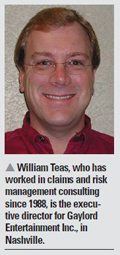 throughout Nashville. One of those buildings was the Gaylord Opryland Resort & Convention Center, where this year's PLRB/LIRB Claims Conference was held.
Claims Assistant Editor Catherine Couretas spoke with William Teas, executive director of corporate risk management for Gaylord Entertainment Inc., the company that owns the resort as well as the Grand Ole Opry, Gaylord Springs Golf Links, and the Wild Horse Saloon, a music venue in downtown Nashville. Teas also spoke at PLRB about the damage the hotel suffered and outlined its successful recovery efforts.
To put it all in perspective, parts of the 2,800-room resort were flooded by nearly 10 feet of water. The the hotel sustained damage to about 117 rooms, although most of the damage was in the atriums. The resort went offline May 2 and did not return until November that same year.
How were employees trained for a possible disaster?
They understood what the plan was and we were able to execute a plan of evacuating 1,500 guests. We were able to make safety paramount. In doing that, everything kind of falls into place. Emergency preparedness isn't just for flooding, either. It's for fire, tornados, or any event that would disrupt a large number of employees and guests. I think that there are a lot of independent success stories for everyone that was working at the Gaylord at that time.
What efforts had Gaylord Entertainment, Inc., made prior to the flooding in terms of potential disasters?
One of the challenges when you go through something like this is putting forward a business interruption claim. You bring forward forensic accountants and people to prepare for construction. We had done a pre-selection with resources. Before a disaster, you have ample time to make sure that you're going to retain the one that understands your business the best. Once you have a loss and if you haven't already determined who you might want to work with, you may not make the best choice. In what ways did that benefit the resort in the long run?
It is critical to have a (post-loss) plan. In the event you need temporary offices, are you scrambling? These are the challenges we had to communicate to our stakeholders. I was standing in the hotel at 11 p.m. the night it flooded. I made one call to our broker and said, "Look, here's who I need to get in touch with tonight." They were in the building the next day. We understood our partnership with our insurance carrier much better. They were our advocates and brought expertise that we didn't have on our shelves, so to speak.
Were any changes made to the way the resort handles an emergency after the flooding?
I don't think it changed the way we did it. What the flood did do is enable us to fine-tune some areas. We could communicate internally a little quicker, but once you move from that emergency preparation and execute your evacuation plan and then you move into your post-loss execution, it all happens very quickly.
How did the renovations go?
We did gain an opportunity to determine the most cost-effective way to reconstruct. While the structure was down, we renovated some rooms that were due to be remodeled. Even though they weren't impacted by the flood, we knew we were going to renovate in 2011, so we went ahead and did that in 2010.
© Arc, All Rights Reserved. Request academic re-use from www.copyright.com. All other uses, submit a request to TMSalesOperations@arc-network.com. For more information visit Asset & Logo Licensing.