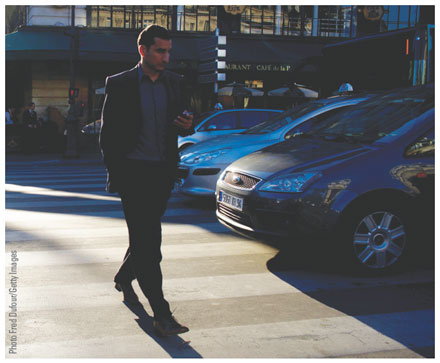
 Chances are good that the average Calif. policyholder opting to purchase uninsured motorist coverage is unaware of the broad scope of coverage that must be afforded under the uninsured motorist statute. For one thing, the insurance is mandatory in all motor vehicle liability policies issued in the state, unless specifically waived in writing.
The uninsured motorist statute mandates that all motor vehicle liability policies issued in California cover "the insured, the insured's heirs, or legal representative for all sums within the limits that he, she, or they, as the case may be, shall be legally entitled to recover as damages for bodily injury or wrongful death from the owner or operator of an uninsured motor vehicle," unless such coverage is rejected in writing by the insured. This also includes underinsured motorist coverage. Therefore, if the applicant does not sign a deletion agreement — or the waiver is somehow defective — then a court could find that uninsured motorist coverage attached, even though it is not reflected in the policy's declarations and no premium was paid.
Coverage Specifics
Under the statute, "uninsured motor vehicle" refers to "a motor vehicle with respect to the ownership, maintenance, or use of which there is no bodily injury liability insurance or bond applicable at the time of the accident, or there is the applicable insurance or bond but the company writing the insurance or bond denies coverage there under…." This also includes an underinsured motor vehicle, as defined. Moreover, the statutory definition of "uninsured motor vehicle" includes a vehicle "whose owner or operator is unknown." In other words, a hit-and-run vehicle qualifies as an uninsured motor vehicle. Thus, an insured struck by a hit-and-run driver has a claim for uninsured motorist benefits.
Because uninsured motorist coverage is purchased in combination with automobile liability insurance, policyholders are likely may assume that the coverage is necessarily tied to the use of their own insured vehicles. The typical policyholder no doubt thinks that the coverage applies only in the event that he or she has an accident with an uninsured motorist while driving the insured vehicle. The coverage is far broader, however, because uninsured motorist coverage protects the named insured and certain others against injuries caused by uninsured motorists without regard to the use or operation of his or her own insured vehicle.
Subsection (b) of the uninsured motorist statute, California Insurance Code section 11580.2, defines who is insured, stating:
- "[I]f the named insured is an individual 'insured' means the named insured and the spouse of the named insured and, while residents of the same household, relatives of either while occupants of a motor vehicle or otherwise, heirs and any other person while in or upon or entering into or alighting from an insured motor vehicle…."
- Under this provision, there are two classes of coverage. For the named insured, his or her spouse, and resident relatives, the statute mandates uninsured motorist coverage for those persons "while occupants of a motor vehicle or otherwise." All others are insured against injury caused by an uninsured motorist only "while in or upon or entering into or alighting from an insured motor vehicle." These have sometimes been termed "Class 1″ and Class 2″ coverages.
By Virtue of "Or Otherwise"
The statute's key phrase is "or otherwise." The named insured, spouse, and resident relatives are not required to be occupants of the insured motor vehicle for uninsured motorist coverage to attach. By virtue of the words "or otherwise," uninsured motorist coverage is afforded to those persons for any and all injuries caused by uninsured motorists, independent from the use of the insured vehicle. For all other persons, an uninsured motorist policy will cover those injured by an uninsured motorist, but only while in, upon or alighting from the insured's own covered vehicle.
Because the "Class 1″ uninsured motorist coverage follows the insured and not his car, it has been termed "portable" coverage. A Michigan court analyzing that state's similar law famously stated that Class 1 persons "are insured no matter where they are injured. They are insured when injured in an owned vehicle named in the policy … in an un-owned vehicle, on a motorcycle, on a bicycle, whether afoot or on horseback or even on a pogo stick." (Bradley v. Mid-Century (1980) 409 Mich. 1). Not to be outdone, a California court recently added stilts to that list. (Daun v. USAA (2005) 125 Cal.App.4th 599).
Thus, in Voris v. Pacific Indemnity Co. (1963) 213 Cal.App.2d 29, an uninsured motorcyclist ran over Ms. Voris while she was crossing the street in a crosswalk. Her insurer argued that uninsured motorist coverage should not apply because she was not occupying her own vehicle at the time that she was injured. According to the insurer, to read the uninsured motorist statute otherwise would make the insured's auto policy a general "accident" policy, subject only to a requirement of causation by negligence of an uninsured motorist. But the court disagreed, concluding that the statute "means what it says."
Because the statute provides that uninsured motorist coverage applies to bodily injuries suffered by the named insured while occupying a motor vehicle "or otherwise," the coverage applied to Ms. Voris' injuries while she was a pedestrian in a crosswalk.
The uninsured motorist statute is specific in providing who qualifies for Class 1 coverage — the named insured, his or her spouse, and resident relatives. "Spouse" and "relative" are given the usual meanings of lawful wedlock or a legal relationship. Thus, mere cohabitation limits the named insured's roommate or domestic partner to Class 2 coverage. Being expressly listed on the policy as a "resident driver" (as distinguished from a "named insured") is also insufficient to meet the requirements for Class 1 coverage, if that person is not married or related to the named insured.
While uninsured motorist coverage for Class 2 individuals remains dependent on the use and operation of the insured's covered vehicle, Class 2 coverage is also broader than many policyholders might expect. The uninsured motorist statute covers "any other person while in or upon or entering into or alighting from an insured motor vehicle." This includes more than simply being a passenger in the insured vehicle. The phrase "in or upon, entering into or alighting from" is interpreted expansively, and has included changing a tire, or being several feet from the car while putting on snow chains. By contrast, walking to the insured vehicle after leaving a theater was not deemed sufficient to trigger Class 2 coverage. In making that call, the courts will look to the person's position in relation to the insured vehicle, as well as his or her purpose and intent in determining whether he or she is "in or upon, entering into or alighting from" the insured vehicle.
When Riding a Bike or Taking a Walk
Finally, Class 1 coverage can only apply where the named insured is a natural person. Courts in other states have split on the applicability of Class 1 coverage where the named insured is a corporation. The fact that a corporation only acts through natural persons, and cannot have a spouse or relatives, has been a basis to extend Class 1 coverage to corporate officers, directors and managers. The California uninsured motorist statute, however, is specific in stating that:
- "[A]s used in subdivision (a), if the named insured is an entity other than an individual, 'insured' means any person while in or upon or entering into or alighting from an insured motor vehicle…."
- Further, "[a]s used in this subdivision, 'individual' shall not include persons doing business as corporations, partnerships, or associations." Therefore, organizational insureds are only afforded Class 2 coverage. The uninsured motorist coverage provided by a policy issued to a corporation or organizational entity in California attaches only for those persons in, upon or alighting from the insured vehicle, and no Class 1 pedestrian coverage is available.
Class 1 coverage is an integral part of the uninsured motorist statute, but most policyholders are probably unaware that they are covered for injuries caused by an uninsured motorist even if entirely unrelated to the use of their own insured auto. However, the Class 1 insured can look to his or her own insurer if injured by an uninsured, or underinsured, motorist, while walking in a crosswalk, riding a bicycle, or even on a pogo stick.

© Arc, All Rights Reserved. Request academic re-use from www.copyright.com. All other uses, submit a request to TMSalesOperations@arc-network.com. For more information visit Asset & Logo Licensing.