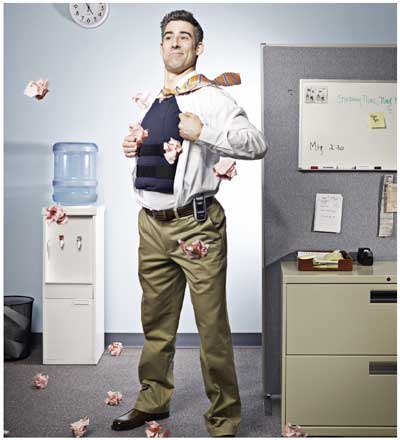
 Although Benjamin Franklin thought that the Constitution was going to survive the test of time, he was only supremely confident about the inevitability of death and taxes. Calvin, Bill Watterson's six-year-old Calvin & Hobbes comic-strip character, decided that even though he was uncertain about many things, he knew that he would forever have a disdain for writhing maggots, cold seaweed wrapping around his legs, and "anything popular in the '70s." Perhaps you can relate, as those of us in risk management and claim professions understand that the list of life's certainties is a short one.
It was probably the extent that the current "Great Recession" hit our particular sector of the industry that caught so many of us off guard. The U.S. unemployment rate of approximately 10 percent was definitely more than almost anyone expected, but the whopping 14-percent loss in P&C claim positions was a definitive shock. We have personally learned afresh that even the biggest insurers are not "too big to fail," and that a really good employee can still lose a job. Subjective flaws in risk analysis have led people to worry about strange things. Thus, insurance policies have been purchased for alien abduction/impregnation, Immaculate Conception, and death from poltergeists. (I'm not kidding.) In regard to recent concerns about employment security, however, our fears have largely been on solid ground.
Reducing Your Chances
Fortunately, an objective analysis provides some good reasons to hope. The recession has officially ended, according to most economists. Most P&C insurers are well capitalized and should be ready to grow when the hard market returns (many project in 2011). The U.S. Bureau of Labor and Statistics is expecting a seven-percent increase in the category of "claim adjusters, appraisers, examiners, and investigators" between 2008 and 2018. Although a seven-percent increase on the heels of a 14-percent decrease may not sound too promising by itself, the aging adjuster population so frequently noted in recent industry news suggests that qualified candidates will have a brighter future.
We can't rely on statistics alone, though, lest we be condemned to be one of them. Risk is our specialty, so we need to make our own risk of unemployment a part of our focus. Being as prepared as possible is the best way to improve one's chances of being on the safe side of a reduction in force or getting a needed job offer if a layoff becomes an unexpected reality.
There are some basics of employment security that hardly need mention. Seek to be a top performer. "Time served" counts less than skills and experience gained. It is often the case that the learning curve flattens out considerably after the first couple of years on a job. Avoid unnecessary negativity, because having a good attitude and being willing to handle difficult tasks can make you the favorite "go-to" person. Seek out challenges, especially when a new opportunity can broaden your skills or make you indispensable. Always watch your company's performance in comparison with its competition. It may help you recognize when an active job search is becoming an urgent priority.

Besides such basic considerations, job security should be grounded in a comprehensive and life-long path of career development. Henry Ford once remarked that "Anyone who stops learning is old, whether at 20 or 80." Simply put, the most valuable work ethic contains an element of development. It's not a panacea, but it's the best "flu shot" out there for employment loss.
Designations and Experience
We are all familiar with how the concept of diversification helps lessen the risk of loss. In the employment world, there is a similar model. Seek both designations and experience. Broaden your general skills and cultivate special competencies. Increase your knowledge and grow your contacts.
Both designations and experience impress employers. Although a degree does not guarantee competency, I personally always like my mechanics to have both a certification and a proven track record. A general skill-set with a special focus helps make your talents diverse enough to handle different job duties, yet specialized enough to provide an added value that your peers may lack. Although getting a job based on "who you know" can carry a connotation of cronyism, employers have good cause to hire people whose character and work product are a known commodity. Job hunting books and websites have their reasons behind the near-universal mantra regarding networking. If done strategically, it can help raise a r?sum? to the top of the stack.
Even with the recent strain of H1N1, many think of influenza as nothing more than a bad cold. Those who know about the Spanish Flu of 1918 have a different view. Most historians estimate that 50 million people died from the illness, racking up a higher body count than the number of fatalities in the better-known contemporary killer called World War I. Developments in the science of immunology have made the world a far safer place; infectious disease is not near the threat it was 100 years ago. Likewise, the economy seems to be stable and many expect that claim positions will begin to open up again.
Hopefully, we will never see another "Great Recession," and there is good reason to be optimistic. Nevertheless, keep developing your career—and don't forget your flu shot.
© Arc, All Rights Reserved. Request academic re-use from www.copyright.com. All other uses, submit a request to TMSalesOperations@arc-network.com. For more information visit Asset & Logo Licensing.