February 2010 has a lot to offer both sports fans and special-event insurers, featuring the year's biggest American sporting spectacle–the NFL's Super Bowl XLIV–followed by a series of athletic contests watched by hundreds of millions during the Winter Olympics, which started this past weekend in Vancouver, Canada.
For insurers, mega-events such as a Super Bowl, Olympics, World Cup–or even large but local events like outdoor music festivals–feature a wide range of risks and offer a little something for everyone who wants a piece of the coverage pie.
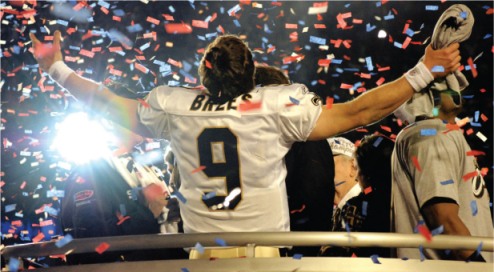 As for the types of insurance involved in covering events of such a large scale, Lori Shaw, sports and leisure practice leader for Aon Entertainment Practice Group, said the main one will be general liability. Primary carriers will write this coverage, she said, with umbrella carriers filling out the excess capacity for additional coverage such as liquor liability.
Offsite events, if part of the organizer's scheduled main event, may also be covered, Ms. Shaw said, adding that other coverage such as media liability may come into play, which would offer insurance should an unplanned occurrence end up on television.
Because mega-events are so highly publicized, Ms. Shaw said, with tens of millions of people tuning in at any given time, a lot can happen on camera beyond the control of those responsible for the event.
Event cancellation coverage–costs, expenses and loss of profit should the event be cancelled–is also a big coverage for these events, according to Robert Barron, a broker in the Accident, Health, Sports and Contingencies team at Lockton International's London office.
Those connected with the event will also require coverage, Mr. Barron noted–citing caterers as one example.
Some events also feature spin-offs that offer opportunities for certain insurers, Mr. Barron said. For example, he noted that for the World Cup, players' contracts may have bonuses associated with the event–paying the player extra money should that player's team win.
Mr. Barron said there is a fair-sized market in London for covering these bonuses, particularly for sports such as golf, tennis, motor sports and soccer. Sports such as baseball and football, he said, generally stay in the U.S. market.
Other types of spin-offs would be, in the Olympics for example, coverage for a superstar who may carry the torch as part of the Opening Ceremonies, Mr. Barron said. For the Super Bowl, coverage will almost certainly be secured for halftime performances, he added.
Phillip Eaglestone, a partner in the Health & Specialty division of Glencairn Ltd.–which is a unit in Willis' third-party wholesale brokerage business, Faber & Dumas–prepared a list of most coverages venue organizers should consider (see accompanying sidebar).
“Crucially, there is a common theme across all events in that the main insurance requirement is for contingent financial risk protection, which provides support to the organizer in its efforts to achieve successful fulfillment of the event, and which enables the organizer to meet its obligations and responsibilities to broadcasters, sponsors and the public alike,” he said.
Contingency insurance, Mr. Eaglestone added, provides financial indemnity for both physical and non-physical losses that can arise from the risks he listed.
Of course, the threat of terrorism is also a concern at any mega-event, and insurers offer coverage for that as well.
“The events of Sept. 11, 2001 changed the world forever” for mega-event insurers, according to Mr. Eaglestone. “Global awareness of the risk of terrorism increased many fold, and in many respects large sporting events represent an ideal target for terrorists. Not only do these events attract large crowds concentrated within confined spaces, the events are attended by heads of state, dignitaries and high profile celebrities.”
Meanwhile, he added, “coupled with the fact that these events are watched by hundreds of millions of viewers via global television broadcasts, [attacking mega-events] represents an ideal opportunity for maximum impact. The fastest-growing proportion of any organizer's costs relates directly to providing adequate security for the event.”
He said although the industry suffered as a result of Sept. 11, leading to increased rates and decreased capacity in the immediate aftermath, the market has rebounded and has seen the emergence of new capacity and pressure on rates.
For mega-events, Ms. Shaw said carriers will usually include terrorism coverage. Very large events, she noted, get security reinforcements from the government.
Speaking to who is writing the coverages, Mr. Barron said just about the whole London market will be involved for a mega-event. He said there is a niche for special events in London, but for events of the scale of a Super Bowl, Olympics or World Cup, the wider market gets involved. Standard carriers will even take on some coverages, he said, if the risk is that big.
Ms. Shaw agreed. “You'll see a variety of different insurers complement each other on [the risk],” she said, adding that the coverages and limits involved usually require bringing in vast resources.
The organizer seeking coverage, she noted, will go to one broker, who will in turn secure the necessary coverages from carriers. But even there, she said, multiple purchasers may be involved within the same event, meaning multiple brokers may also be involved.
Mr. Eaglestone said there is a healthy and competitive market for large sporting risks, but mega-events require a special approach, with less room for competition on price. The events use a mix of insurers and reinsurers, as well as financial market products such as catastrophe bonds, to generate the levels of coverage required, he noted.
“It is for these events where capacity is derived on a global basis, and therefore by necessity rating can be less flexible in order to entice those insurers who do not usually underwrite event business to do so,” Mr. Eaglestone explained.
The multitude of coverages involved means a lot of premium dollars as well, market experts told National Underwriter.
“It is not uncommon these days for a major sporting event to generate many hundreds of millions of dollars in revenues, with events such as the Olympics having been described as the equivalent of starting a Fortune 500 company and dismantling it shortly thereafter,” according to Mr. Eaglestone.
He said high premiums are necessary to cover events with big operational fixed costs, producing revenues that can exceed $1.5 billion.
An event like the World Cup can generate around ?500 million (about $793 million, under current exchange rates), according to Mr. Barron. He said there is always some fighting over price and which carrier leads, but he explained that “with something that big, everyone knows they'll see something.”
Smaller risks generating ?10-to-?20 million pounds ($16-to-$32 million), Mr. Barron noted, will see more fierce competition.
However, Ms. Shaw said carriers could get competitive over marquis events, as carriers want to be associated with them.
As a broker, she said it is important to determine whether the carriers understand the type of event they are trying to insure, and whether the carrier is set up to handling potential claims.
Although individual risks and coverages have their own intricacies, Mr. Eaglestone cited several general areas underwriters will consider when evaluating a mega-event (see accompanying sidebar).
Still, according to Mr. Barron, the principles involved in underwriting a mega-event are not all that different from smaller-scale events.
“At the end of the day, an event's an event,” he said. Underwriters will determine if the venue can support the size of the events, if the venue can handle weather events such as a massive amount of rain in a short time, etc.
He added that each risk is different. A Super Bowl held in a large stadium will be well-suited to handle 100,000 people, he noted, while an outdoor music festival, such as Glastonbury, is different, as underwriters must consider the logistics of having 150,000 people in a field.
Ms. Shaw said underwriters will look at the historical prevalence of occurrences at similar large events, and also consider the venue's age and possible security issues.
Ultimately, for the insurance industry, mega-events present opportunities for sizable premiums spread among many companies. Industry members also achieve a certain level of prestige being associated with such events.
But the risks are present as well. As Ms. Shaw noted, with events of this size, “you never know what's going to happen that might give rise to a claim.”
© Arc, All Rights Reserved. Request academic re-use from www.copyright.com. All other uses, submit a request to TMSalesOperations@arc-network.com. For more information visit Asset & Logo Licensing.