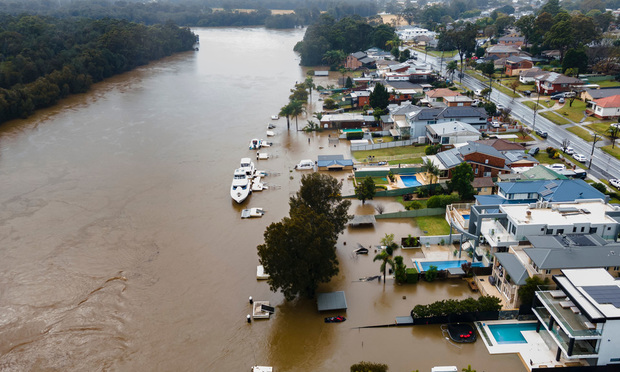
 Credit: Steve/Adobe Stock
Editor's Note: This is the second in a four-part series examining how risk, regulation and technology are reshaping flood insurance, and why the private market is no longer optional. The first part can be found here.
The National Flood Insurance Program's (NFIP) headline problems are well known: $22.5 billion in debt, 35 short-term reauthorizations since 2017, and a recurring cycle of borrowing and political uncertainty. Too often, these are dismissed as political problems, things that will resolve themselves the next time Congress acts.
That framing misses the point. The NFIP's challenges are structural, baked into the program's design. And their consequences ripple outward into real estate transactions, mortgage lending, agency operations and the broader P&C market.
The NFIP was built for a different era
The NFIP was established in 1968 to fill a genuine void. It brought flood insurance to more than 22,000 communities, established floodplain management standards and built foundational awareness that flood is a distinct and insurable peril. That history matters.
But the program's financial model broke in 2005. Hurricanes Katrina, Rita and Wilma pushed NFIP borrowing past $18 billion. The 2017 season added $10.2 billion in claims. Congress cancelled $16 billion of debt (the only time that has happened), yet the program has since accumulated $8.1 billion in new obligations, including $2 billion following the 2024 storm season. The current total outstanding balance is $22.5 billion, accruing nearly $2 million in interest daily.
The math is straightforward: the NFIP collects approximately $4.3 billion in annual premium revenue. Out of that, it must pay claims, fund operations, compensate Write Your Own carriers and service its debt. In any significant hurricane year, the program cannot meet its obligations without borrowing more from the Treasury. On top of that, the insured base is declining. FEMA's Risk Rating 2.0 is transitioning NFIP pricing toward actuarial accuracy, but GAO estimates it would take until 2037 for 95 percent of policies to reach full-risk premiums. As the premium base shifts, it is driving mass uncertainty around pricing and shrinking the insured base along with it.
Short-term reauthorizations create real market instability
Each NFIP expiration creates a lapse window during which FEMA cannot issue new policies, and borrowing authority drops from $30.4 billion to $1 billion. For professionals inside the industry, the consequences are immediate: real estate transactions in flood zones stall because lenders cannot close mortgages without evidence of flood insurance. Title companies delay closings. Deals fall apart. The National Association of Realtors has estimated that the NFIP supports roughly half a million home sales annually, contributing $70 billion to the economy. Every lapse puts a portion of that at risk.
This isn't hypothetical. During the 43-day government shutdown in late 2025, the NFIP stopped selling and renewing policies entirely. An estimated 1,300 property closings per day were delayed or disrupted. Lenders suspended requirements. Deals fell apart. Private flood carriers kept writing, but the millions of homeowners and agents who depended on the NFIP had no option until Congress acted. That's not a business model. It's a vulnerability.
Coverage limits, waiting periods and pricing constraints leave gaps
Even without a lapse, the NFIP's product structure creates daily friction. Coverage caps of $250,000 for buildings and $100,000 for contents were set decades ago and haven't kept pace with construction costs. The Federal Reserve Bank of Philadelphia found that 80 to 90% of at-risk households are underinsured or uninsured, with average out-of-pocket shortfalls of $103,000 to $136,000 during a major flood event. The policy exists, but the protection often isn't sufficient.
Furthermore, standard NFIP policies carry a 30-day waiting period, undercutting agents trying to convert a moment of awareness into a bound policy. And Risk Rating 2.0, while a necessary transition toward actuarially accurate pricing, has accelerated attrition: the NFIP has dropped from 4.7 million contracts at its 2009 peak to fewer than 3.6 million today, losing policyholders even as flood exposure grows.
The ripple effects land on agents and lenders
The NFIP's challenges don't stay contained within the program. They flow downstream to the professionals who sit closest to the customer. Most agents built their flood practices around a single government product because, for 50 years, that was the only option. The result is a distribution channel that knows how to place an NFIP policy but is often less equipped to evaluate whether it's the best one.
Lenders face parallel friction. The mandatory purchase requirement applies only in mapped high-risk zones with federally backed mortgages, and compliance teams focus on checking a box rather than ensuring adequate coverage. Meanwhile, the NFIP's subsidized legacy pricing distorts competitive dynamics: private carriers frequently offer equal or better coverage at lower premiums, across both full Risk Rating 2.0 policies and many existing legacy-rated policies. Yet the perception that the NFIP is the "standard" product keeps agents defaulting to a program that may not be the best option.
This is an industry problem
The NFIP continues to provide coverage to millions of Americans and will remain part of the flood insurance landscape. But its financial trajectory, product constraints and dependence on short-term political action all point to the same conclusion: the industry needs more than one option. Not to replace the NFIP overnight, but to build the capacity to share a burden that has outgrown any single institution.
In Part 3, we'll talk about why private flood insurance isn't "new" anymore — it's becoming infrastructure.
Kyle Bingham is a Quantitative Risk Analyst at Neptune Flood, the largest private flood insurance provider in the United States. Neptune is publicly traded on the New York Stock Exchange (NYSE: NP).
Opinions shared here are the author's own.
Photo credit: Steve/Adobe Stock
© Arc, All Rights Reserved. Request academic re-use from www.copyright.com. All other uses, submit a request to TMSalesOperations@arc-network.com. For more information visit Asset & Logo Licensing.