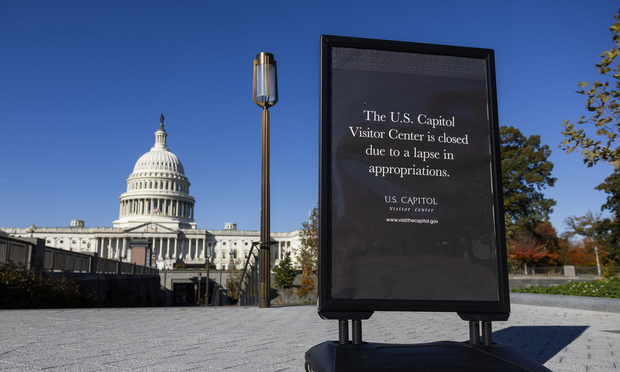
 A sign outside the U.S. Capitol in Washington, D.C., advises the Visitors Center is closed due to the ongoing government shutdown, on Wednesday, November 5, 2025. The shutdown is now the longest running in U.S. history. Photo: Diego M. Radzinschi/ALM
The U.S. government shutdown shut down on Oct. 1, making it the longest in the nation’s history while putting insurance companies in a unique and dynamic risk environment.
The suspension of the National Flood Insurance Program (NFIP) is one of the most visible impacts to the sector, as insurers continue monitoring developments and preparing for evolving risks as the situation unfolds.
Recently, PropertyCasualty360.com spoke to John Romano, principal at the Baker Tilly Financial Services Risk Advisory Practice, about potential impacts on the insurance industry related to the government shutdown.
PropertyCasualty360.com: How is the prolonged government shutdown affecting the P&C insurance market? Are we seeing any measurable impacts yet on underwriting, claims processing, or capital markets?
Romano: While the shutdown is now the longest in U.S. history, it remains too early to quantify the full scope of its impact. Comprehensive data is still limited, but we’re already observing both direct and indirect effects and possible longer-term risks of the prolonged government shutdown on the P&C market.
One of the most immediate and visible impacts is the suspension of the National Flood Insurance Program (NFIP). Many lenders and insurers rely on NFIP coverage for properties in flood-prone areas. With NFIP unavailable, new policies are on hold, which could significantly disrupt real estate transactions, particularly in flood zones.
This disruption presents an opportunity for private flood insurers to step in and fill the void. However, coverage availability and pricing vary widely depending on regional risk profiles, which may not offer a consistent or affordable alternative for all consumers. Beyond flood insurance, the broader economic consequences of unpaid federal employees are beginning to surface.
Changes in spending habits among this group could lead to increased defaults on financial obligations, including mortgages and insurance premiums. This poses a risk to insurers, especially those with exposure to personal lines. Should the shutdown continue for a prolonged period, there is potential for a rise in claims, both legitimate and fraudulent, as affected individuals seek financial relief for expenses they might otherwise have covered out-of-pocket. Insurers should continue monitoring developments closely and prepare for evolving risks as the situation unfolds.
PropertyCasualty360.com: Are there other impacts you would expect insurers to see if the shutdown continues for a prolonged period? Are there any industries you expect to be most impacted?
Romano: The full extent of the insurance impacts from the government shutdown will ultimately depend on its length and timing. While it’s still too early to quantify all consequences, it’s clear that the longer the shutdown persists, the broader and deeper its effects will be.
Real estate and construction are two industries likely to be among the hardest hit. Delays in permitting and approvals are already slowing real estate closings and new construction projects. For insurers, this means fewer opportunities to write new business, as properties aren’t being bought or built. These delays also ripple through the entire construction supply chain, potentially affecting multiple lines of insurance including commercial property, workers’ compensation, and even business interruption.
Additionally, insurers may face reputational risks if they’re perceived as unresponsive to policyholders experiencing hardship due to the shutdown. This could be particularly damaging in a prolonged scenario where public scrutiny intensifies. As the situation evolves, insurers should remain vigilant and consider how extended disruptions in key sectors could affect their portfolios and customer relationships.
PropertyCasualty360.com: What should insurers consider as they prepare for a potentially longer shutdown?
Romano: The impact of a government shutdown on insurers will largely depend on its duration and timing. While a government shutdown was likely very low on the list of business risks for most organizations, a prolonged shutdown exposes vulnerabilities that may not have been previously accounted for making it a priority enterprise risk management (ERM) issue the longer it lasts.
Insurers should begin scenario planning to assess their exposures across various lines of business and industries. This includes evaluating dependencies on federal programs for reimbursements and understanding how those exposures evolve as the shutdown continues. Particular attention should be paid to lines most sensitive to economic disruption, such as personal and commercial property, flood insurance, and mortgage-related products.
Organizations with less diversified revenue streams may be more susceptible to prolonged disruptions, making diversification and contingency planning critical. Capital planning should also be prioritized, especially in light of potential volatility in investment markets triggered by broader economic uncertainty. Ultimately, insurers should treat the shutdown as a dynamic risk event. Proper enterprise risk management of a dynamic risk event requires proactive modeling, cross-functional and collaborative coordination, and clear communication strategies to mitigate both financial and reputational impacts.
© Arc, All Rights Reserved. Request academic re-use from www.copyright.com. All other uses, submit a request to TMSalesOperations@arc-network.com. For more information visit Asset & Logo Licensing.