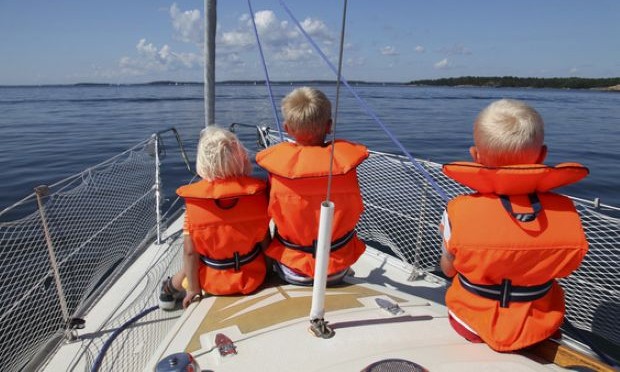
 Recently, the Corp Foundation announced that Progressive Insurance was providing significant support of the program’s life jacket loaner stations that are available USACE waterways across the country. (Credit: Shutterstock)
Around 84% of the 150-plus people in who drown at U.S. Army Corp of Engineers (USACE) parks each year were not wearing a life jacket. To help counter this statistic, the USACE has put together its “Life jackets worn… Nobody mourns” campaign, for which the Corp Foundation has secured $1 million in funding.
Recently, the Corp Foundation announced that Progressive Insurance was providing significant support of the program’s life jacket loaner stations that are available USACE waterways across the country. To date, the program has reportedly made more than 5,450 adult life jackets available to boaters who may otherwise have gone without.
“As the leader in boat insurance covering over 1.8 million watercraft, we want to make sure people are not only insured on the water, but also protected with the proper safety equipment,” said Rick Stern, boat product manager at Progressive. “Seeing the number of drownings that have happened in the last decade on waterways across the country, we are proud to work with The Corps Foundation to support the availability of life jackets that can help reduce these tragedies and allow communities to enjoy safer times on the water.”
It only takes an average of 60 seconds for an adult to drown, the USACE warns. Wearing a life jacket when on a boat can protect the rider from unexpected slips or falls overboard, as it gives them more time to be rescued. Even the strongest swimmers can have accidents that impair their abilities or can tire while in the water, so no one should assume they are too skilled to wear a life jacket.
If someone on a vessel falls overboard, the USACE recommends following four basic steps to safely get them back on board safely:
- Reach: Hold onto the dock or boat and reach out with your hand, boat oar, fishing pole or whatever else you have for the swimmer to grab onto.
- Throw: If no one is able to reach far enough, toss things that float for the person to grab.
- Row: If you are in a boat, use oars to row closer to the person or to call a nearby boat for help. Do not use the boat’s motor during a rescue as the swimmer could be injured by a propeller.
- Don’t go: Do not get into the water to rescue the person unless you are trained.
Related:
© Arc, All Rights Reserved. Request academic re-use from www.copyright.com. All other uses, submit a request to TMSalesOperations@arc-network.com. For more information visit Asset & Logo Licensing.