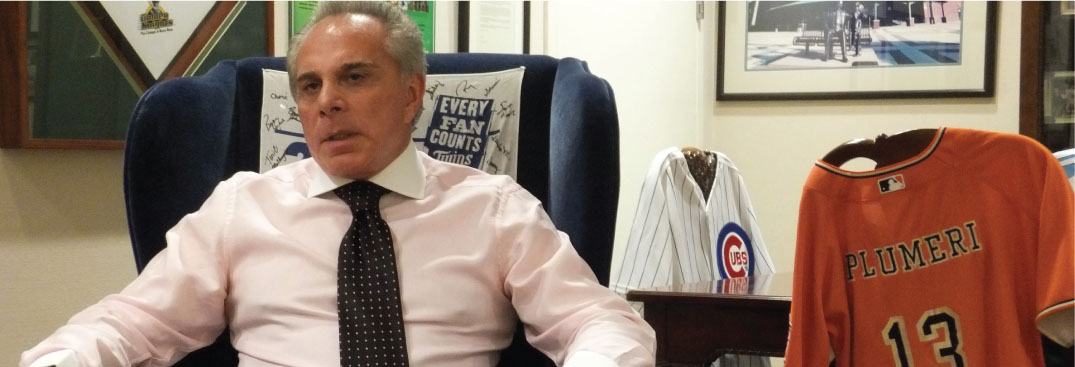
After 12 years at the helm, Joe Plumeri is stepping down as the CEO of Willis Group Holdings on Jan. 7. He will serve as nonexecutive chairman through July 13, when his contract expires.
Plumeri stresses that the move is not a "retirement"; rather, he views it as the next phase in his long career.
NU sat down with the outgoing chief executive to discuss his reasons for leaving, his highs and lows at Willis, contingent commissions, and other topics.
Why are you retiring?
I'm not retiring. I'm leaving Willis. There's a difference between the two. I actually think there is a point in time where you've done your thing and it comes time to leave room for the next generation, the next group, to come in and take it to the next level. In the past 12 years, we took a company that didn't make money and was not a force in this industry and brought it to its position today.
I think the worst thing I ever saw was Willie Mays try to steal second base when he was 45 years old. No one remembers Joe DiMaggio as a broken-down ballplayer. Sometimes you just stay too long. Sometimes you outlive your stay.
What do you feel are the high points and low points in your career?
I think the way we conducted ourselves during the Spitzer investigations was the high point. The integrity that we showed and the brand that is associated with that integrity makes me feel better than any shareholder return or any other metric.
The first thing that people say when you say "Willis" is integrity, and that has to be the high point.
The low point, professionally—it wasn't a point, as much as a stage—was when we brought in [Hilb, Rogal & Hobbs].
The financial crisis began, and the degree of difficulty in acquiring a company under such financial duress—the markets being soft and the economy being bad, credit markets closed, and still getting the deal done with financing at high interest rates and all the issues that came along with that—that was a low point.
We grew dramatically during eight years before that happened, and the low point began when we brought in HRH. It was not a low point to buy HRH. I think the decision was the right decision. I think the timing could have been better. You don't have jurisdiction over timing.
You took a very active role criticizing contingent commissions. Are you disappointed with the way the issue turned out?
I was criticized for my position and even received a letter from an agents' association. But I never had a problem with contingents; I just felt that clients need to know who you represent. Do you represent insurance companies or do you represent them? My issue was accepting them from anyone but your client and simply telling people who you represent.
[The way in which contingent commissions are paid] is not going to change. I'm disappointed in clients not demanding change and that they don't appreciate who pays brokers, and I'm not sure if we are as transparent as we should be.
What do you think about the future of the insurance industry?
The more risky the world becomes, the more important insurance becomes. If we change as the world is changing, so we become less insurance brokers and more insurance advisers—advising about how people can sustain themselves, their family, their businesses, rather than insure their businesses—then what more vital part can you play than that in a society?
Secondly, if the population explosion around the world is what people say it will be—that by 2030 you'll have eight billion people in the world, and 60 percent of those people will live in cities—then by definition you're either going to have a middle class with jobs or total chaos.
If you have a middle class with jobs, then that means those businesses are going to have to be insured and sustainable and resilient, which means insurance plays a big part in making sure all of that happens.
With the world becoming more risky, more complex, more urbanized and more populated…insurance still has not seen its best days. The golden era of insurance has not occurred yet.
© Arc, All Rights Reserved. Request academic re-use from www.copyright.com. All other uses, submit a request to TMSalesOperations@arc-network.com. For more information visit Asset & Logo Licensing.