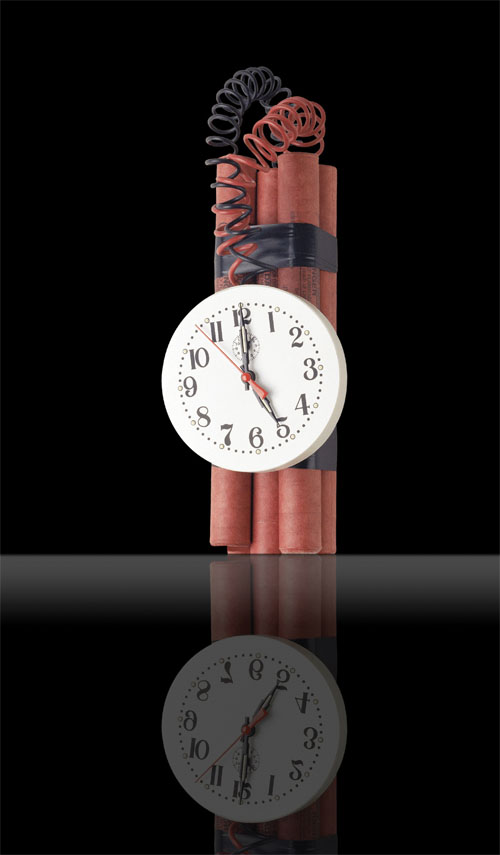
 Working with the new Congress on a renewal of the Terrorism Risk Insurance Act (TRIA) is one of the primary lobbying goals of the P&C industry in 2013.
TRIA, whose enactment in 2002 created a U.S. government reinsurance facility to provide coverage to insurance companies following a declared terrorism event, is set to expire Dec. 31, 2014—and, according to some industry sources, a renewal is by no means a slam-dunk.
Should the federal backstop disappear, the ripple effect on the country's real estate and insurance sectors will resemble more of a tsunami than a wave, observers warn.
"Over a trillion dollars in commercial mortgage-backed securities will be in technical default if the program is allowed to lapse," says Matt Gannon, assistant vice president of federal affairs for the National Association of Mutual Insurance Companies (NAMIC).
And new commercial lending will cease if lenders don't receive a signal from Congress that it plans to re-up TRIA. "This can't be a last-minute deal because of the way the commercial real estate industry works," Gannon adds.
"TRIA extension is always politically challenging," says Joel Wood, senior vice president of government affairs at the Council of Insurance Agents and Brokers.
Wood says corporate insurance buyers will be the leaders in pushing for an extension of the act, "particularly those for whom there is a stronger perception of risk," such as those at companies with large real estate portfolios in urban areas.
"TRIA provides necessary market stability by mitigating the potentially devastating loss of capital resulting from an attack," says Willem O. Rijksen, vice president of public affairs for the American Insurance Association (AIA). "AIA will continue to work with members of Congress in the months ahead to achieve broad bipartisan support for TRIA's reauthorization."
While TRIA was originally intended as a temporary solution, Clifton E. "Chip" Rodgers Jr., senior vice president of the Real Estate Roundtable, argues that a "viable private-sector marketplace for this coverage does not yet fully exist" and that the program's expiration would leave policyholders and taxpayers exposed and unprotected—just as they were after 9/11.
He says the Government Accountability Office, the President's Working Group on Financial Markets and other terrorism-risk observers have consistently concluded that "acts of terrorism" are uninsurable risks.
"Terrorism is not aimed at a specific business or property owner; it is aimed at our governmental policies and our way of life," says Rodgers. Therefore, he adds, a federal backstop is vital and justified.
"Those who suggest that private markets should bear the risk alone are missing the point," he explains. "Private markets alone cannot and will not provide the level of Terrorism insurance our economy demands."
As for the insurance industry, Wood says, "we have to persuade policymakers that the industry will pay back any losses paid through the federal backstop."
Many insurance executives testified this year about TRIA's importance before a House subcommittee on the highly symbolic date of Sept.11.
Aon has been steadfast in its support of a TRIA extension, says Aaron Davis, managing director in Aon Risk Solutions' National Property practice.
"Prior extensions of [TRIA] have been decided within one month or less of the successor act's respective expiration," says Davis. "We continue to advise our insurance and reinsurance clients to advocate for an early and long-term resolution to extending this key catastrophic-risk backstop."
Christopher M. Lewis, senior vice president and chief insurance risk officer for The Hartford Financial Services Group, speaking on behalf of the AIA, told the House subcommittee that TRIA must be maintained "so that the U.S. can enjoy national economic security for years to come."
 Darwin Copeman, a member of NAMIC's board and president and CEO of Wisconsin-based Jewelers Mutual Insurance Co., testified that TRIA has been critical to the continued existence of a private market for Commercial Terrorism coverage.
"TRIA put a ceiling on potential insured losses and reduced the fear that a worst-case terrorist event could render an insurer insolvent," Copeman says.
Wendy Peters, Terrorism insurance practice leader for Willis Group Holdings, says there is an extremely limited private market for Terrorism Risk insurance. Moreover, TRIA only covers 85 percent of a policy limit, with the insurer retaining 15 percent of its loss.
"As far as the government is concerned, TRIA is cat-only," Peters adds. "TRIA is only meant to respond to a catastrophic loss."
Michael Lanza, representing the Property Casualty Insurers Association of America and executive vice president and general counsel of the Selective Insurance Group Inc., specifically notes TRIA's importance to the Workers' Compensation insurance market.
"State Workers' Compensation laws mandate coverage for terrorist acts in the workplace," says Lanza. "Without TRIA, it will be very difficult for insurers to obtain reinsurance in the private market."
Rep. Judy Biggert, R-Ill., chair of the Subcommittee on Insurance, Housing and Community Opportunity of the House Financial Services Committee, tells NU: "Congress will take the time between now and December 2014 to assess conditions in the insurance market and the private sector's capacity to offer reinsurance and insurance coverage without a federal backstop."
Congress will continue to hold hearings to examine options for encouraging greater private-sector participation in the market for Terrorism Risk insurance, says Biggert.
"It is still early in that process, but the input we receive will help guide Congress toward a long-term solution that protects families, businesses and taxpayers," she adds.
© Arc, All Rights Reserved. Request academic re-use from www.copyright.com. All other uses, submit a request to TMSalesOperations@arc-network.com. For more information visit Asset & Logo Licensing.